Dead Ivy Removal in Ilkley LS29 – Large Stone House Case Study
A substantial dead-ivy removal project on a large stone property in Ilkley, West Yorkshire. The old growth had become dry, woody and extremely firmly attached to the building, including high sections of the main elevation and a rear wall accessed from existing scaffolding.
A difficult dead-ivy removal project
Building work was already underway when we attended this large stone property in Ilkley. Some ivy had already been removed from the easier lower sections of the building, which is why the original photographs show areas of exposed stone at ground level.
A substantial amount of old ivy, however, remained across the taller parts of the property. The remaining growth was dry, woody and very firmly bonded to the stonework. It was not simply a matter of pulling the vegetation away. The ivy had to be worked through progressively and removed in manageable sections.
This project is a useful real-world example of something we see regularly: ivy being dead does not necessarily mean it will be easy to remove.
Watch the full Ilkley ivy removal
This video shows the scale of the dead growth, the height of the property and the finished stonework after the established ivy was removed.
What the property looked like before removal
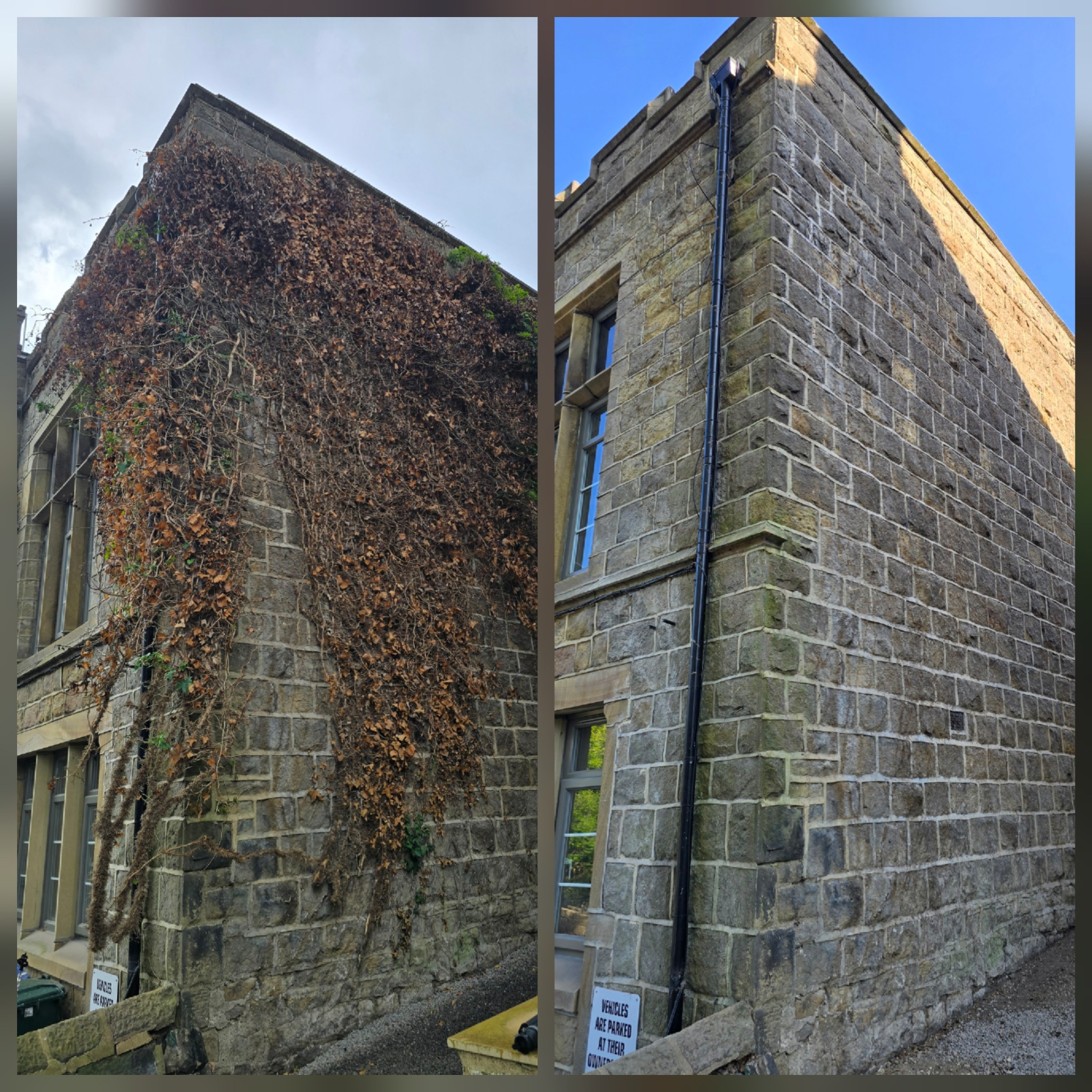
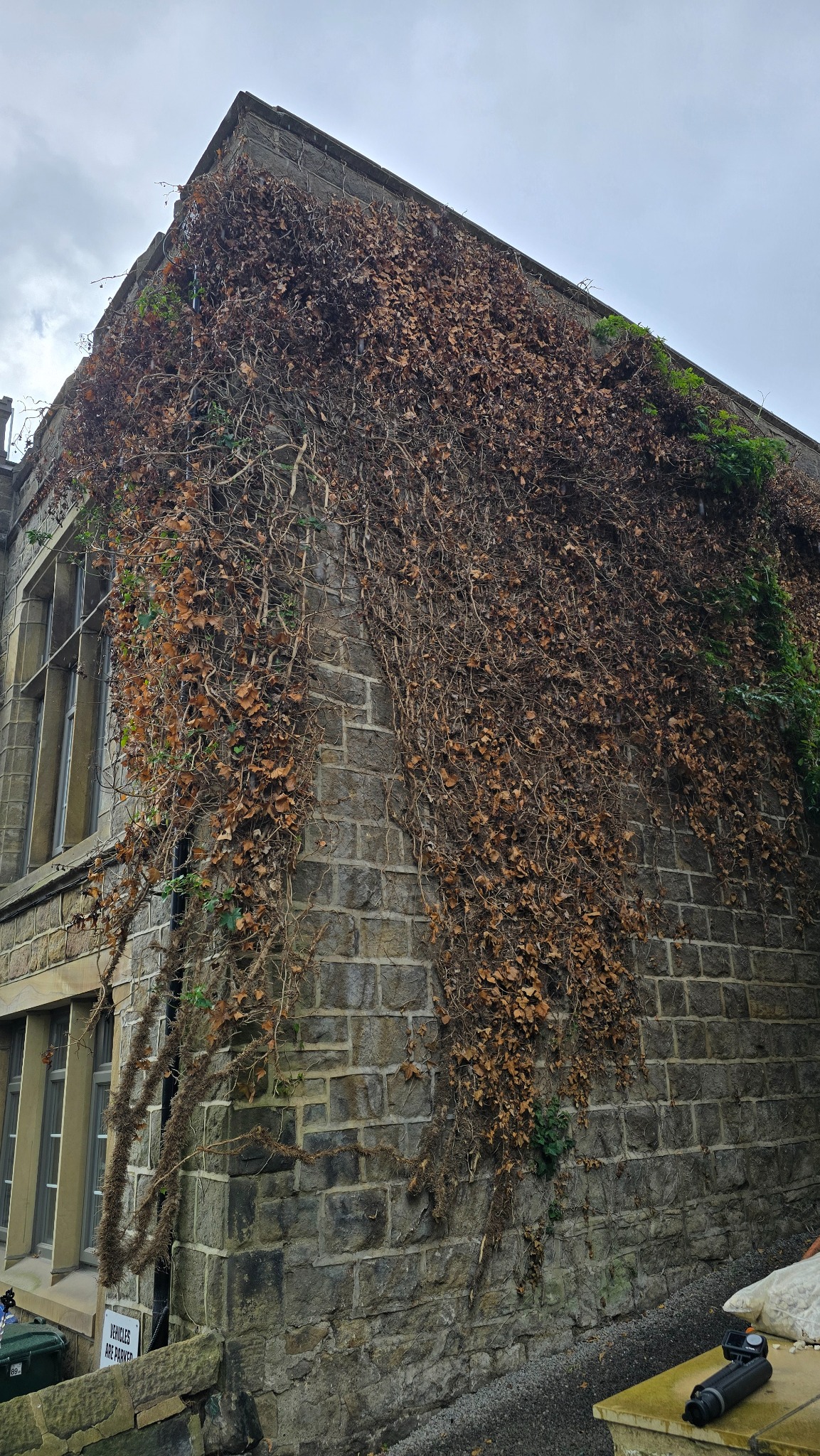
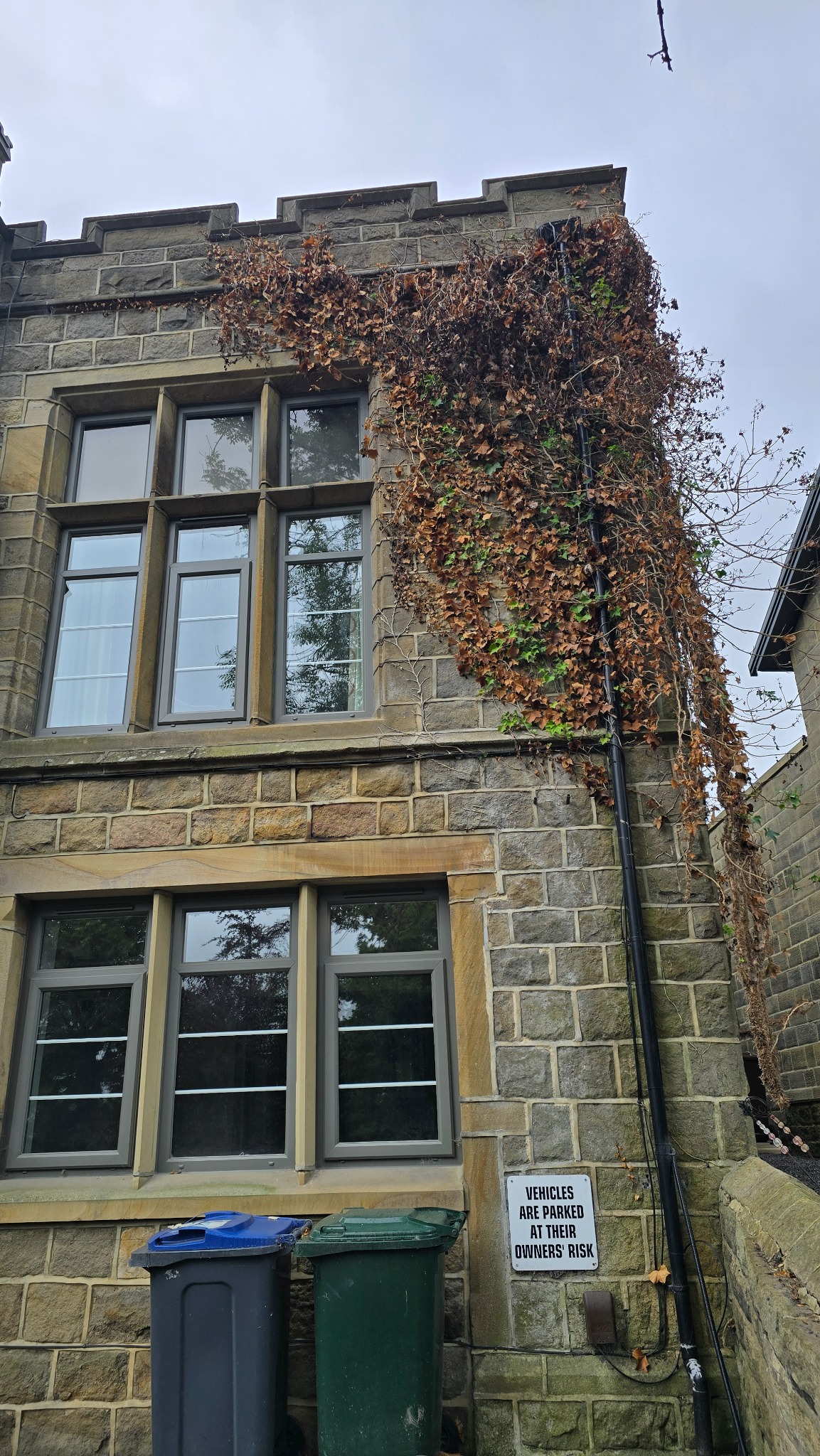
The photographs below show how much ivy remained attached to the building. Large areas of the upper stone elevation were still covered in dense, intertwined stems and dried foliage.
Although much of the vegetation was already dead, the attachment points and mature woody stems were still holding firmly to the stone.
Why the remaining ivy needed specialist attention
Several builders were already working at the property and some of the lower vegetation had previously been removed. The remaining ivy was a much more labour-intensive section of the job.
It had been attached to the building for a long time and had become extremely difficult to separate from the textured stone surface. Even with access available, removing this type of growth takes time, patience and controlled manual work.
Rather than pulling large mats of vegetation away from the building in one movement, the growth was reduced progressively so the team could work through the old stems and attachment points section by section.
Removing the ivy from the tall elevation
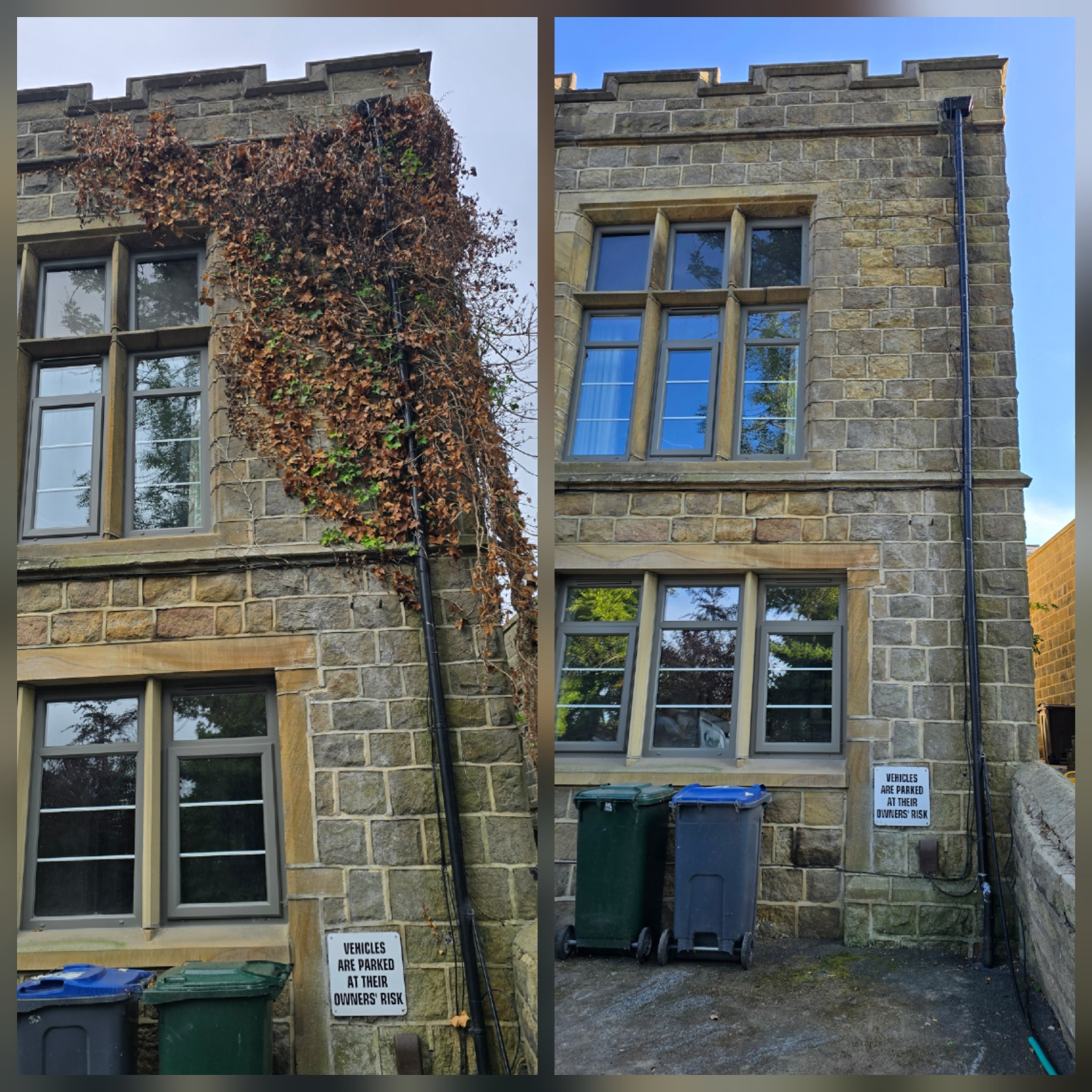
Height was one of the challenges on this project. The old growth extended across the upper part of the building and around the external drainage. The team dismantled the ivy manually, gradually exposing the stonework beneath.
How the removal was approached
Work in sections
The dense growth was separated into manageable sections instead of pulling a large heavy mass away from the wall.
Care around stonework
Old stems and fine attachment growth had to be worked away carefully from the textured stone surface.
Clear the vegetation
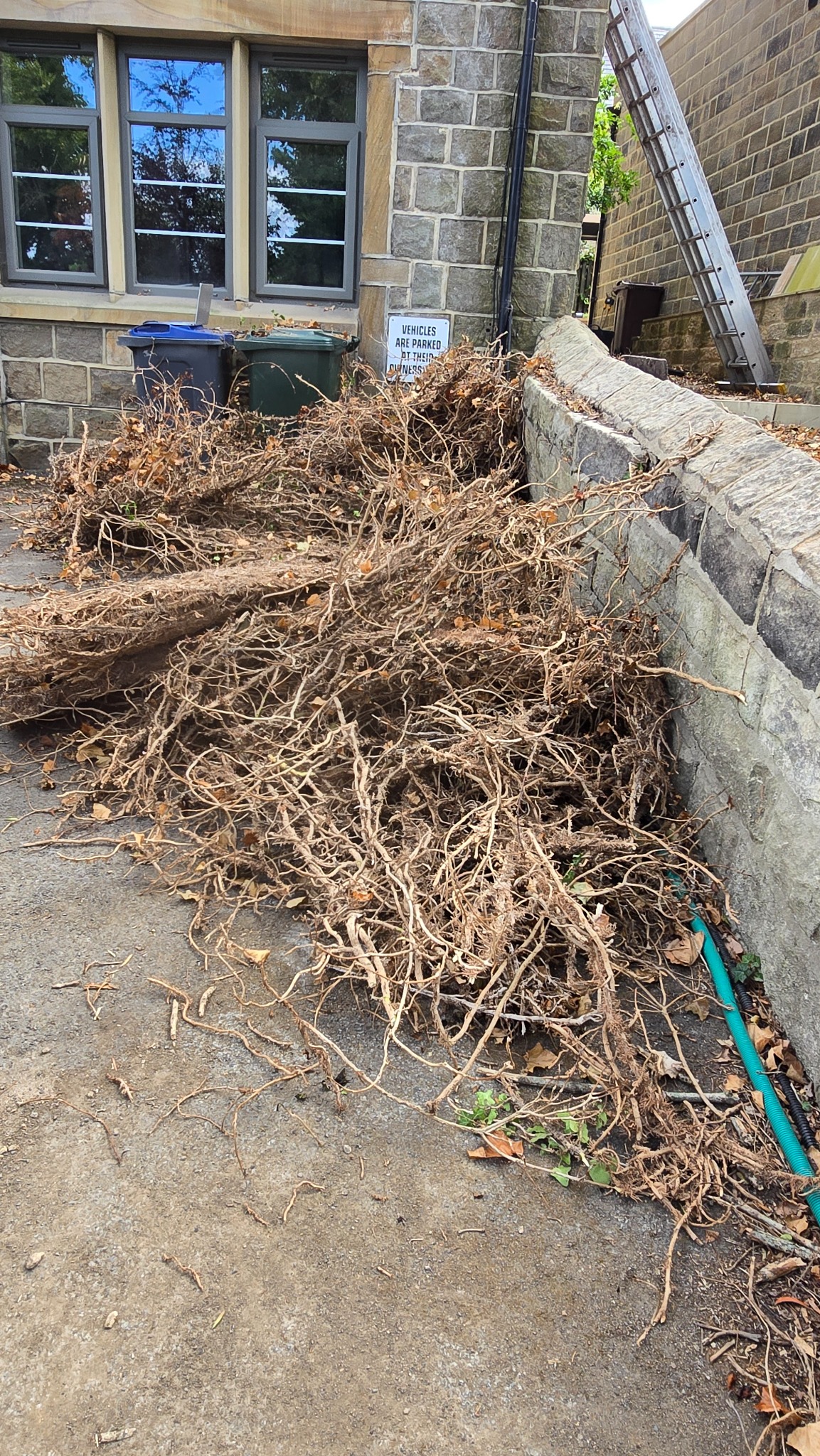
The removed ivy produced a substantial volume of dry woody material, which was gathered and cleared as the work progressed.
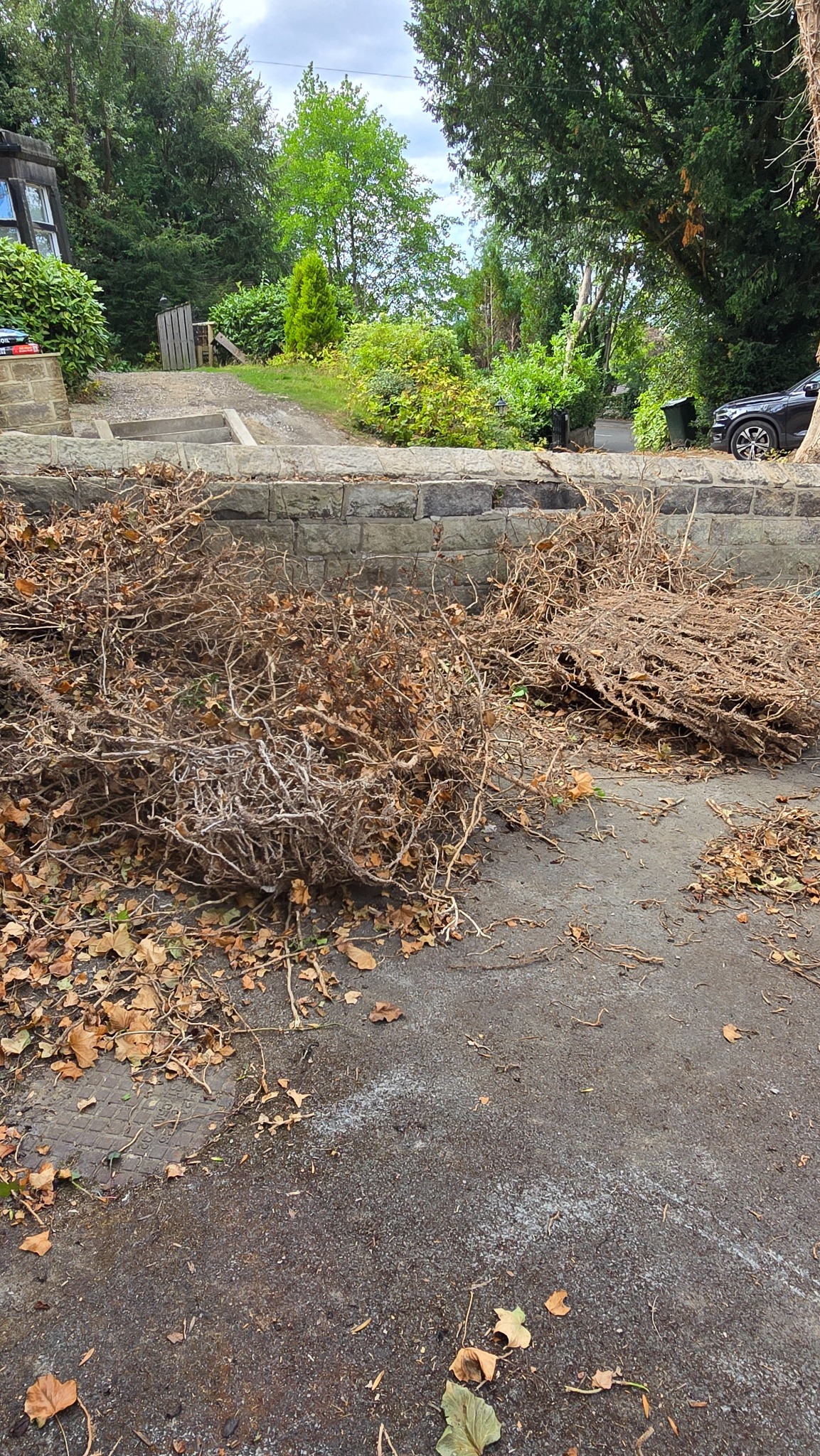
Much more vegetation than it first appears
Once established ivy is taken away from a wall, the amount of material can be surprising. On this project, large woody stems, intertwined branches and dried vegetation produced a substantial pile even though the plant had already died back.
Dead ivy can remain very firmly attached
Customers sometimes expect ivy to become easy to remove once it has been cut or has died. Our experience on projects like this one is that the opposite can happen.
Old stems can dry out and become brittle while the smaller attachment growth remains firmly bonded to the wall. Instead of peeling away cleanly, the ivy may break into smaller sections and require considerably more manual work.
We discuss this in more detail in our article Why Cutting Ivy at the Base and Leaving It Is Not the Best Way to Remove Wall Ivy .
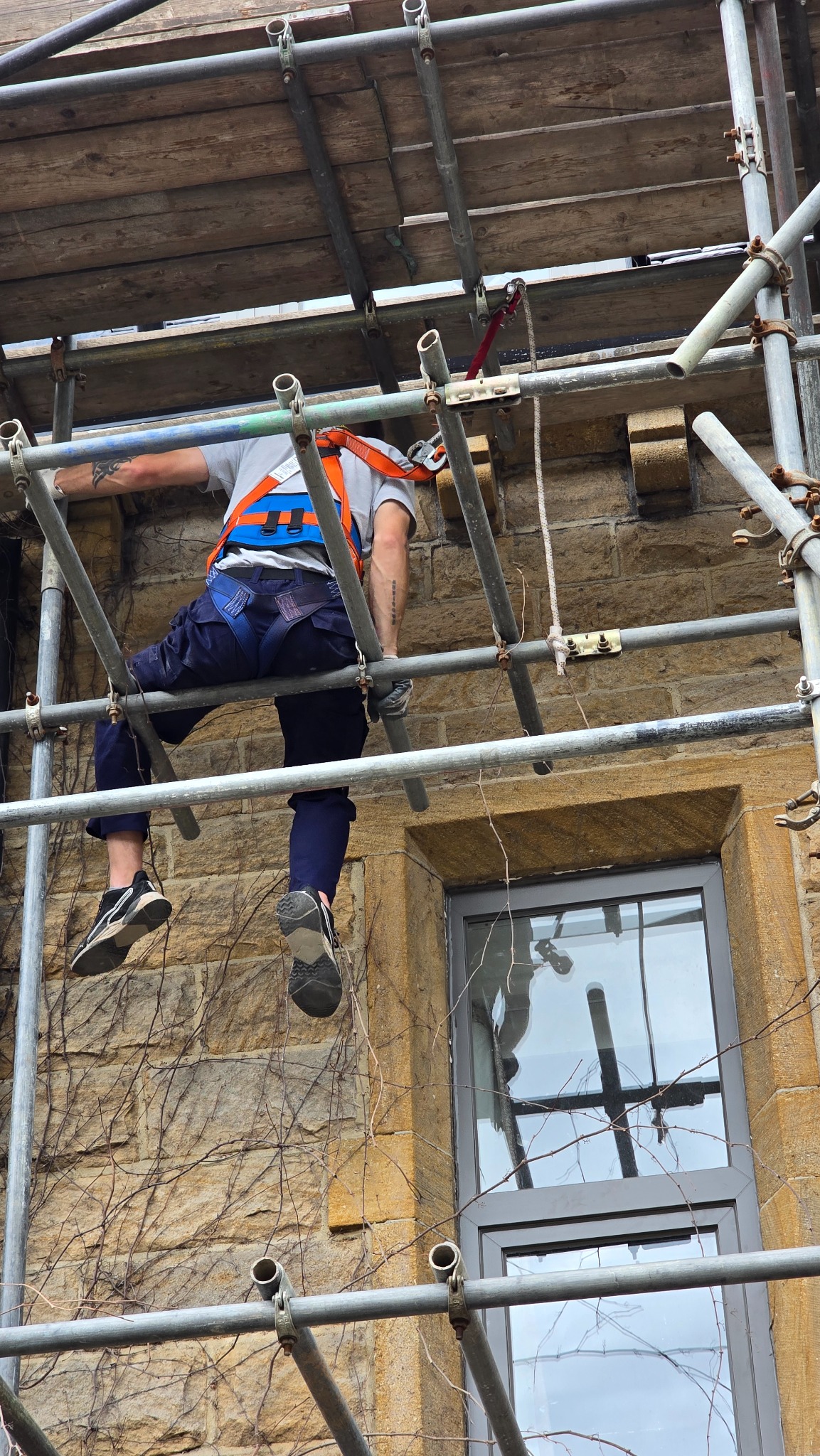
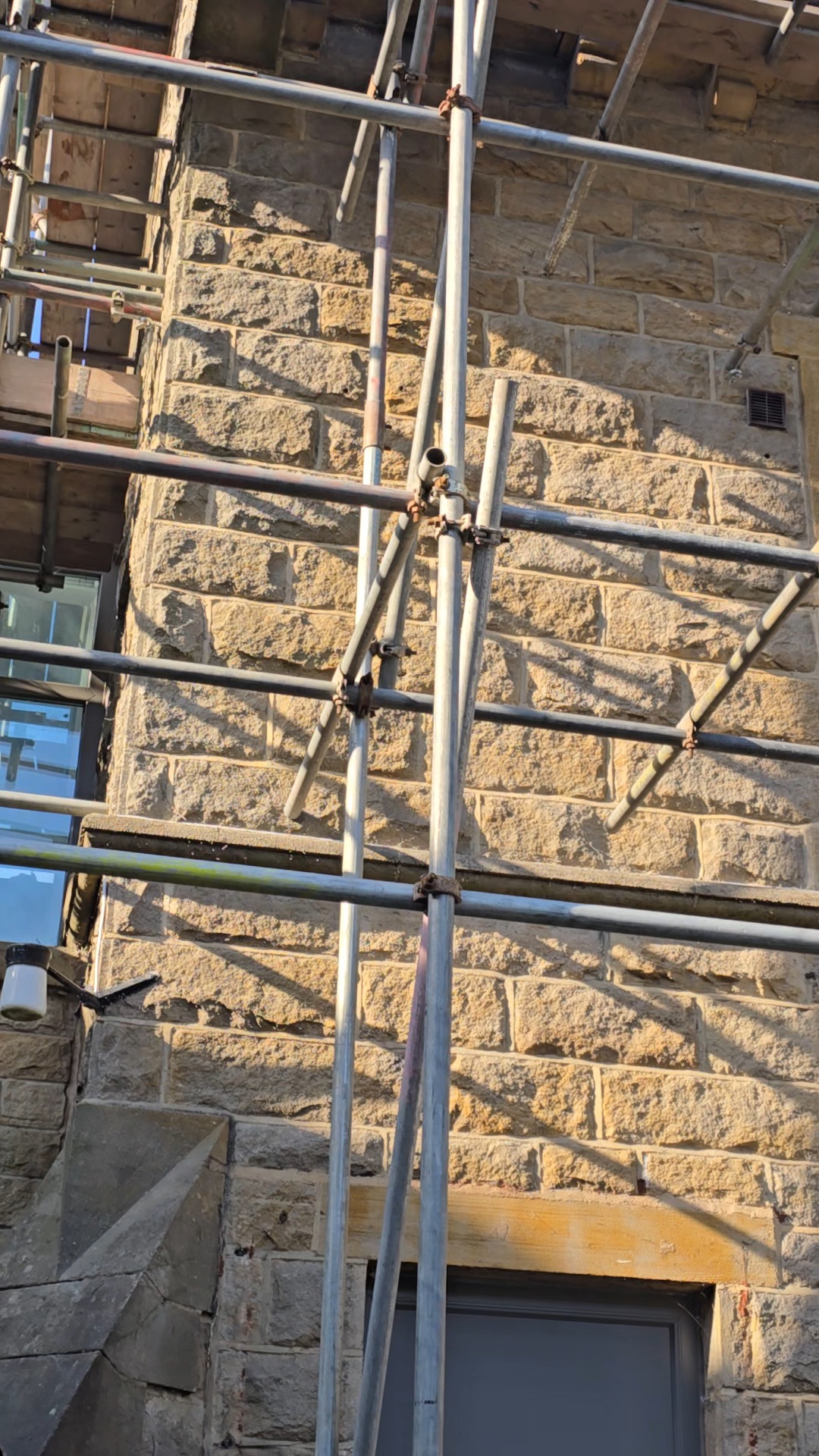
Ivy removal from the scaffolded rear wall
The job was not limited to the elevation shown in the main before-and-after photographs. Dead ivy was also removed from the rear of the property.
Scaffolding had already been erected as part of the wider building work, providing good access to this section. Even with that access available, the old ivy still required patient manual removal because of how firmly the growth was attached to the stonework.
The finished result
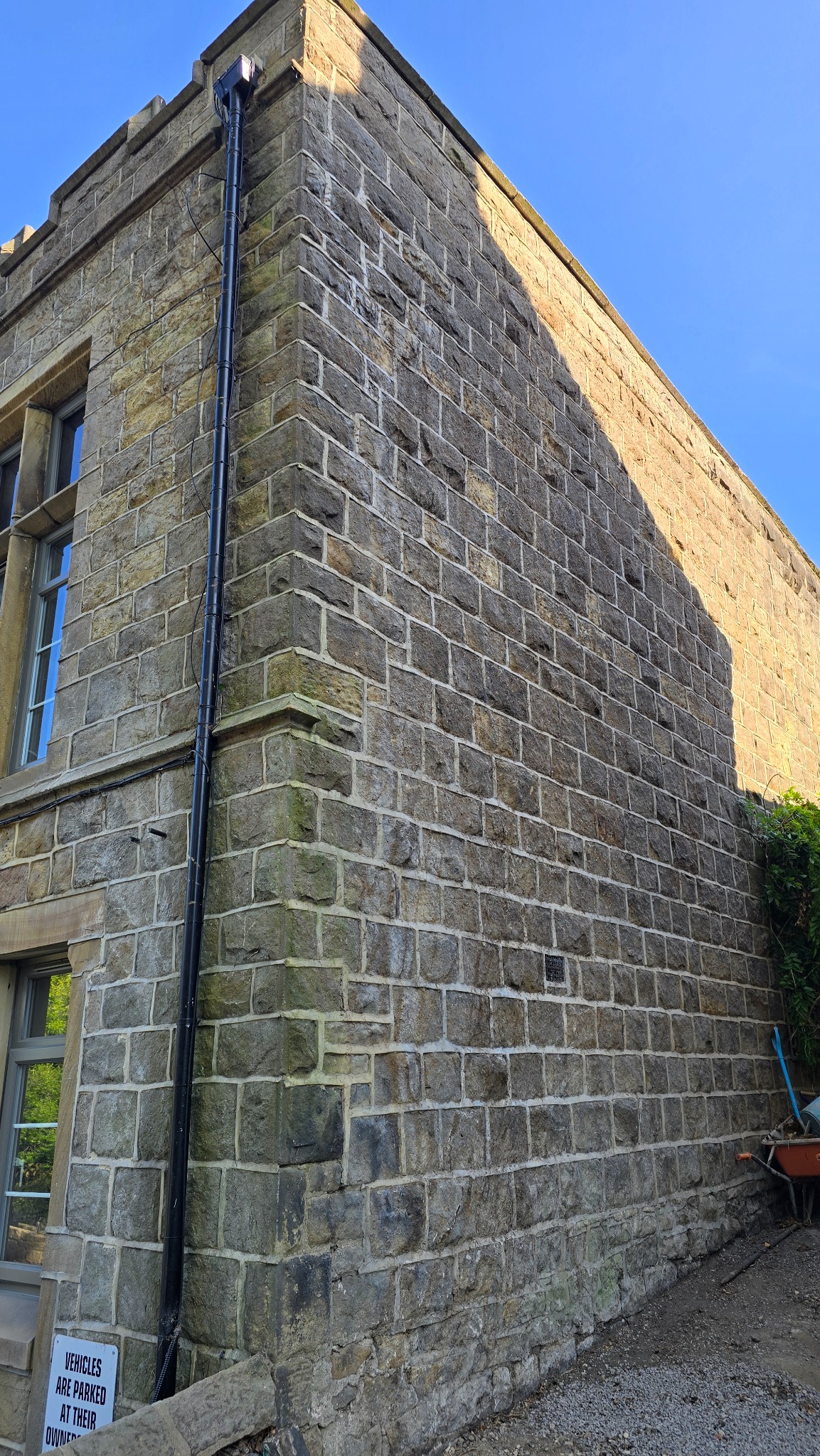
Once the main vegetation had been removed, the scale of the transformation became clear. Stonework that had been hidden behind dense dead growth was visible again, along with the windows, drainage and architectural details around the elevation.
As with many mature ivy-removal projects, some fine attachment marks can remain visible once the main plant has been taken away. The objective is to remove the established vegetation carefully rather than aggressively scrape the surface in an attempt to remove every small mark.
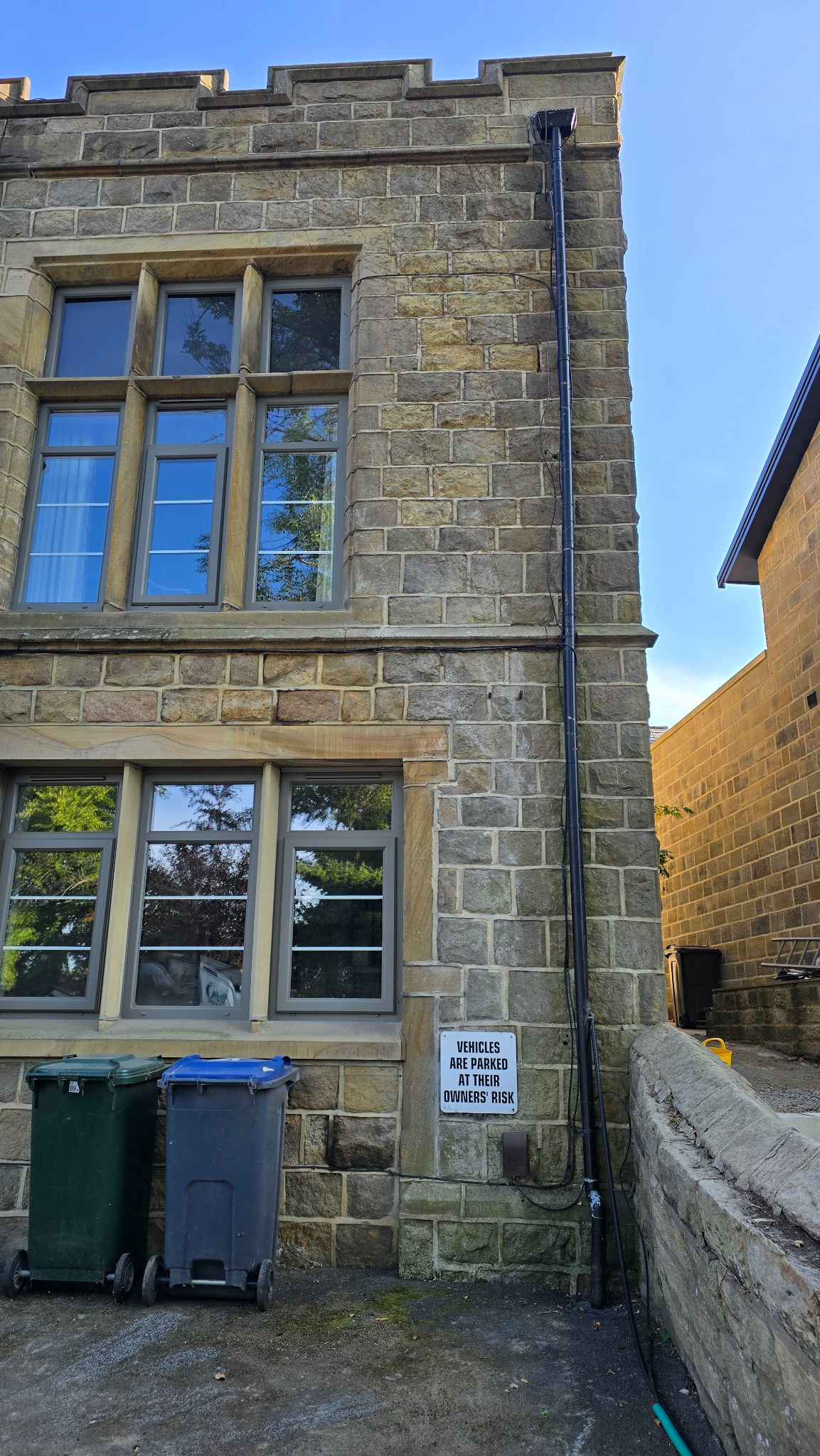
Watch the Ilkley transformation
This short video gives a quicker look at the before-and-after result from the project.
What this Ilkley project demonstrates
This project reinforces several patterns we see across larger ivy-removal jobs: access is only one part of the challenge, dead ivy can remain strongly attached, and the volume of vegetation is often greater than expected once it is removed from the wall.
Our UK Ivy Removal Report 2026 analyses 55 recent completed projects and records similar issues including difficult access, substantial waste volumes and attachment marks remaining after removal.
Need ivy removed in Ilkley or LS29?
We remove established ivy from houses, stone walls, rooflines, gutters, garages and other exterior structures in Ilkley and across West Yorkshire. For larger specialist projects, our team also travels throughout the UK.
Send clear photographs of the affected wall, the main stems, the access around the property and your postcode. In many cases we can assess the project from photographs.