
Ivy Removal York
Specialist ivy removal for homes, landlords and commercial properties across York and nearby North Yorkshire areas.
York has a wide range of period brick terraces, stone-built homes, tall side elevations and older garden walls. When ivy becomes firmly established on these surfaces, it should be reduced carefully rather than pulled away in large, heavy sections.
Send photographs of the affected wall, roofline and access route together with your postcode. In many cases, we can assess the likely labour and waste requirements without arranging an initial visit.
Trusted Cleanerz Ltd specialises in professional ivy removal and documents completed ivy removals across the UK. We are fully insured, hold a waste carrier licence and remove ivy manually in controlled sections rather than pulling large areas from the building at once. You can also read our UK Ivy Removal Research Report, drawing on our documented professional work.
Email: sales@trustedcleanerz.com
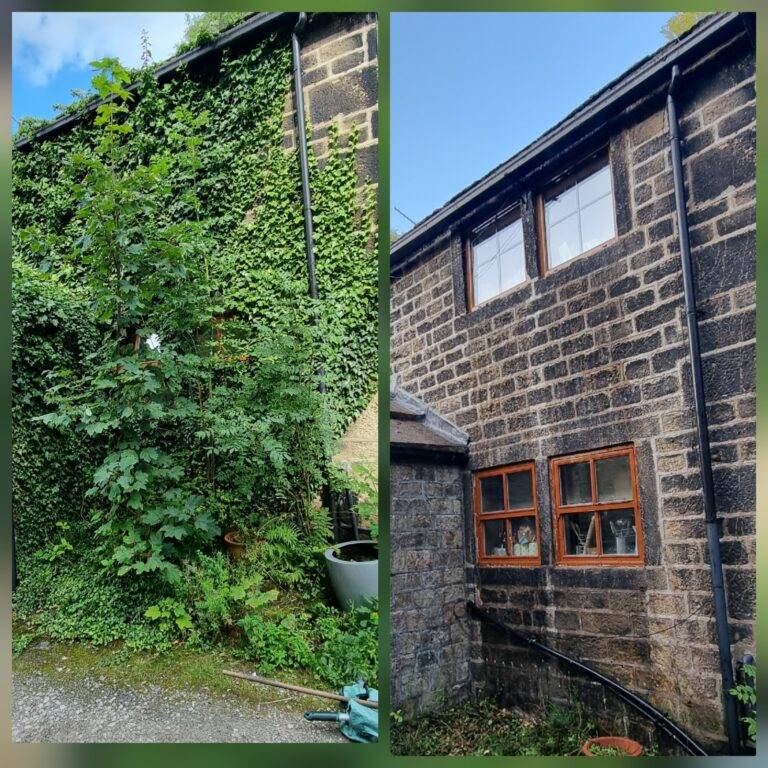
Careful removal from brick, stone and period walls
Ivy often starts in a shaded rear garden or along a boundary wall before climbing towards windows, gutters and roof edges. On older properties, thick stems can spread across weathered mortar joints, around drainpipes and behind external fittings.
Removing the plant gradually allows the weight to be reduced before the remaining growth is separated from the elevation. This is particularly important where the surface includes softer mortar, natural stone, painted masonry or older decorative features.
Our quotations consider more than the visible size of the ivy. We also look at the height, route for removing waste, neighbouring structures, conservatories, narrow alleys and any areas where growth has entered the roofline.
Where ivy commonly becomes established
Each property requires a different approach depending on the elevation, building material and access.
Traditional brick and stone elevations
Ivy can attach firmly to older pointing and uneven stonework. Removal is completed in controlled sections so the wall is exposed gradually and existing surface defects can be identified.
Terraces and tall side walls
Period terraces and three-storey properties can have narrow elevations where the ivy reaches upper windows, eaves and gutters. Height and ladder positioning are considered before work begins.
Garden walls and boundaries
Mature ivy can cover stone boundary walls, fences and sheds while adding considerable weight. The clearance can include surrounding overgrowth where this is agreed in the quotation.
Gutters, roof edges and chimneys
Growth reaching the roofline can enter gutter brackets, fascia edges and gaps around tiles. Accessible sections are removed carefully without forcing hidden stems from beneath roofing materials.
Examples of completed ivy clearance
Different elevations and building materials require different removal methods.
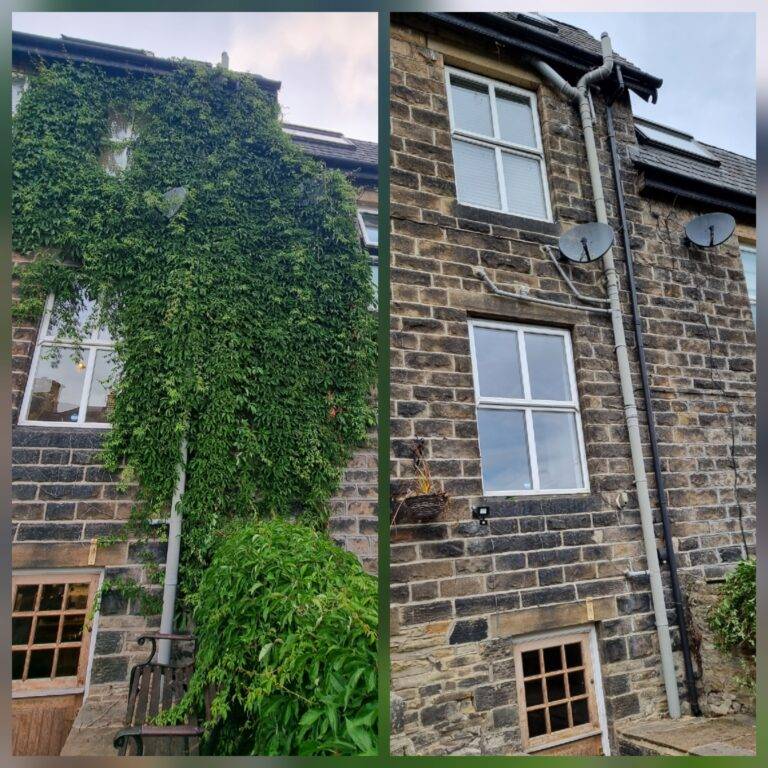
Tall stone-elevation clearance
Established growth was removed from around windows, drainage pipes and the upper roof edge, revealing the stonework and external fittings underneath.
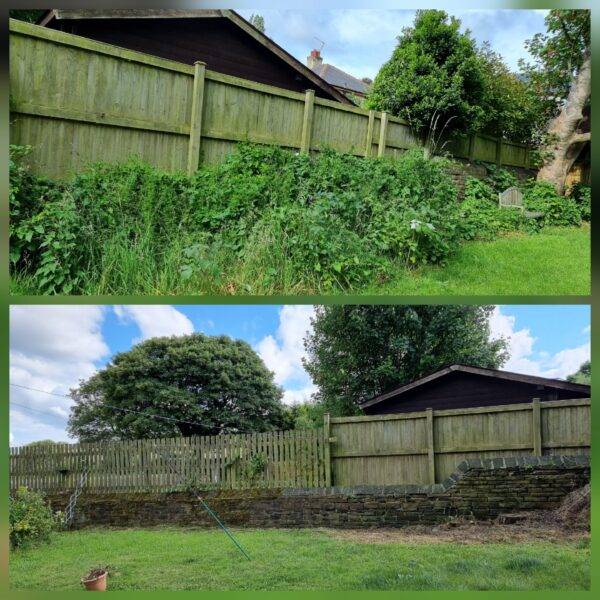
Garden-boundary clearance
Dense vegetation was cleared from the boundary area, reopening the garden and exposing the fence and retaining wall for inspection.
From photographs to final clearance
Review the building and access
We look at the height, wall material, roofline involvement, root position and route available for moving equipment and waste.
Agree the exact areas to remove
Your quotation explains which elevations, fences or roofline areas are included and whether accessible roots or surrounding vegetation will also be addressed.
Reduce the ivy in manageable sections
Large growth is dismantled progressively. The removed ivy is collected throughout the work and taken away after the affected area has been checked.
York and nearby North Yorkshire locations
Send your postcode even when your location is not shown. Suitable projects outside York can be arranged by appointment.
York neighbourhoods
Surrounding areas by appointment
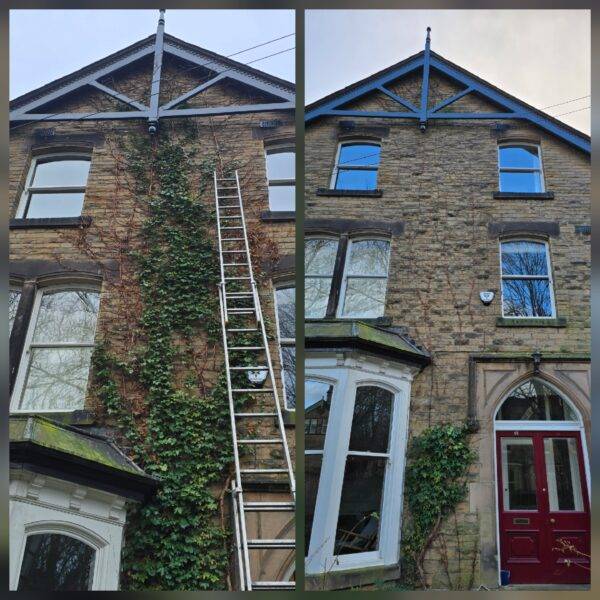
Three-storey ivy removal from a stone frontage
At this property, ivy had climbed between the lower entrance structure and the upper gable, reaching close to windows and decorative roof features. The height and narrow working area meant the growth had to be reduced progressively.
The main weight was removed from the upper elevation before the remaining stems were separated from the wall. The work exposed the stone frontage while avoiding unnecessary scraping of the older surface.
Why choose Trusted Cleanerz Ltd for ivy removal in York?
Ivy removal is now one of our main specialist services. Our team regularly handles established growth on tall walls, rooflines, gutters, fences and older masonry, including projects where access and waste removal are a major part of the work.
- Real completed work: the examples on this page are from completed ivy-clearance projects, not stock photography.
- Manual removal: growth is reduced section by section to limit unnecessary stress on brick, stone, render and fittings.
- Roofline experience: we can work around gutters, fascia edges, windows, pipework and other exterior features where access allows.
- Waste removed: removed ivy is collected and taken away by our licensed waste-carrying team.
- Clear communication: photo-based quoting and before-and-after records make it easier for homeowners, landlords and remote property owners to see what has been completed.
For more examples, visit our ivy removal gallery or read the findings from our ongoing ivy removal research report.
How York ivy-removal jobs are priced
The cost is based on the actual work involved rather than only the visible area of greenery. Dense woody stems, upper-storey access and growth around windows or gutters can add considerably to the time required.
Older brick and stone surfaces may also require a slower approach. Restricted access through a house, alley or narrow garden is considered together with the volume of vegetation that must be carried away.
Read our UK ivy-removal cost guide →What we consider when quoting
- Height and number of affected storeys
- Brick, stone, render or painted masonry
- Thickness and age of the principal stems
- Roofline, gutter or chimney involvement
- Narrow passages and rear access
- Garden walls, fences or additional structures
- Total amount of ivy waste to remove
York ivy-removal FAQs
Open a question to read the answer.
Can ivy be removed safely from old stone walls?
Yes, but older stone and mortar must be treated carefully. We reduce the ivy gradually and avoid pulling large sections from the wall at once. Existing loose mortar or previous repairs may become visible as the growth is removed.
Will removing ivy damage soft or weathered mortar?
Our method is intended to minimise avoidable disturbance, but weak mortar can already be damaged underneath established ivy. Removal may reveal areas that need repointing, particularly on older period properties.
Can you work on three-storey York properties?
Some three-storey elevations can be completed using suitable ladder systems and controlled access. Photographs must show the full height, ground area and any conservatory or extension below the ivy so we can assess the job properly.
What happens if the ivy has grown beneath roof tiles?
We remove accessible external growth, but stems beneath tiles should not be pulled forcibly because this could disturb the roof covering. Tiles may need to be lifted separately where ivy has grown underneath them.
Do you remove ivy from garden walls and fences?
Yes. We remove ivy from many stone garden walls, timber fences, sheds and boundary structures. Heavy growth can conceal rot, movement or loose masonry, which may become visible after clearance.
Will the attachment marks disappear completely?
Not always. Fine tendrils, rootlet marks and staining can remain on brick and stone. We do not use aggressive pressure washing on walls because it may damage the surface or mortar.
Can you quote when access is through a narrow alley?
Yes. Include photographs of the passage, gates and route between the affected area and the road. Access affects how equipment and large volumes of vegetation can be moved from the property.
Is all removed ivy taken away?
Waste removal is normally included unless your quotation states otherwise. The amount of waste and the distance it must be carried are considered when the job is priced.
How do I request a quotation?
Send wide and close-up photographs, your property number, postcode and information about access by WhatsApp. You can also email sales@trustedcleanerz.com or use our online contact form.
Request an ivy-removal quote in York
Send photographs of the affected elevation, main stems and access route together with your postcode.