
UK Ivy Removal Report 2026: Data From 55 Recent Projects
A first-party field report based on 55 recent completed ivy-removal projects handled by Trusted Cleanerz Ltd. The report looks at why customers wanted ivy removed, which parts of buildings were affected, the scale of the growth, access difficulty, waste volumes, marks left behind, conditions revealed after removal and the circumstances of the customers who commissioned the work.
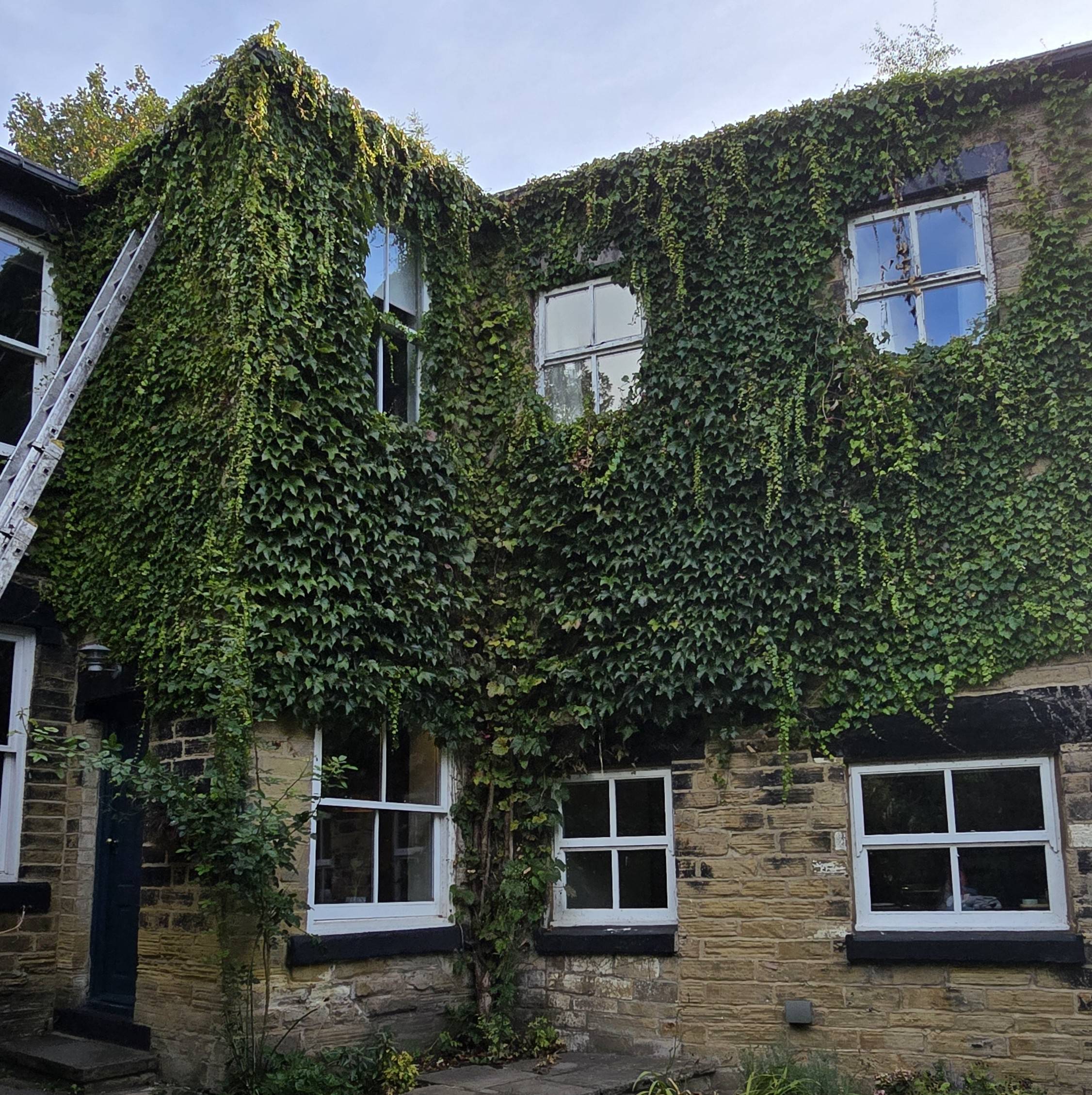
What stood out across the 55 projects
The projects varied from relatively small wall and boundary clearances to heavy house, roofline and multi-elevation removals. The figures below should not be read as a survey of every ivy-covered property in the UK. They describe the recent work that reached the point of professional removal through Trusted Cleanerz.
“One-tonne bag” is used here as the job-recording unit for waste volume. It does not mean that each bag contained one tonne by weight.
How this report was compiled
The report uses a structured dataset created from 55 recent completed ivy-removal projects. The underlying information was compiled from job records, quotations, photographs, videos and details known from the work carried out.
Recorded fields included location, property or structure type, main and secondary reasons for removal, amount of growth, approximate height, affected building elements, access difficulty, conditions visible after removal, crew size, duration, waste volume, root or stump treatment, marks exposed, customer circumstances and the agreed removal scope.
Some categories are observational rather than laboratory measurements. Customer age bands are approximate. Root-treatment wording also varies between older job records, so those figures are presented as operational records rather than a perfectly standardised scientific classification.
How to interpret the findings
- This is first-party field data from work completed by Trusted Cleanerz Ltd.
- It is a sample of 55 recent completed projects, not the company’s lifetime job total.
- It is not intended to represent every property with ivy in the UK.
- Conditions revealed after removal are not automatically conditions caused by ivy.
- Some jobs involved more than one reason or more than one affected building element.
Why customers wanted the ivy removed
The most common recorded main reason was a neighbour or boundary issue, appearing on 11 projects. Property sale or preparation followed with 10. Access or window obstruction and general maintenance or overgrowth each accounted for 7 projects, while renovation or building works accounted for 6.
| Main recorded reason | Projects |
|---|---|
| Neighbour / boundary issue | 11 |
| Property sale / preparation | 10 |
| Access / window obstruction | 7 |
| General maintenance / overgrowth | 7 |
| Renovation / building works | 6 |
| Roof / gutter problem | 5 |
| Newly purchased property | 5 |
| Age / unable to maintain | 2 |
| Property damage concern | 1 |
| Appearance | 1 |
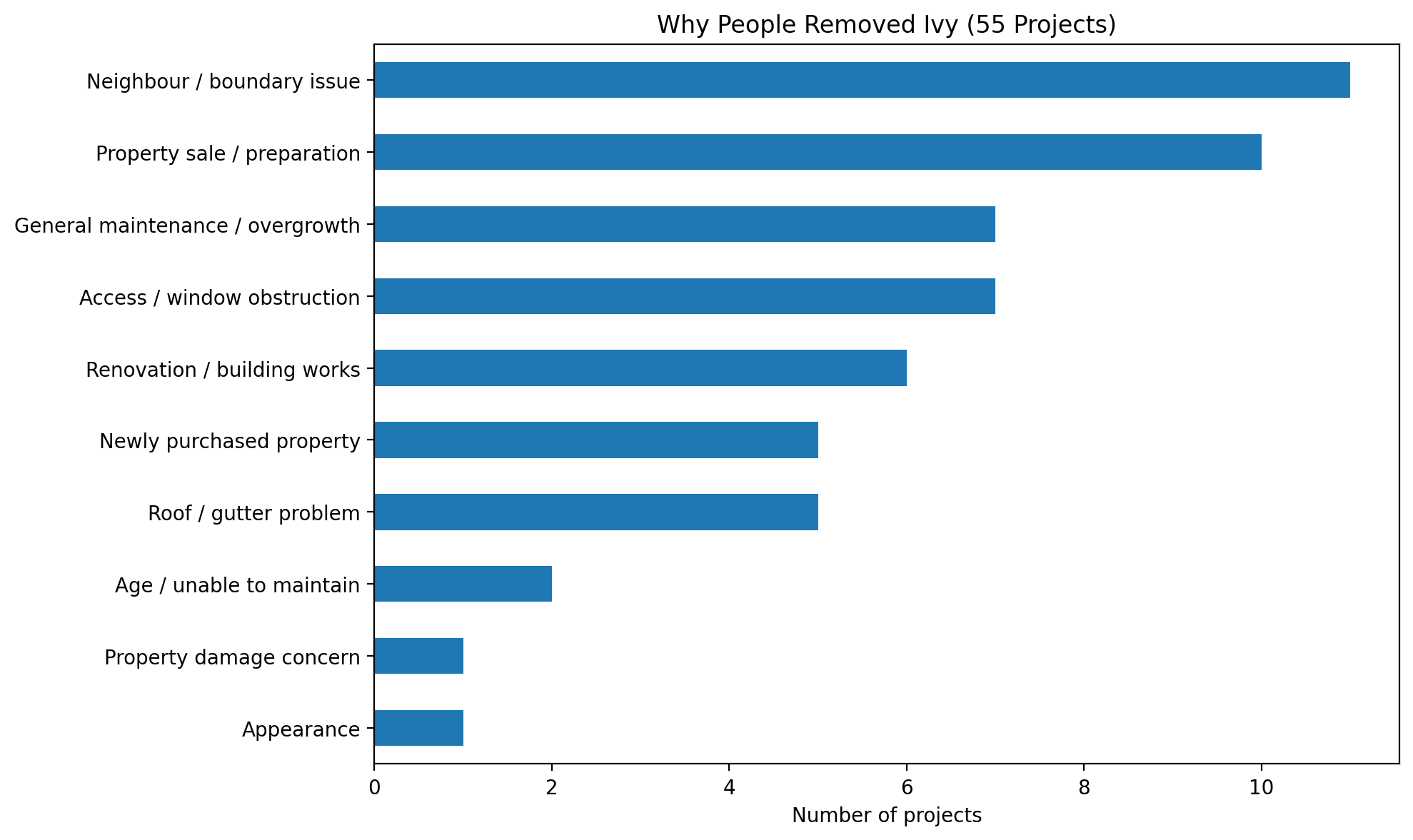
Main recorded reason for removal across the 55-project sample.
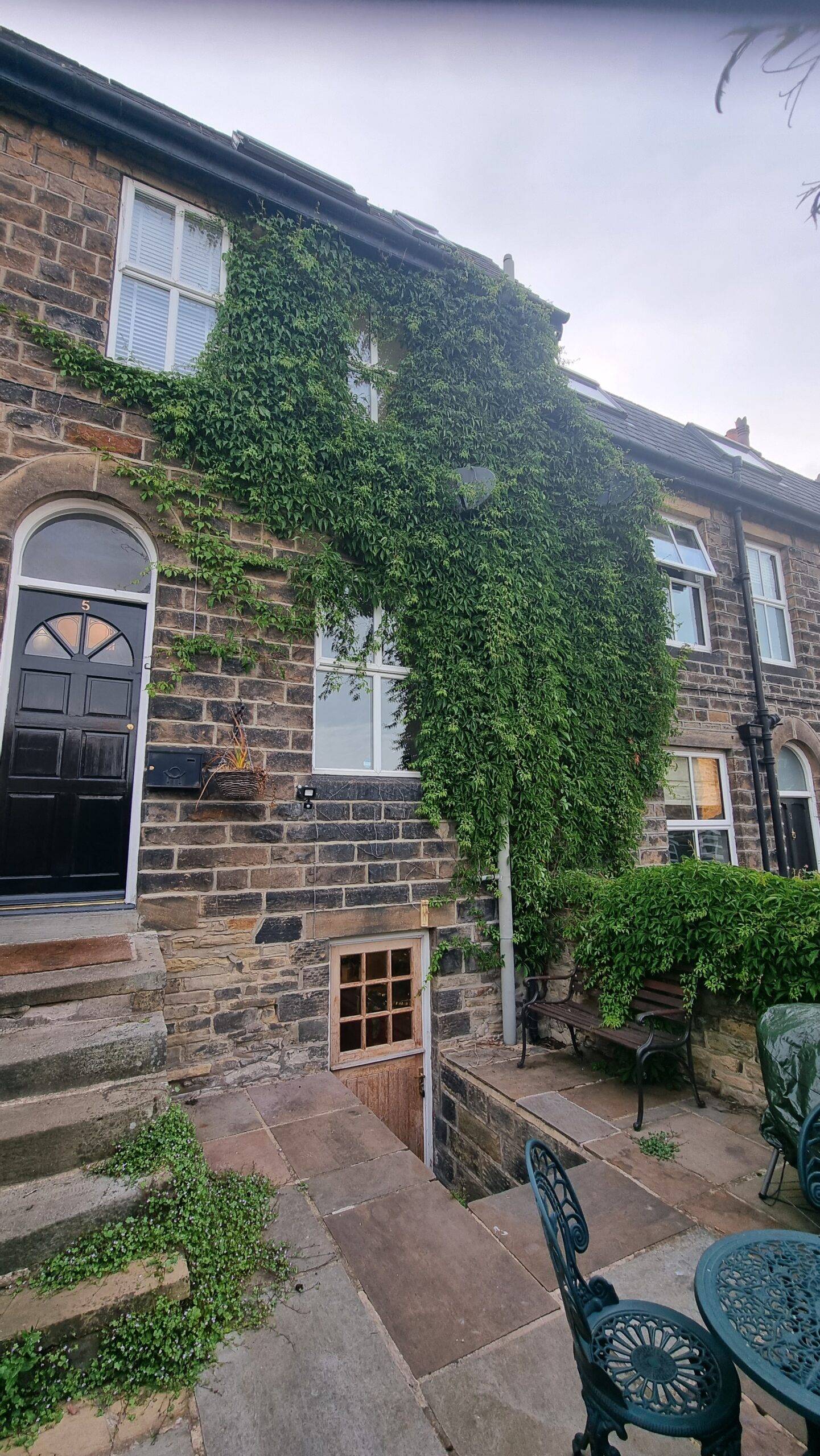
Neighbour and boundary growth was the most common main removal reason in the dataset.
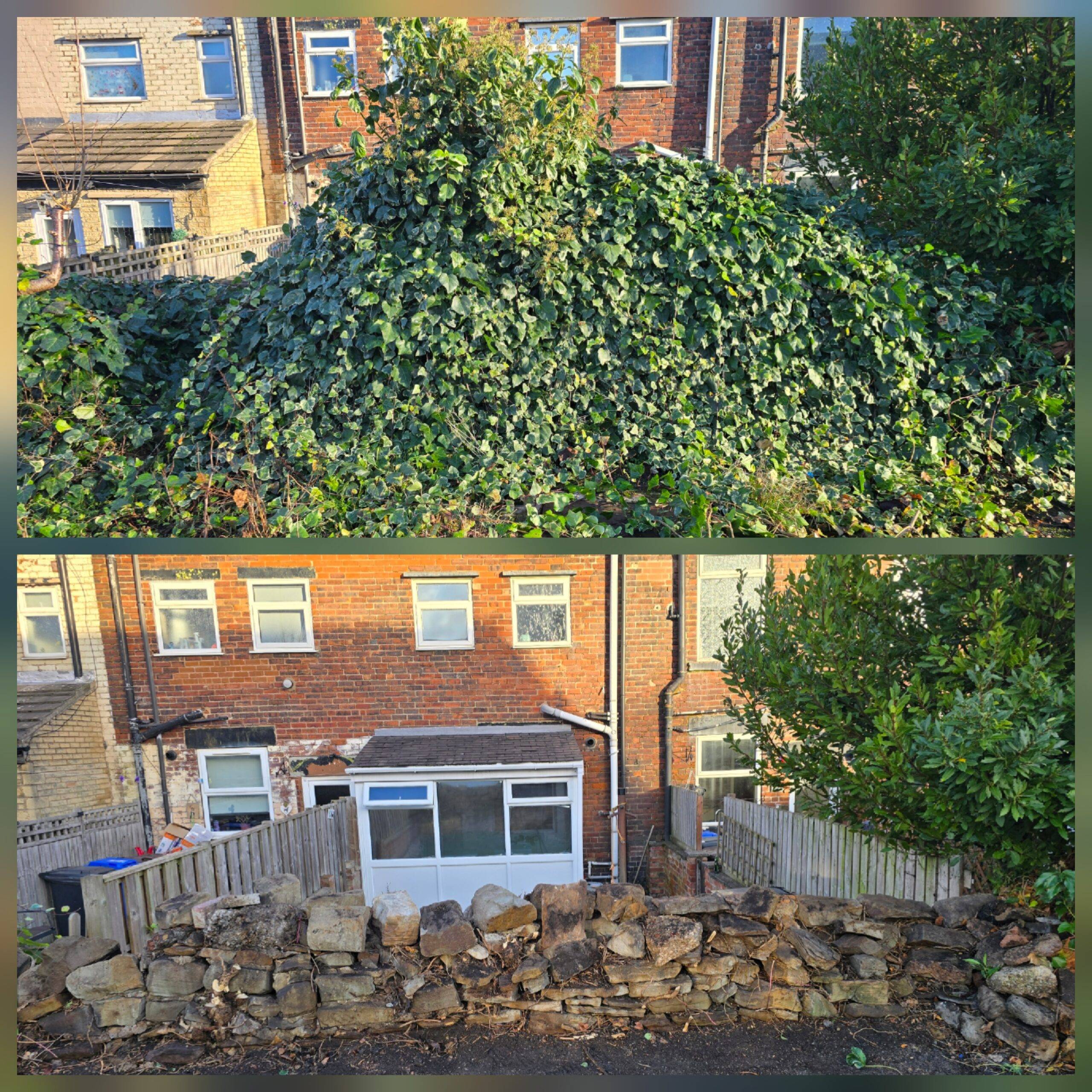
Boundary and garden-wall jobs can become dense and time-consuming despite relatively modest height.
The work was not limited to one type of property
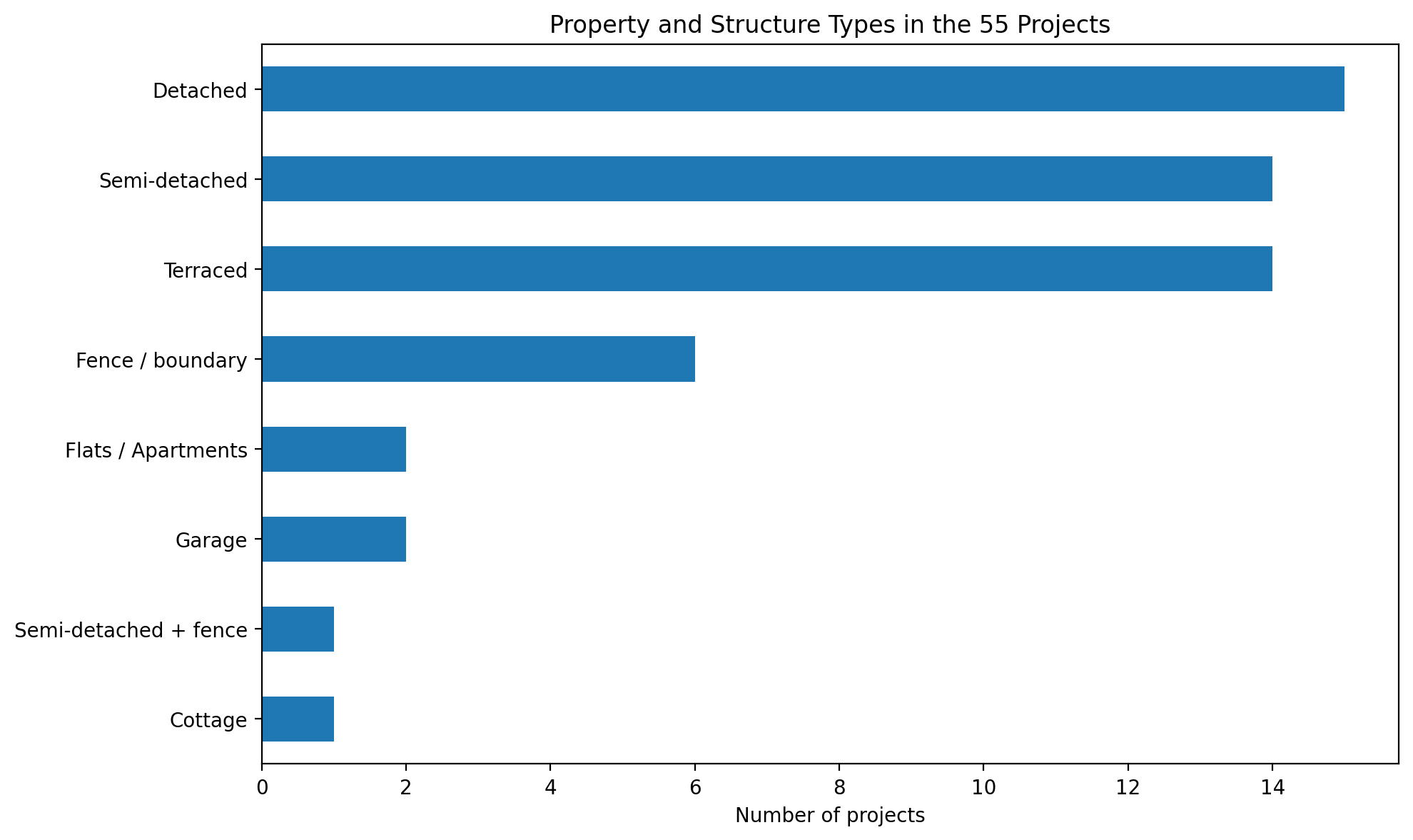
Detached, terraced and semi-detached houses made up most of the sample, but the work also included fences and boundaries, garages, flats or apartments and a cottage. This matters because the practical difficulty of ivy removal is often influenced as much by access, structure and the way the plant is interwoven as by simple building height.
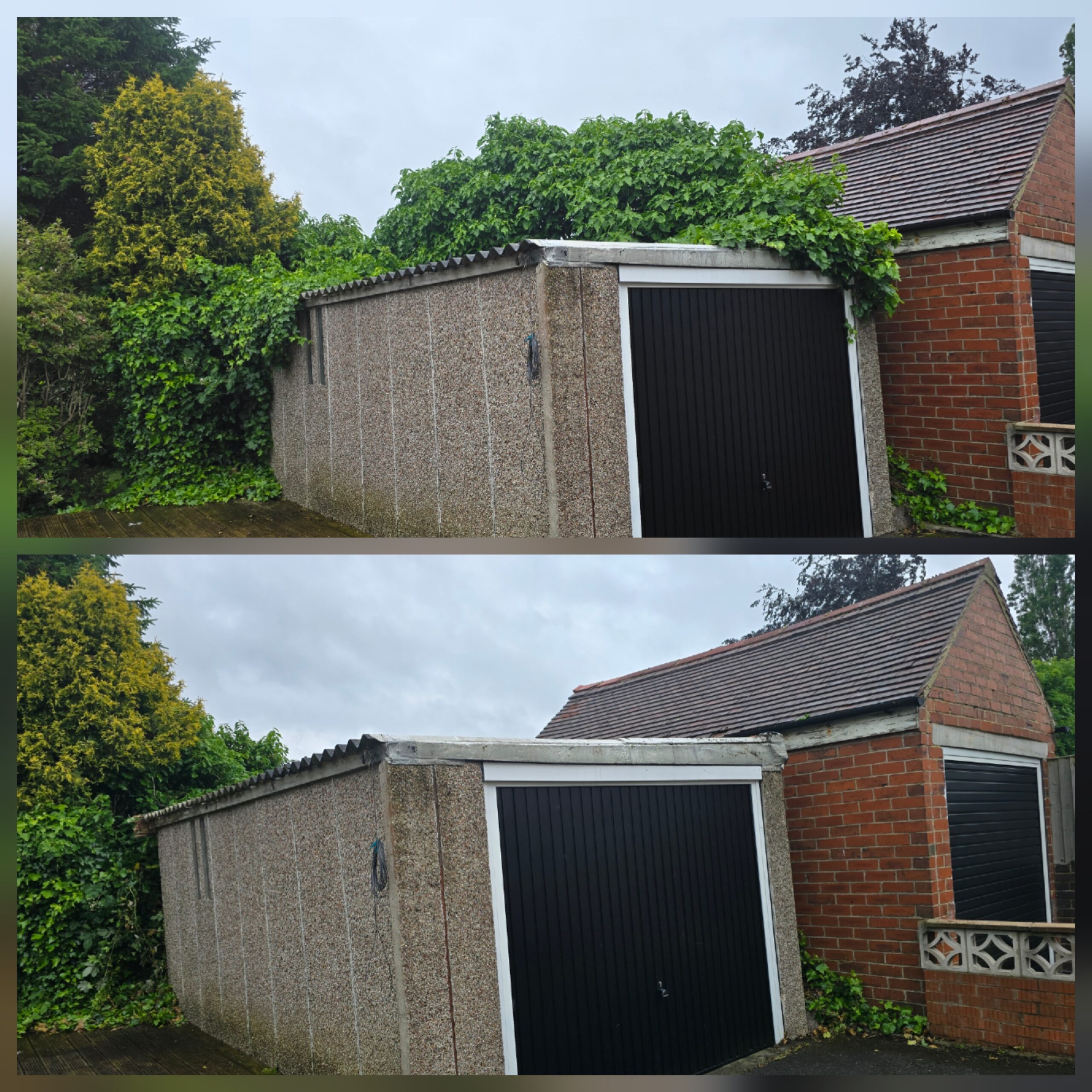
Ivy removal can involve garages, outbuildings and roof structures as well as main house walls.
Rendered and painted surfaces require particular care because existing weak finishes may be exposed.
Ivy frequently reached drainage, rooflines and openings
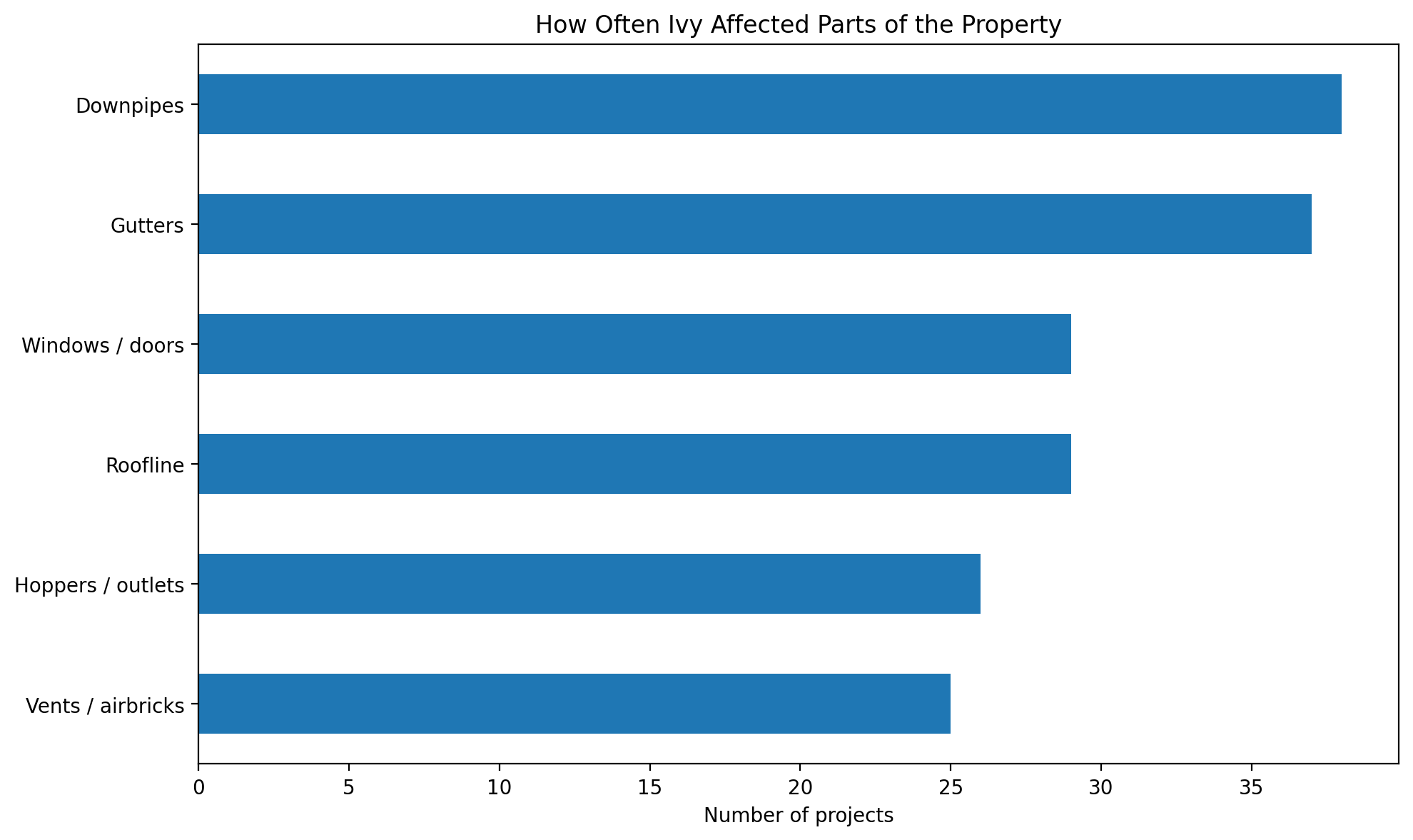
The job records show that ivy was often affecting more than the wall itself. Downpipes were affected on 38 projects and gutters on 37. Rooflines and windows or doors were each affected on 29 projects. Hoppers, bends or outlets were affected on 26 and vents or airbricks on 25.
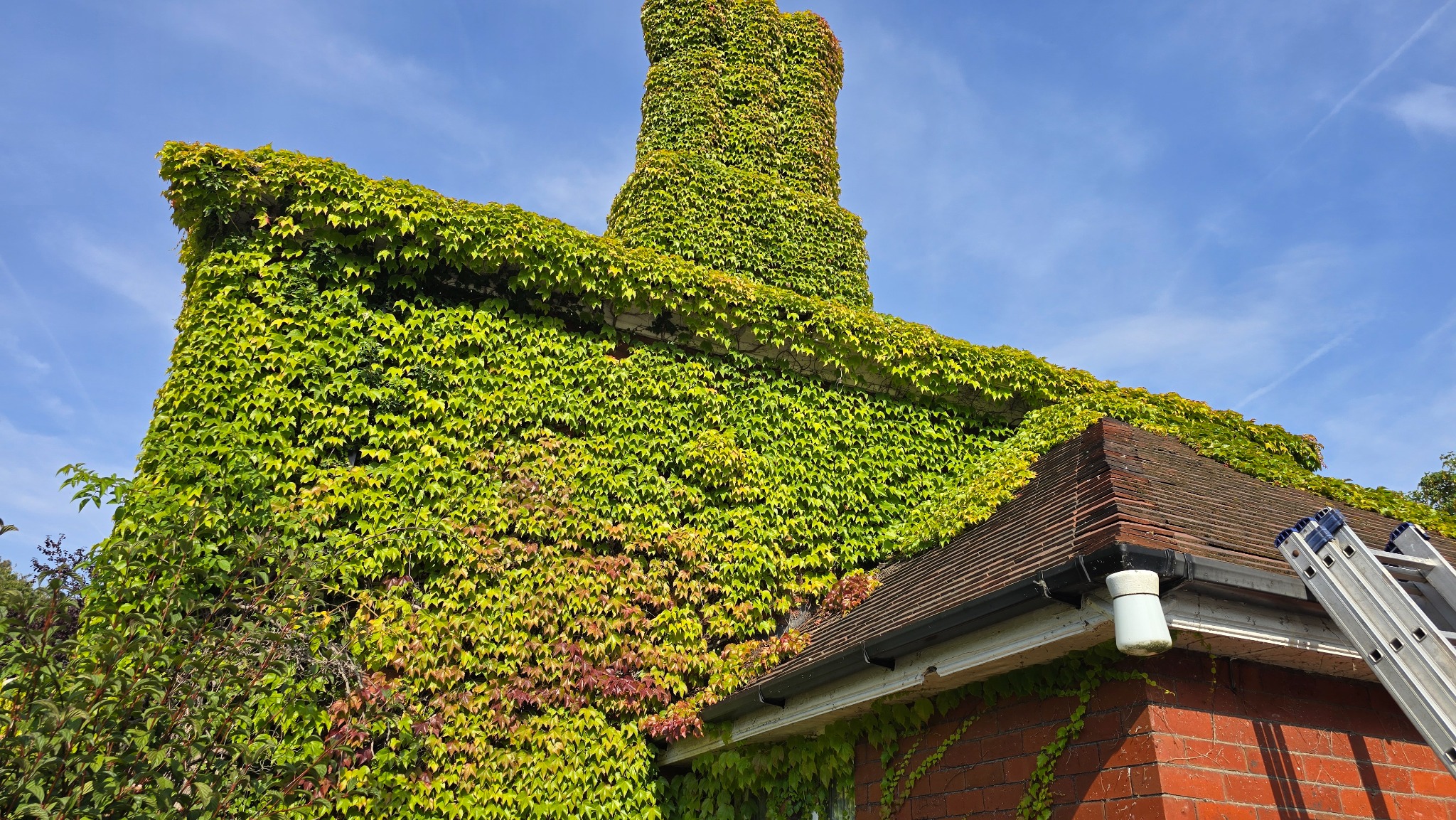
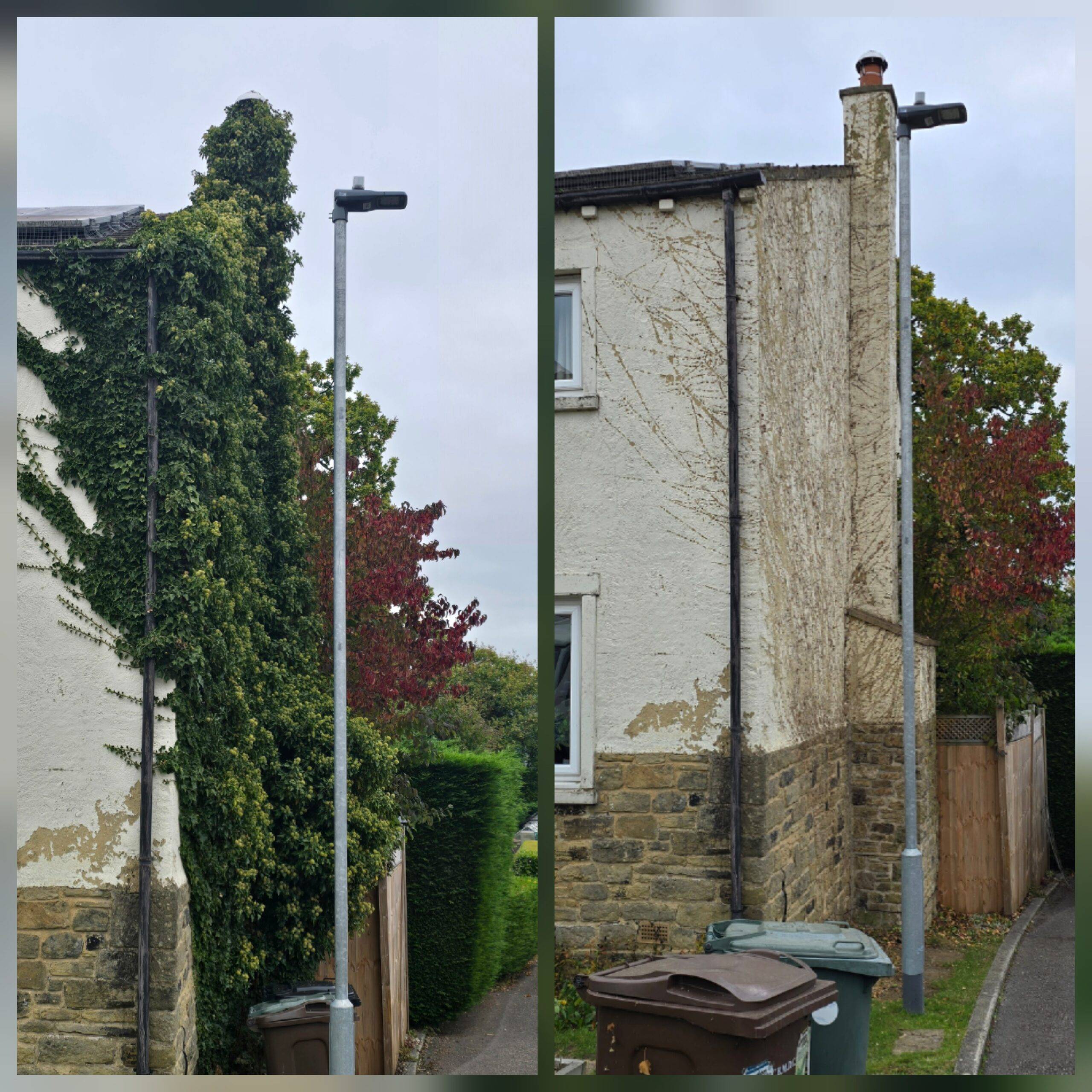
Ackworth project showing established growth around upper walls, roofline and chimney areas.
Fence and boundary-only jobs are structurally different from house jobs. Where roofline statistics are discussed, those non-building jobs should not be interpreted as properties where a roofline was available to be affected.
Most of the recorded growth was substantial
Twenty-four projects were recorded as heavy and another 10 as very heavy, meaning 34 of the 55 recent jobs fell into those two upper categories. Ten were medium, 5 light, 5 small and 1 moderate.
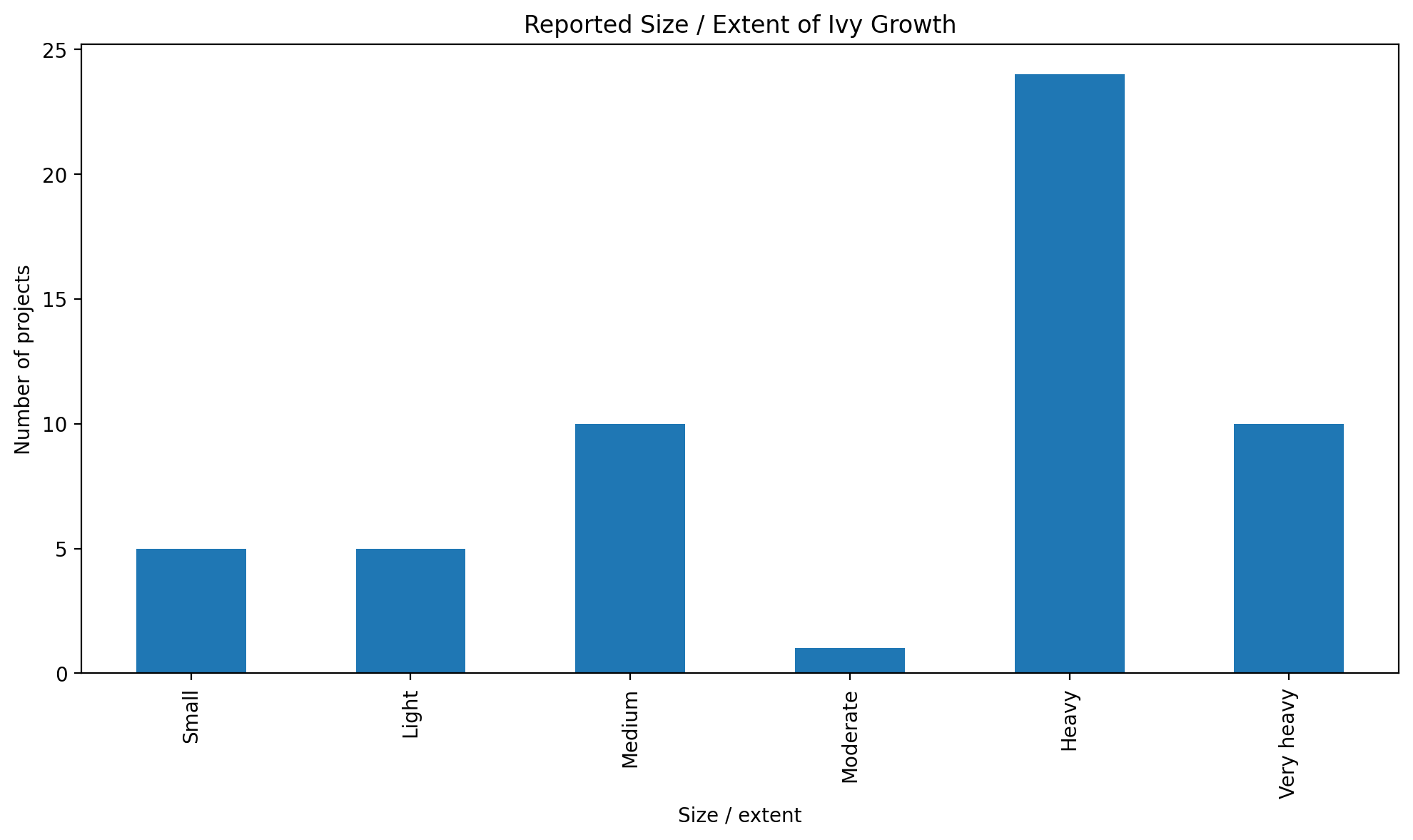
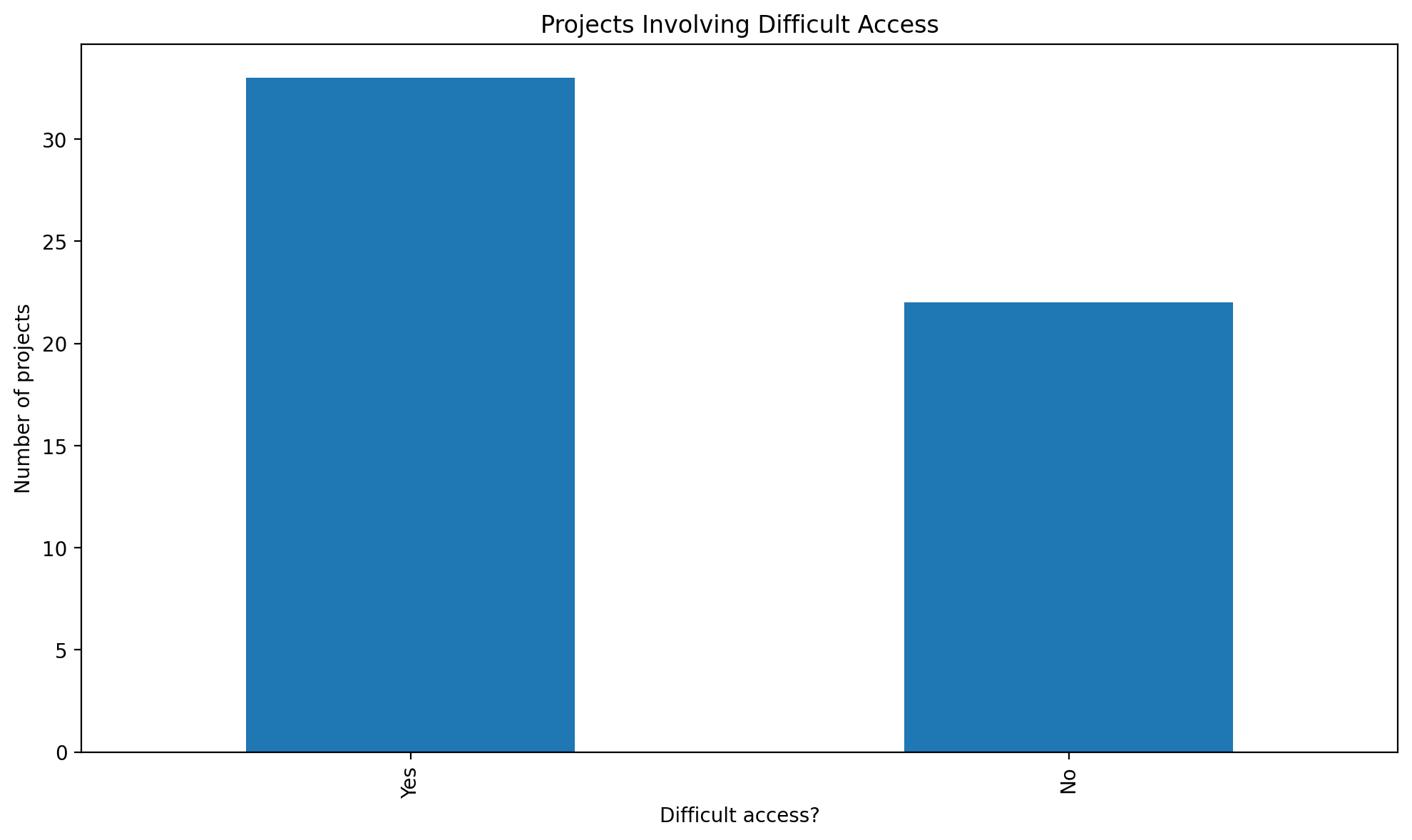
Access was also a recurring issue. Thirty-three projects were recorded as involving difficult access, compared with 22 that were not.
Waste volume was often larger than customers expected
Across the 55 projects, the recorded waste total was 385 one-tonne bags. The mean and median were both 7 bags per project. The recorded range was 2 to 14 bags, and the most common result was 8 bags, recorded on 15 projects.
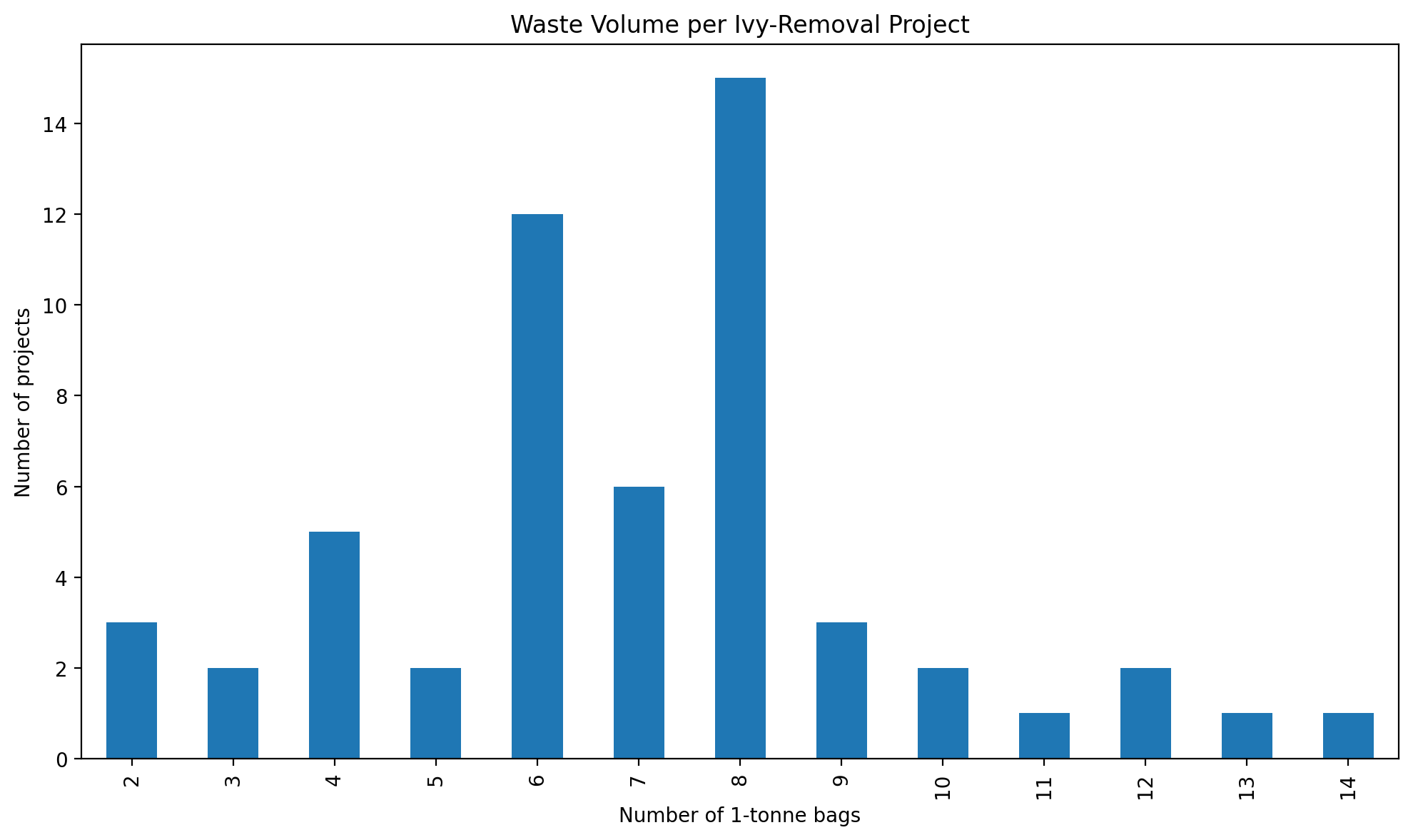
All 55 jobs recorded waste removal. The bag figure is a practical field measure of volume, not a statement of the actual weight of the vegetation.
Attachment marks were common after the main ivy was removed
Some level of visible attachment marking was recorded on 52 of the 55 projects. Thirty-five were described as light, 13 as moderate and 4 as significant. Only 3 were recorded as having no visible attachment marks.
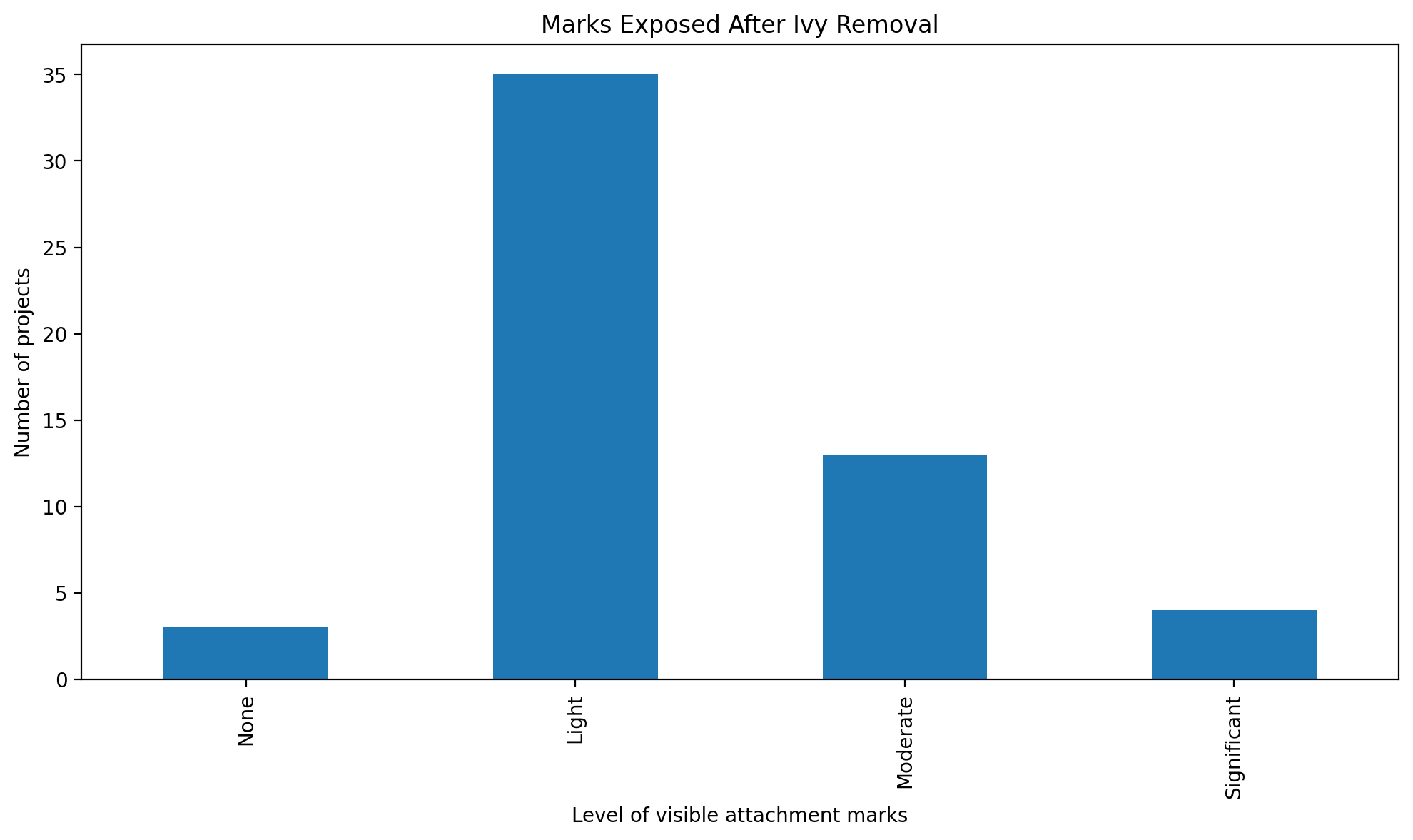
The records also describe what became visible once the vegetation had been removed. Light marks or tendrils were the most common recorded condition, followed by moisture or damp signs. Smaller numbers of jobs revealed loose paint, heavy staining, damaged mortar or pointing, render damage, a damaged roof tile or deteriorated timber.
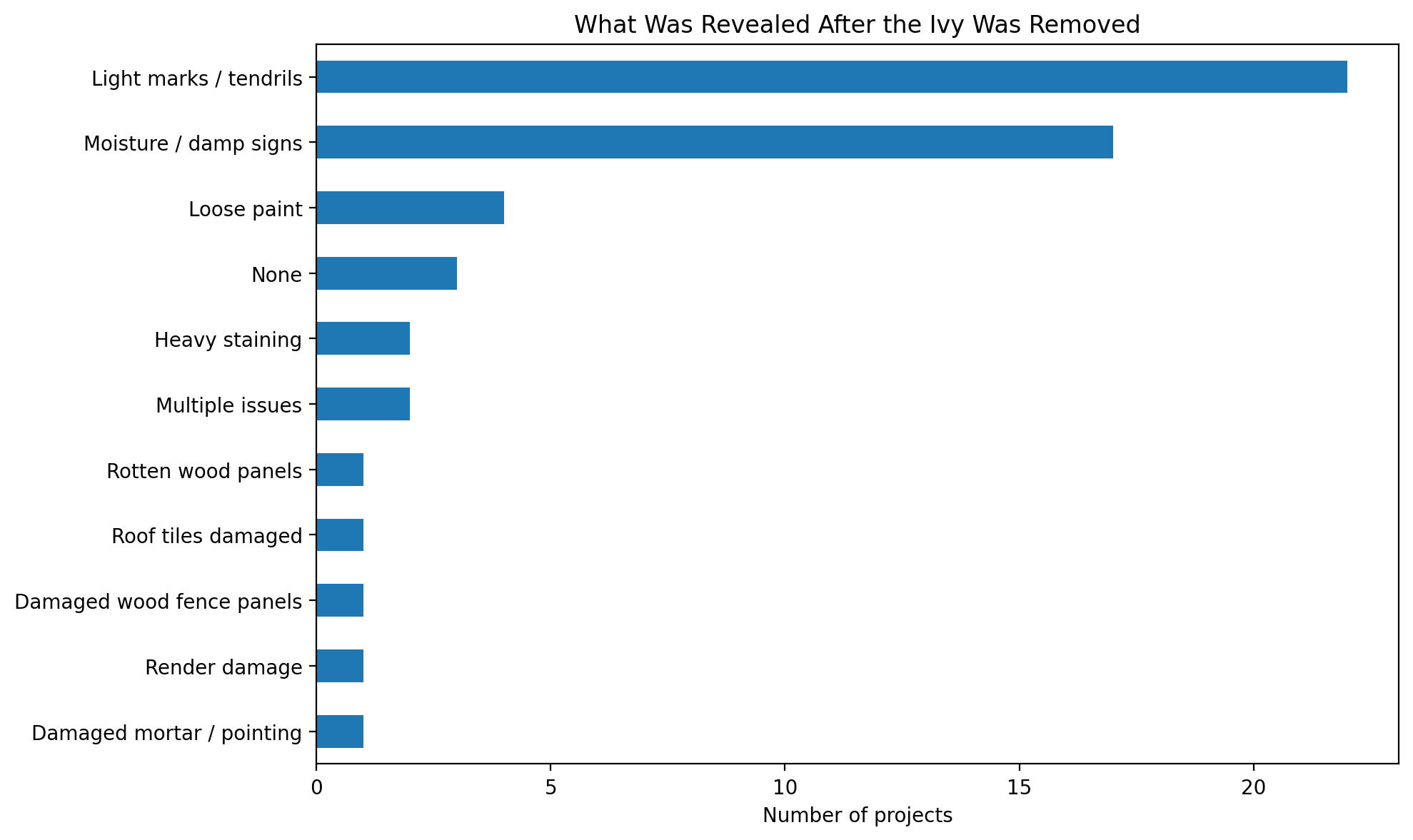
A defect becoming visible after ivy is removed does not prove that ivy caused it. Paint, mortar, render, timber or roofing may already have been deteriorated and simply concealed by the vegetation.
Dead ivy was harder to remove in every dead-ivy project we recorded
Dead ivy appeared in 8 of the 55 recent completed projects in this dataset. In all 8 of those jobs, our team found the dead ivy harder to remove than the live ivy we normally encounter on comparable work.
The difficulty was not simply the amount of growth. Once ivy had died and dried on the wall, the stems were more brittle and tended to break into smaller pieces, while the aerial attachment roots and old growth remained firmly bonded to the surface. Instead of being dismantled in larger controlled sections, more material had to be removed piece by piece, with additional work needed to clear stems, rootlets and debris that remained attached.
This has been consistent with our wider field experience. Where the condition of the wall and access allow it, we generally find live ivy easier to remove in controlled sections than ivy that has already been killed and left to dry on the building. This is a practical observation from our own work rather than a claim that every property or wall surface will behave identically.
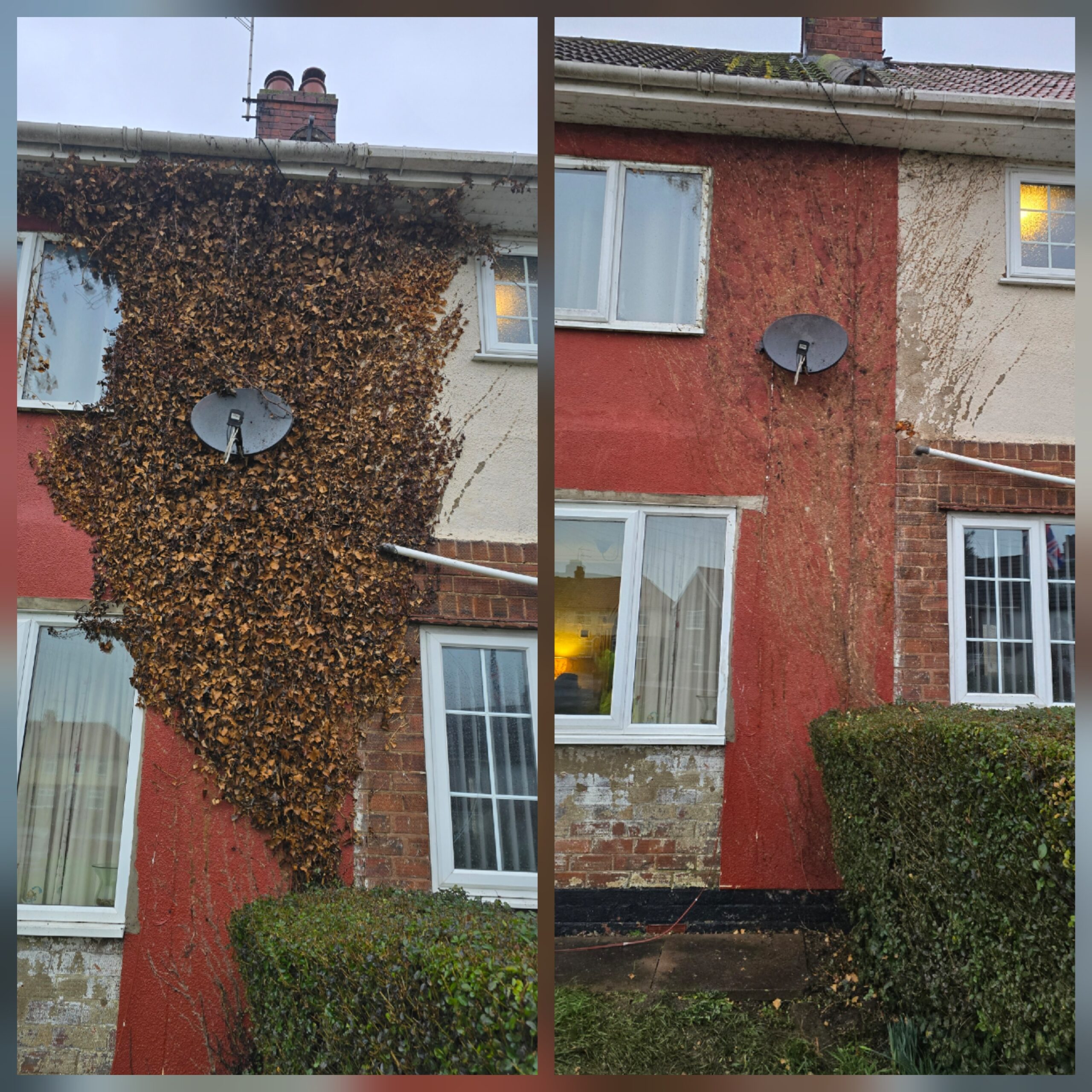
Worksop project: the dead ivy remained strongly attached and had to be removed slowly rather than simply pulling away from the wall.
University of Oxford research reached a similar practical conclusion
Research commissioned by English Heritage, now Historic England, was undertaken by the University of Oxford's School of Geography and the Environment. In the project's ivy-removal case studies, the researchers concluded that it was best to remove ivy directly rather than leave the plant to die first.
In the Godolphin case study on stone walls with soft lime-based mortars, the report found that simply removing the ivy gently by hand was the preferred method. It also reported that poisoned ivy could pull off mortar and require additional work to remove the plant completely. The researchers therefore did not find that killing the ivy first made removal easier.
This research was carried out in a heritage-conservation setting, so it should not be treated as a measurement of every modern house wall. However, its removal findings are consistent with what we have observed on our own dead-ivy projects.
Historic England's current guidance also states that ivy's attachment system continues to work even when the plant is dead. It does not recommend cutting ivy at ground level and simply leaving it to die, and advises removing stems carefully in small sections.
We have also documented a completed job where dead ivy remained exceptionally difficult to detach from the wall.
Root and stump treatment varied by access and customer requirements
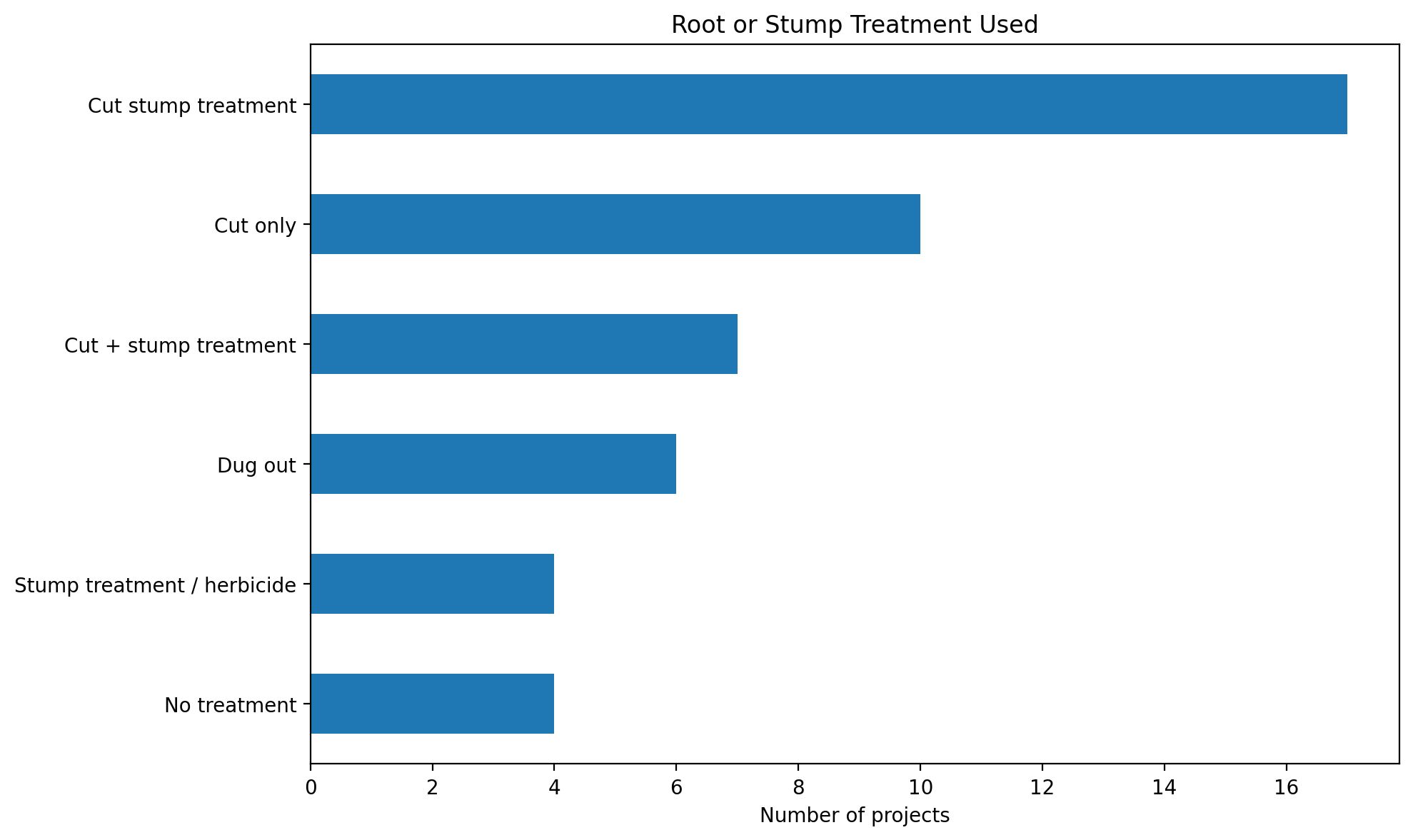
The base of the plant is not equally accessible on every job. Some projects allowed the stump to be dug out, some involved cutting only, and others included an agreed cut-stump or herbicide treatment. Older job records used slightly different labels for similar operations, so this chart should be read as a record of how the work was logged rather than as a tightly standardised treatment study.
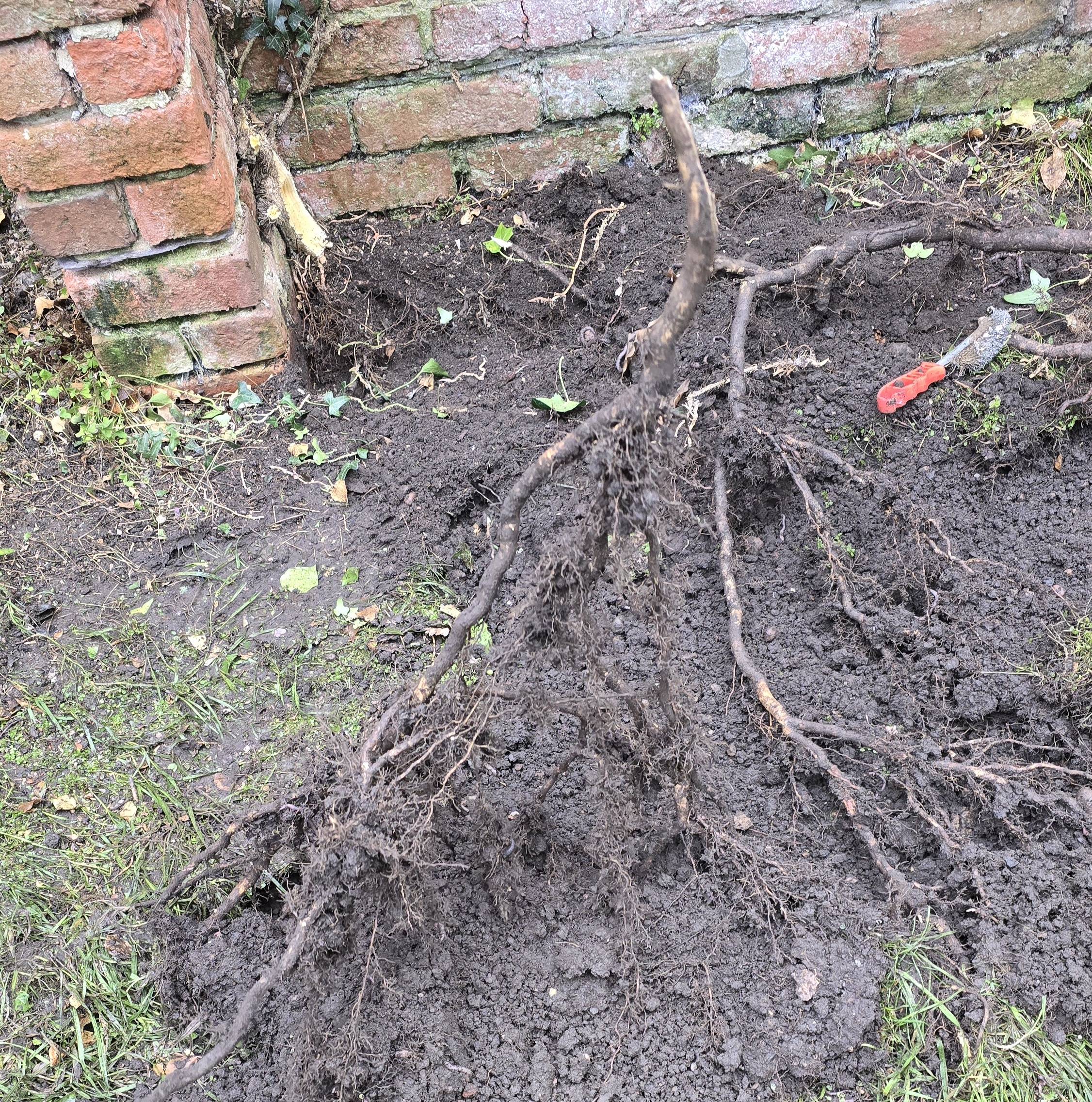
Ivy roots and runners exposed in topsoil. Root access can vary significantly from property to property.
Most customers were local homeowners, but remote and landlord work was significant
Thirty-seven of the 55 projects were recorded as local-homeowner jobs. Eight involved a remote UK client, 7 a landlord, 2 an EU-based client and 1 a commercial client. These categories help explain why photographs, videos, clear quotations and remote communication are often important parts of professional ivy-removal work.
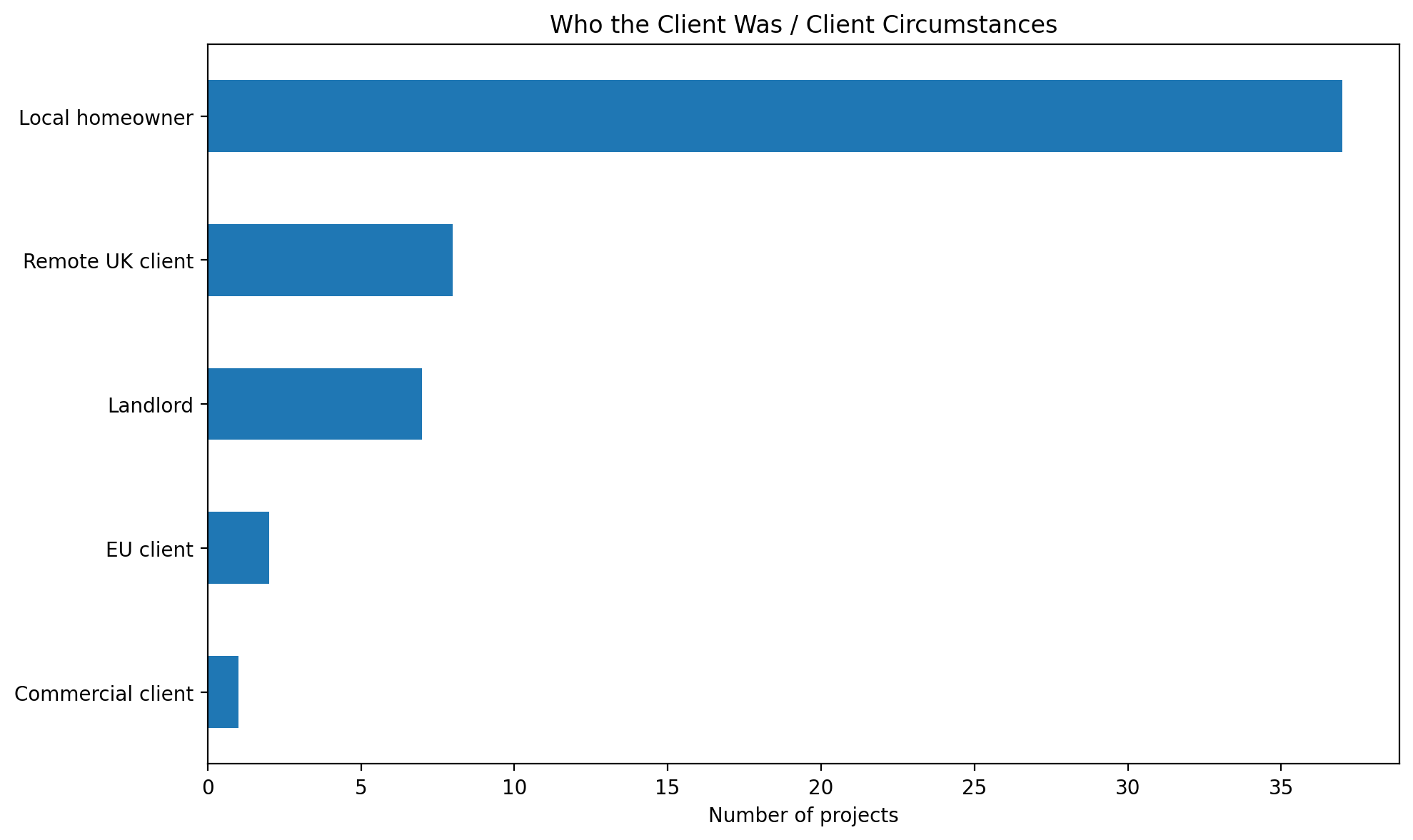
Remote-client cases can involve landlords, owners living elsewhere in the UK, or owners living abroad. In these situations, project photographs and video evidence can be especially useful because the person arranging the work may not be present at the property.
Customer age groups and gender in the 55-project sample
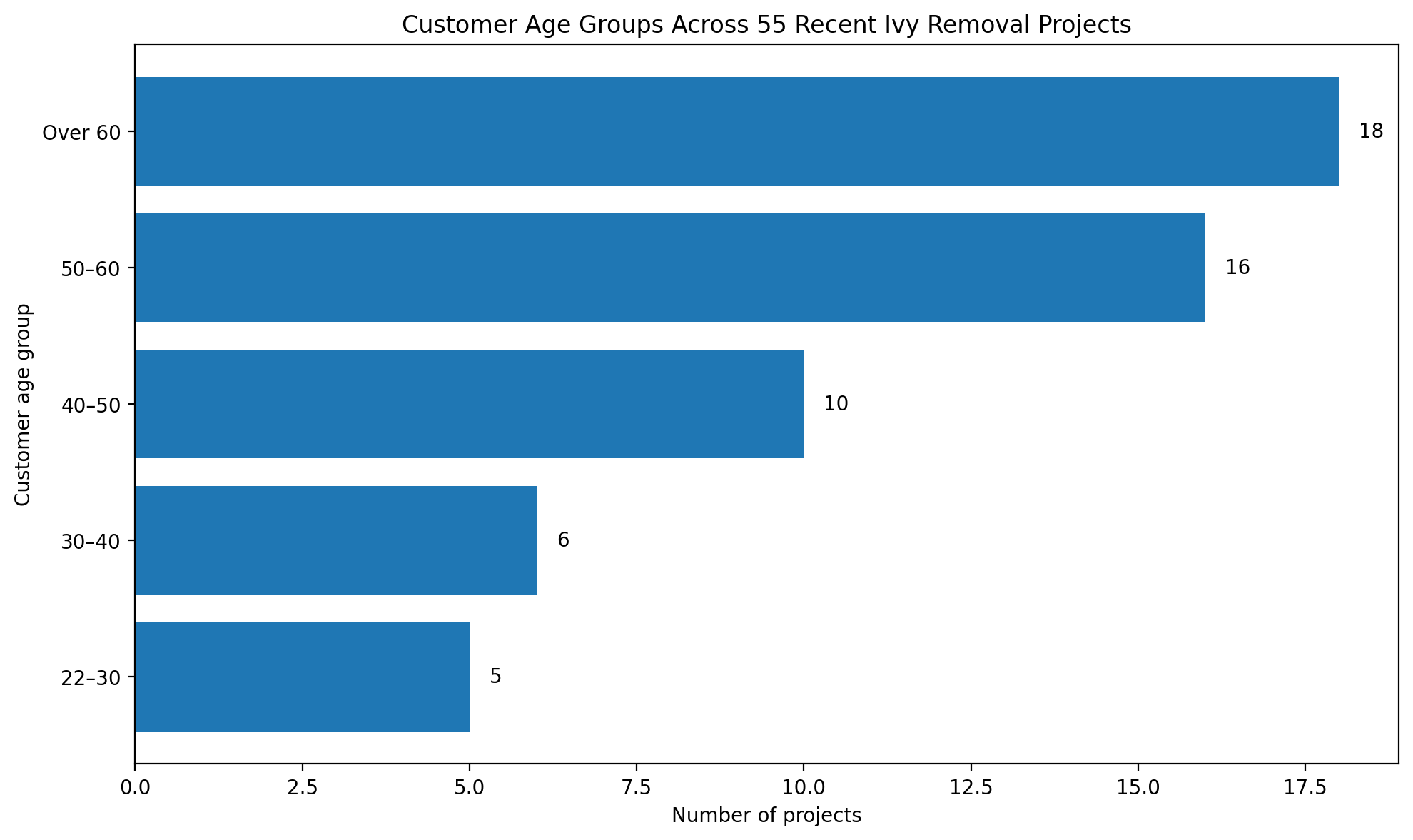
Customer age was recorded approximately rather than as verified date-of-birth data. The largest groups in this sample were customers over 60 and customers aged approximately 50–60.
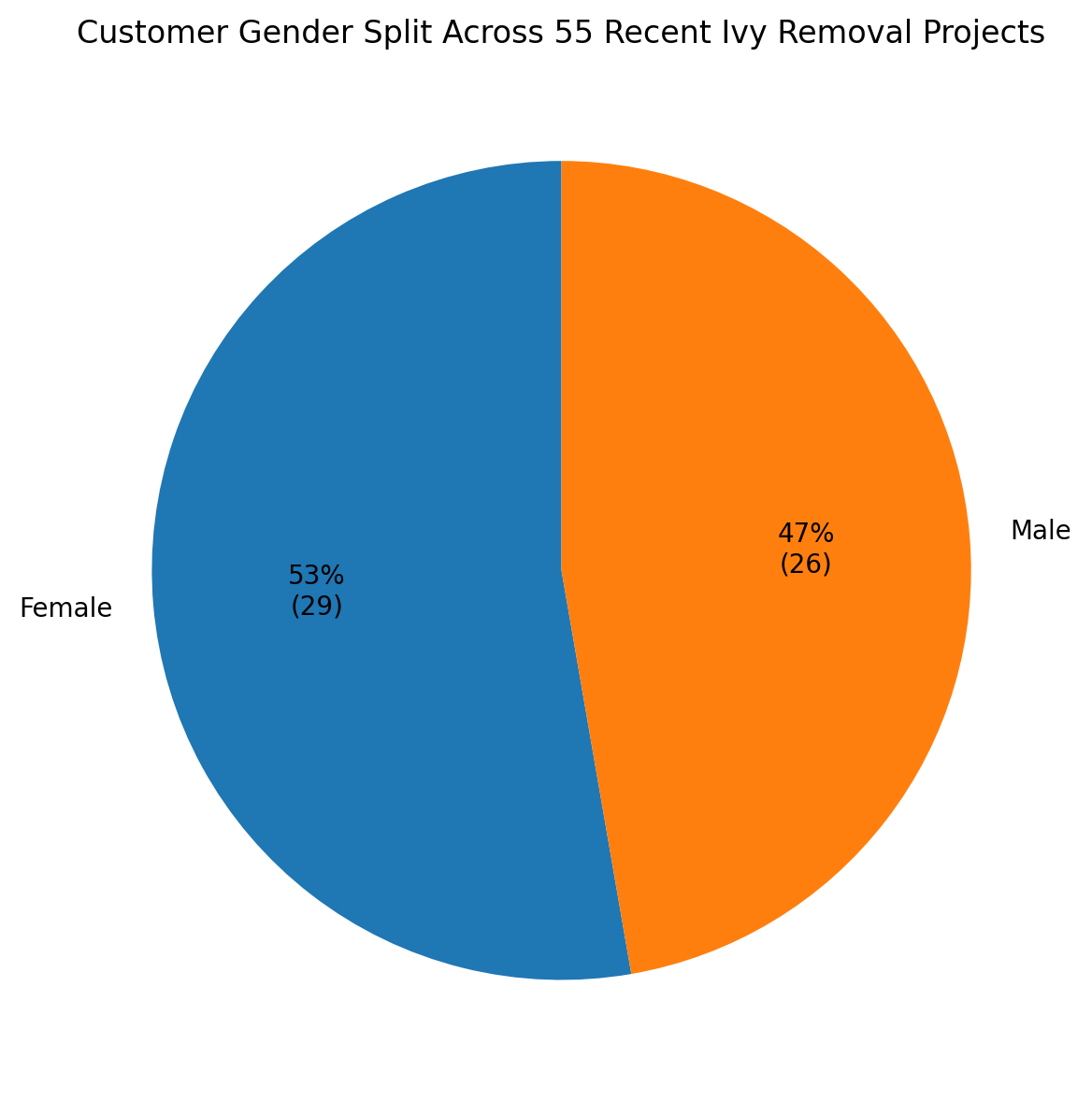
Across the 55 jobs, the recorded gender split was 29 female customers and 26 male customers. This is included as descriptive information only; the difference is small and is not treated as a major finding.
Most customers chose full removal rather than reduction
Forty-three projects were recorded as full removal and 10 as partial removal or reduction, with 2 records left blank for this field. Partial reduction can be appropriate where the customer wants to retain some ivy but reduce its spread around a boundary, window, roofline or another vulnerable area.
Large mature growth can involve several elevations and building elements at the same time.
What these 55 recent projects suggest in practice
Several themes repeat across the dataset. Customers often call for professional help only once ivy has moved beyond ordinary garden maintenance and reached boundaries, windows, drainage, rooflines or difficult-access areas. Waste volume is frequently substantial, and the condition of the surface underneath cannot always be judged accurately until the growth is removed.
The figures also show why apparent height alone is not a reliable measure of difficulty. Dense boundary ivy, restricted access, interwoven growth, heavy woody stems, fragile surfaces and the need to move large volumes of green waste can all make a relatively low-level job labour-intensive.
Another practical point is that professional removal does not necessarily mean stripping every trace of aerial root or staining from a wall. The main vegetation can be removed while fine tendrils, rootlet marks, colour differences or previously hidden defects remain.
What this report does not claim
- The 55 projects are not claimed to be a statistically representative sample of every UK property with ivy.
- The dataset reflects projects that reached the point of professional removal through Trusted Cleanerz, so it naturally contains more substantial or difficult cases than would be expected among all properties where ivy grows.
- Conditions exposed after removal are not automatically conditions caused by ivy.
- Age bands are approximate and should be treated as descriptive only.
- Root and stump treatment categories were taken from operational job records and were not originally designed as research variables.
- Waste is recorded by bag volume, not verified weight.
First-party project data and independent guidance
The numerical findings in this report come from Trusted Cleanerz Ltd’s own recent completed ivy-removal projects. Independent sources are included only where they help put specific observations into context.
- Trusted Cleanerz Ltd: structured records from 55 recent completed ivy-removal projects, supported by quotations, job notes, photographs and videos.
- Historic England — Ivy on Walls
- Historic England — Managing Ivy Growth
- Royal Horticultural Society — Ivy on Buildings and Fences
About this report
Trusted Cleanerz Ltd provides specialist ivy removal for residential and commercial properties. This report is intended to document what we are seeing in real completed work and to provide a growing first-party evidence base around professional ivy removal.
As more completed projects are added to the structured dataset, future editions can expand the sample and track whether the patterns reported here remain consistent.
Professional ivy removal services | Contact Trusted Cleanerz