Professional Ivy Removal Tips: Safety, Access & Controlled Removal
Start With the Property, Not the Plant
One of the biggest mistakes is beginning to pull or cut the visible ivy before understanding what it is attached to. Dense established growth can hide much more than a wall.
Inspect
Check the roofline, gutters, wall condition, windows, cables, pipework and where the main ivy stems originate.
Plan access
Decide whether the vegetation can genuinely be reached from a safe, stable position rather than automatically reaching for a ladder.
Control the removal
Think about how individual sections will be cut, detached and moved before releasing large amounts of vegetation.
Assume the Ivy Is Hiding Something
Mature ivy can completely cover parts of a property that have not been visible for years. Until the vegetation is progressively removed, it may be impossible to see exactly what is behind it.
- Electrical or communications cables
- Gutter brackets
- Downpipes and vents
- Lights and security equipment
- Loose mortar or render
- Damaged fascia or timber
- Roof tiles
- Old wall fixings
A Ladder Is Not Automatically the Right Access Method
The fact that ivy is high on a wall does not mean that an ordinary leaning ladder is automatically suitable.
Consider the height, duration of the work, position of the building, ground conditions and the amount of force that may be required.
Never improvise a ladder base with loose stones or bricks
A ladder needs a firm and stable base. If the ground is uneven, do not try to compensate by placing a loose stone, brick, timber offcut or similar object underneath one ladder foot.
A wide stabiliser or crossbar can improve stability, but it does not turn unsuitable ground into a safe working surface.
Check the ground every time the ladder moves
The previous ladder position may have been suitable, but the next one may not be. Recheck the surface whenever access equipment is repositioned.
The UK’s Health and Safety Executive provides detailed guidance on the safe use of ladders and working at height.
Do Not Pull Hard on Ivy From a Ladder
Ivy can be deceptive. A mature section may initially feel extremely firmly attached, encouraging someone to pull harder.
The problem comes when the attachment suddenly releases.
The resistance can disappear almost instantly, causing the person pulling it to move backwards or lose balance.
The harder you pull, the bigger the unexpected movement can be.
Never depend on the ivy itself for support or balance. If a section requires excessive pulling force from a ladder, reconsider how it is being removed.
Remove Mature Ivy Section by Section
Controlled removal is generally much safer than trying to tear an entire mass away from the building.
Cut
Isolate a manageable section rather than releasing a huge mass.
Reduce
Gradually reduce the vegetation and control where its weight is going.
Inspect
Look at the newly exposed surface before moving onto the next section.
Keep Cut Ivy Away From the Bottom of the Ladder
Ivy waste accumulates extremely quickly during a large removal. It should not be allowed to pile up underneath or around access equipment.
The obvious issue is the trip hazard. There is another important problem: once the ground is covered by vegetation, you can no longer properly see the surface supporting the ladder.
A pile of cut ivy can conceal uneven ground, a displaced ladder foot, soft soil or objects underneath.
Tools Commonly Used for Building Ivy
Building ivy is normally a controlled dismantling job. The fastest cutting tool is not necessarily the safest or most useful tool when vegetation is wrapped around a property.
Secateurs
Useful for small stems and precise cuts close to sensitive areas.
Loppers
Useful for thicker stems while retaining good control over the cut.
Hand Pruning Saw
Useful where stems are too large for loppers but controlled cutting is still important.
A chainsaw is not automatically necessary because the ivy is thick
Around cables, roof edges, gutters, windows and building surfaces, controlled hand tools can often provide much better precision.
Where a chainsaw is genuinely required for professional work, appropriate training and competence are essential.
Think About Where the Ivy Will Go Before You Cut It
A section that is easy to detach can still cause damage once released. Before cutting high-level vegetation, consider what is immediately below.
- People
- Conservatory roofs
- Windows
- Lower roof sections
- Vehicles
- Neighbouring property
- Garden furniture
- Plants to be retained
Large vegetation should be reduced into manageable pieces rather than simply released and allowed to fall uncontrolled.
Be Prepared for Spiders and Insects
Dense mature ivy provides sheltered spaces for spiders, insects and other small creatures.
When the vegetation is disturbed, something may suddenly move onto your gloves, clothing, arms or face.
For someone who is particularly frightened of spiders or insects, the biggest danger while working at height may be the instinctive reaction: suddenly leaning backwards, letting go or making an uncontrolled movement.
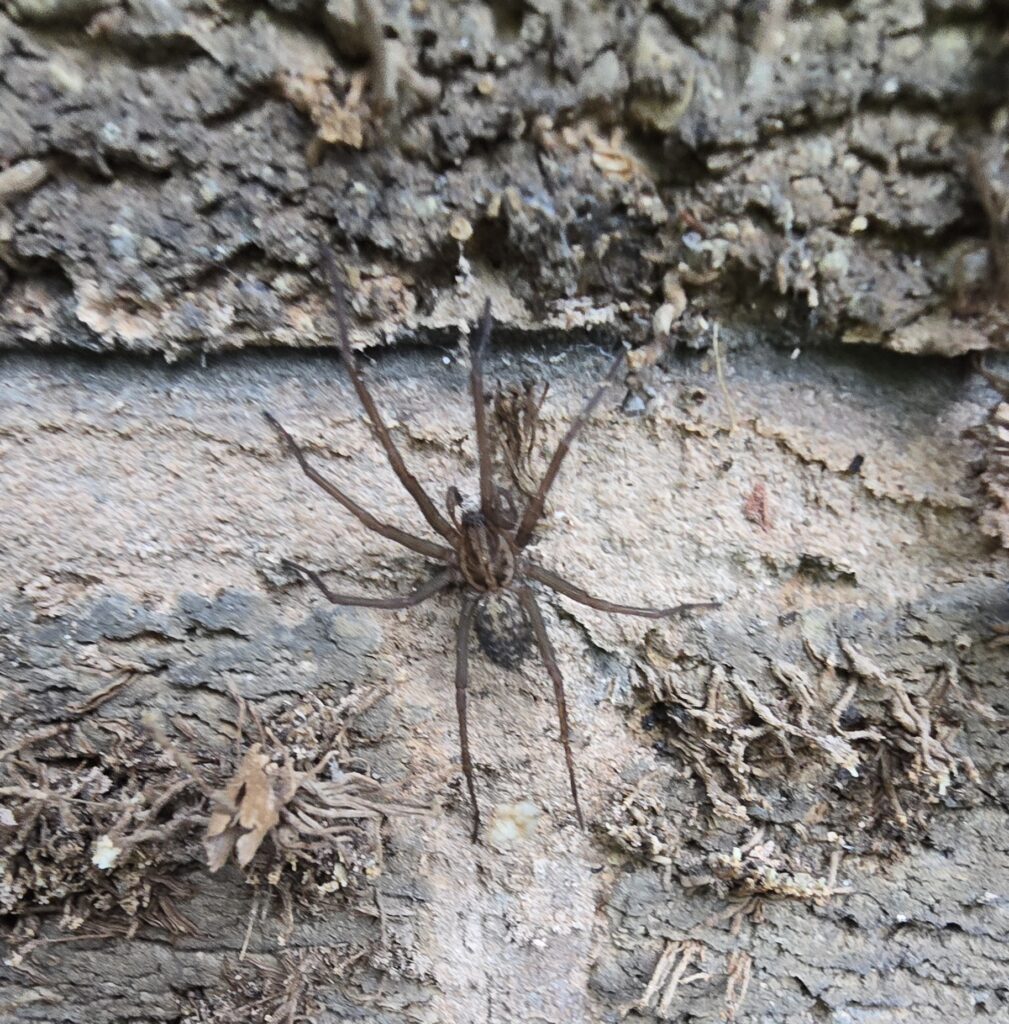
What Pests Can Be Hiding Behind Ivy?
Check Dense Ivy for Active Bird Nests
Established ivy can provide nesting habitat for birds, so dense growth should be checked before substantial cutting begins.
In the UK, wild bird nests are protected by law while they are being built or are in use.
If an active nest is discovered, do not simply continue cutting through the vegetation. Stop and establish what action is appropriate.
Check Whether the Ivy Belongs to Your Neighbour
The visible ivy on your property may originate from a plant rooted in the neighbouring garden.
Establish where the main stems are located before carrying out major work. If the job would involve entering the neighbour’s garden, positioning access equipment on their property or carrying out work on their side of the boundary, speak to them and obtain permission first.
Dead Ivy Can Be Harder Than It Looks
Cutting the main stem does not mean that established ivy will simply drop from the building.
Once dead, leaves may disappear while woody growth and aerial attachment points remain firmly bonded to brick, stone or other surfaces.
Dead ivy remained attached years after being cut
On one of our Rotherham projects the ivy had already been cut long before removal, but substantial dead growth remained strongly attached to the property and still required controlled manual removal.
View the dead ivy removal project →Sometimes the Correct Decision Is Not to Use a Ladder
Restricted spaces, neighbouring structures, poor ground position or the shape of the building can prevent suitable ladder access.
Heavy ivy with restricted access in Rotherham
On a particularly heavy ivy removal project, the available space between properties made normal ladder positioning unsuitable. Alternative access was needed to reach the upper growth and roofline.
See the Rotherham ivy removal project →Inspect the Building — Don’t Just Inspect the Ivy
Removal may reveal parts of the property that have been hidden for years. This is the time to look carefully at the newly exposed areas.
- Mortar and pointing
- Render
- Gutters and brackets
- Downpipes
- Fascia
- Roof tiles
- Windows and frames
- Cables and fixtures
Do not expect every ivy mark to disappear
Fine attachment rootlets, tendrils, staining and marks can remain after the main vegetation has been removed.
Trying to aggressively scrape every remaining mark away can sometimes damage the surface underneath. Further cleaning, restoration, repainting or repointing should be assessed separately according to the surface.
When Should DIY Ivy Removal Stop?
Small, accessible growth close to ground level can be very different from mature ivy several metres up a building.
Stop and reconsider the method if you cannot comfortably reach the ivy from a stable working position, cannot position access equipment safely, need to pull forcefully at height or cannot see what the vegetation is attached to.
If it feels as though you need to fight the ivy, stop.
More pulling force is not necessarily the answer. Cutting a smaller section, changing the access method or seeking professional assistance may be the safer option.
Related Ivy Removal Guides
Professional Ivy Removal FAQ
Should you simply pull ivy straight off a wall?
Large mature sections should generally be reduced gradually. Pulling aggressively can release a large amount of vegetation unexpectedly and may also place force on gutters, fixtures or weak areas underneath.
Can pulling ivy make you fall from a ladder?
It can contribute to a fall if someone pulls forcefully and the vegetation suddenly releases. The unexpected loss of resistance can cause a person to move backwards or lose balance.
Can I put a brick or stone underneath one ladder foot?
Loose bricks, stones or timber should not be used as an improvised solution for unsuitable ground. Access equipment should be positioned on a firm and stable surface and used according to its instructions.
Do I need a chainsaw for very thick ivy?
Not necessarily. Secateurs, loppers and hand pruning saws can provide considerably more control around buildings. Chainsaw work introduces additional hazards and requires appropriate competence and training.
Is dead ivy easier to remove?
Not always. Dead ivy can remain strongly attached long after the leaves disappear, especially where mature woody growth has become firmly bonded to masonry.
Should ivy be checked for birds before removal?
Yes. Dense established ivy may contain active nests. In the UK, wild bird nests have legal protection while being built or in use.
Need Help With Established or High-Level Ivy?
We undertake specialist ivy removal projects across the UK, including mature growth covering walls, rooflines, gutters and more complicated areas where access needs careful planning.
For an initial assessment, send photographs showing the complete affected area, access and approximate height together with the property postcode.