Removing Dead Ivy Firmly Bonded to Brickwork in Rotherham
The ivy had been cut at its base around three years earlier, but the dead woody growth remained firmly attached to the brick wall, chimney and roofline.
Watch the full process and see why ivy can remain strongly bonded to brickwork years after the plant has died.
The Homeowners Expected the Ivy to Fall Away Naturally
The ivy had previously been cut at its base. The homeowners believed the dead growth would dry, weaken and gradually fall away from the building.
Three years later, the leaves had disappeared, but the thick woody stems and smaller attachment points were still firmly bonded to the brickwork.
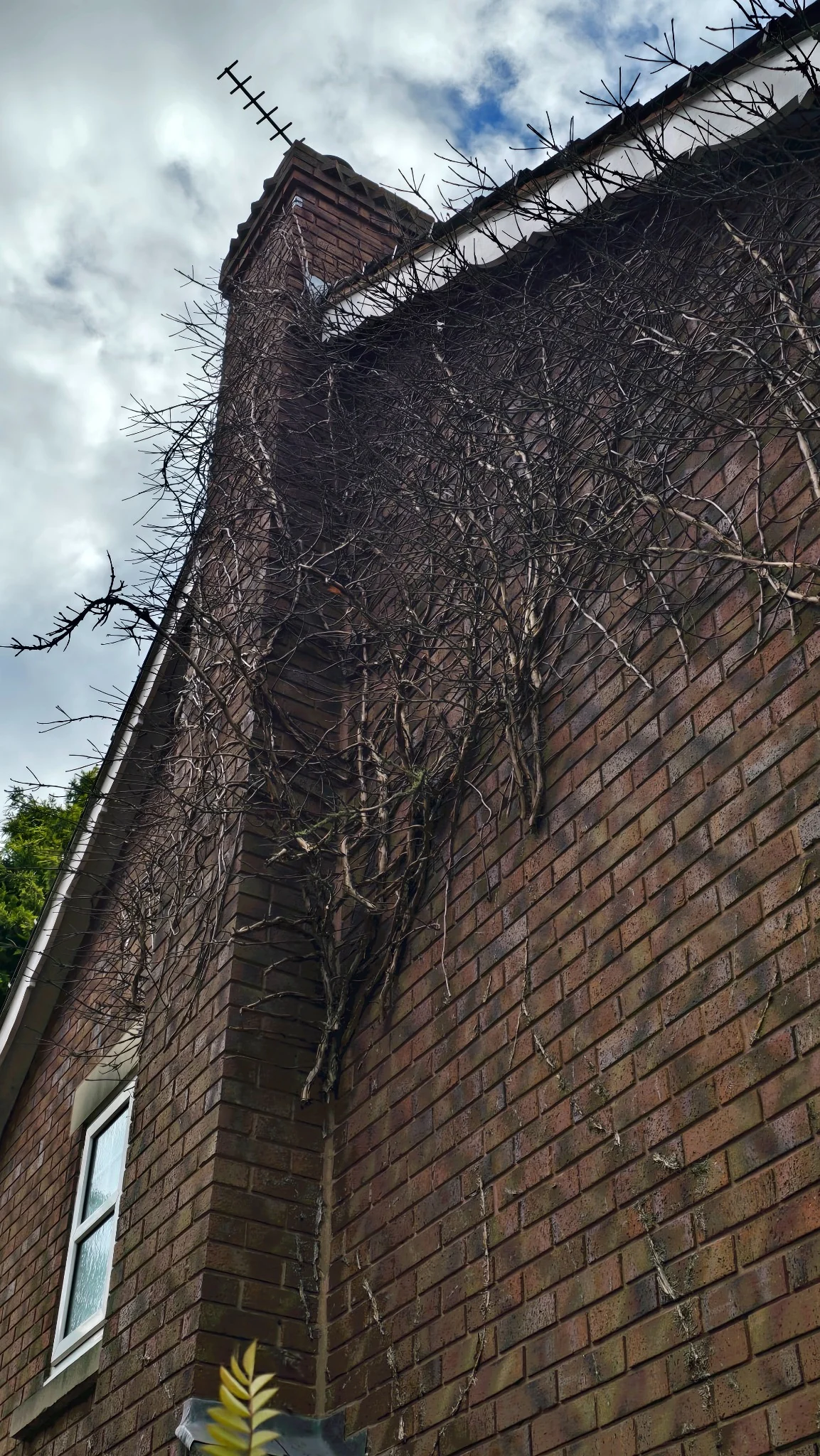
Dead stems remained attached around the chimney, upper wall and roofline approximately three years after the ivy was cut at its base.
Why Was the Dead Ivy Still Attached After Three Years?
Ivy attaches itself to external surfaces through many small aerial rootlets. Cutting the plant at its base stops the upper growth from remaining alive, but it does not release these existing attachment points.
The leaves may fall and thinner sections may become brittle, while thick woody branches remain fixed to the wall for years.
On this property, the ivy could not simply be pulled away. The stems had to be reduced and removed manually in controlled sections.
Why the Customer Decided to Have It Removed
The dead branches were highly visible and affected the appearance of the property. The customer wanted the brickwork exposed again and the wall to look better maintained.
There was also concern that some of the thicker, brittle branches could eventually loosen during strong winds. It is not possible to predict exactly when an individual section may detach, so the customer decided to have the dead ivy removed professionally.
How Our Team Removed the Dead Ivy
The work was completed manually by a two-person team. Although the ivy was dead, the removal was labour-intensive because many sections were still strongly attached to the brickwork.
Wall and roofline assessed
The team identified the thickest stems and the areas most firmly attached around the chimney and roof edge.
Growth divided into sections
The dead vegetation was cut into manageable sections instead of being pulled from the wall in one large piece.
Stems removed manually
Woody branches were carefully worked away from the wall where they remained firmly bonded.
Root area dug out
The remaining root was dug out as part of the agreed work to reduce the chance of renewed growth.
Brickwork exposed
The main wall and chimney were exposed again once the attached branches had been cleared.
Waste taken away
The removed ivy and associated waste were collected and removed from the property.
Before and After Dead Ivy Removal
The removal exposed the brickwork and chimney again, producing a substantial improvement to the appearance of the property.
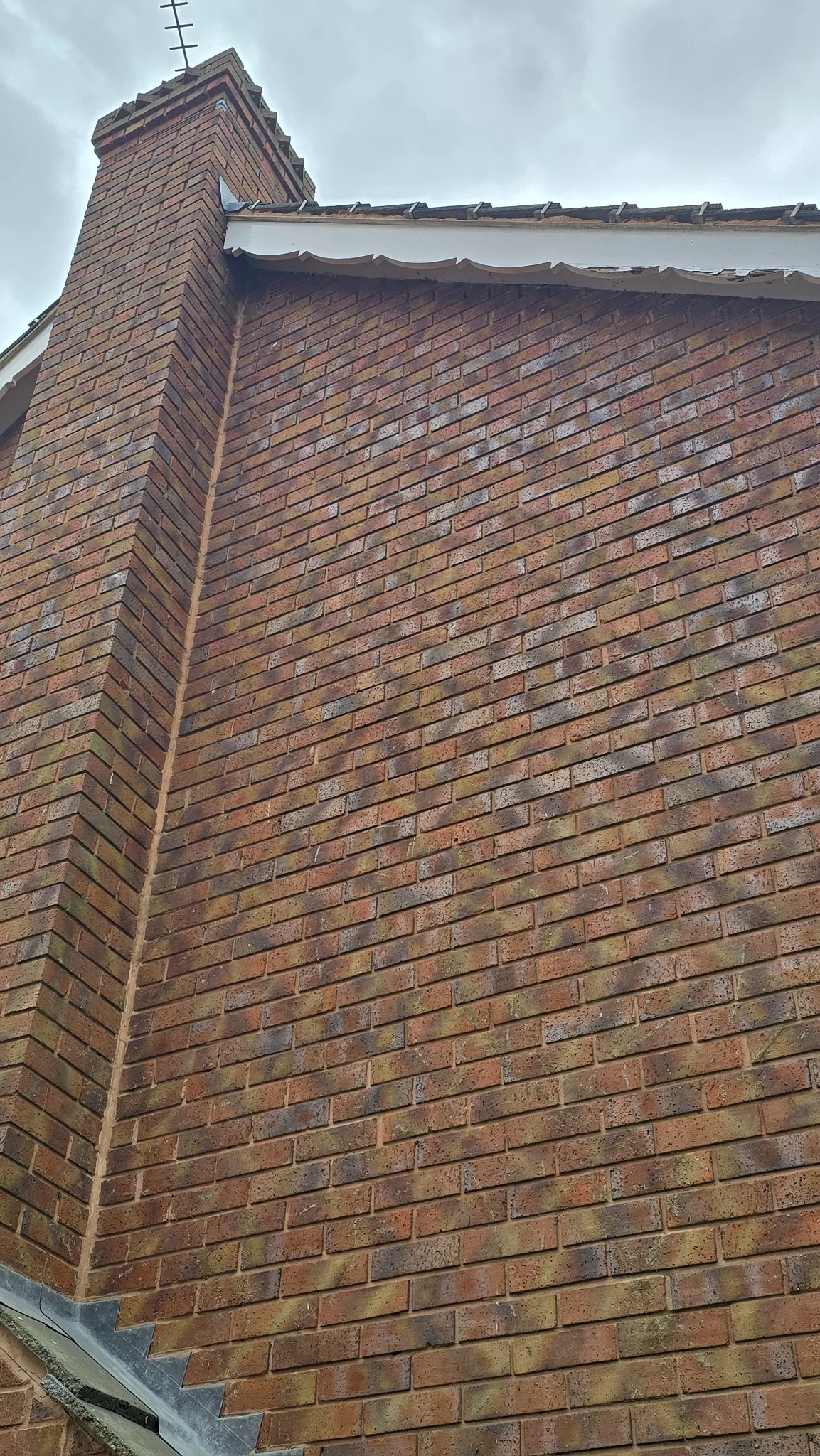
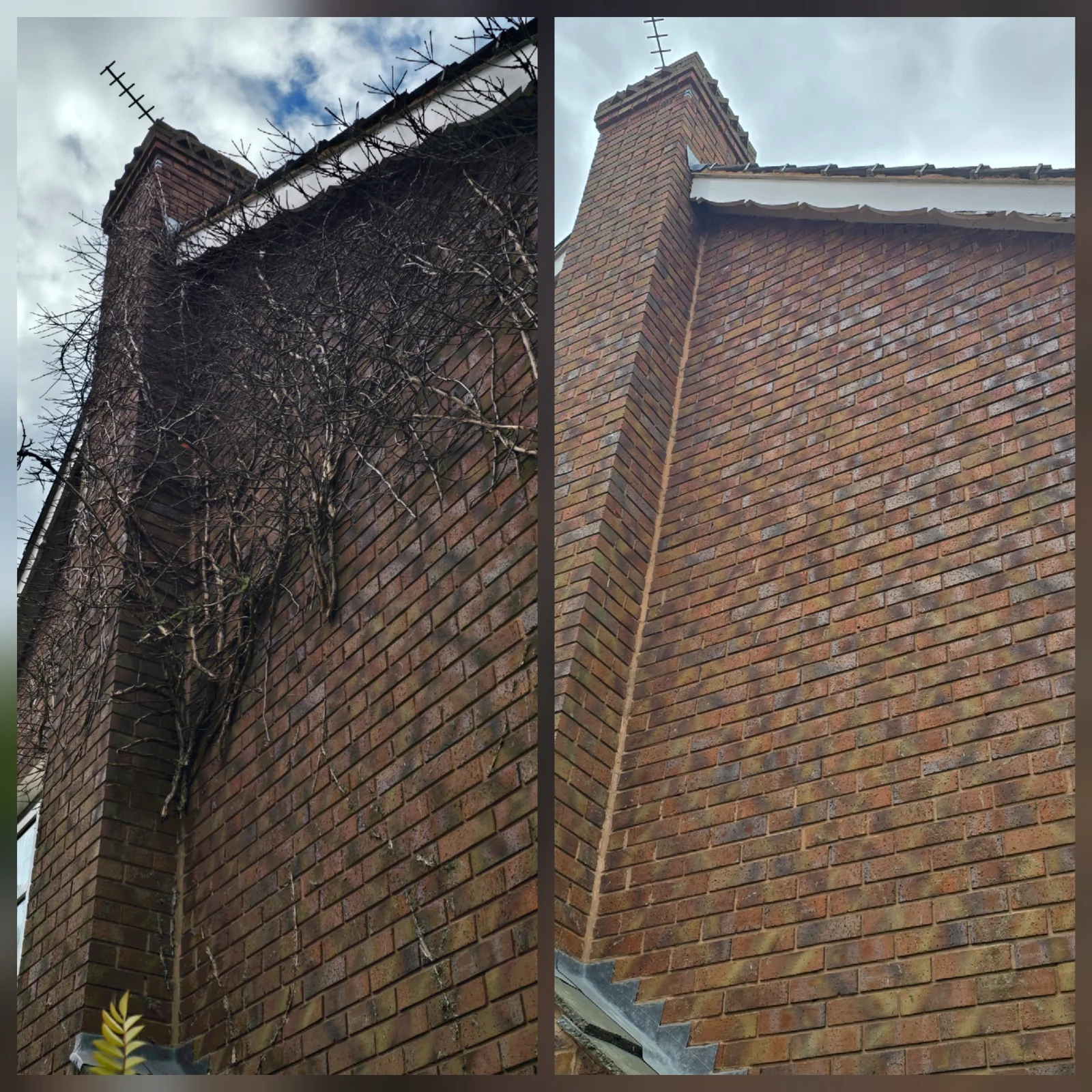
Side-by-side comparison showing the wall before and after the firmly attached dead ivy was removed.
Fine tendrils and attachment marks may remain
Removing the main dead stems does not always remove every fine aerial rootlet from individual bricks and mortar joints.
Some staining, small tendrils and attachment marks can remain after established ivy removal. Brick restoration, abrasive cleaning and repointing are separate services unless specifically included in the quotation.
“Amazing job. We had some old ivy growing on the house and the team did a great job removing it — you can hardly tell anything was there. Much better result than I was expecting. Would certainly recommend them and will be in touch for other work in future.”
Five-star Google review from the customer
Frequently Asked Questions
Common questions about dead ivy remaining attached to external brick walls.
Will dead ivy eventually fall off a wall?
Some small sections may loosen naturally, but thick stems and aerial rootlets can remain attached for years. There is no reliable timescale for dead ivy to fall away by itself.
Is dead ivy easier to remove than live ivy?
Not always. Dead ivy can become brittle while remaining firmly bonded to brickwork, making removal slow and labour-intensive.
Why did this ivy remain attached for three years?
Cutting the base killed the upper plant, but did not release the existing aerial rootlets and woody stems already attached to the wall.
Was the root removed?
Yes. The remaining root area was dug out as part of this particular project.
Will the wall look completely new after removal?
Not necessarily. Fine tendrils, staining and attachment marks may remain. Standard ivy removal does not include brick restoration or repointing unless separately agreed.
How can I get a quotation?
Send clear photographs of the complete wall, roofline, height and access together with the property postcode.
Is Dead Ivy Still Attached to Your Property?
Send photographs showing the entire affected wall, roofline and access together with your postcode. We can assess the likely manpower, access and waste requirements before providing a quotation.