Heavy Ivy Removal Between Two Properties in Rotherham
A major restricted-access project involving roof-level ivy, scaffolding, temporary fence-panel removal, biocide treatment and approximately five van loads of vegetation.
Watch the full Rotherham project, including the heavy ivy, restricted access, roof clearance and completed wall.
A Large Ivy Removal Project with Access Problems at Every Level
Trusted Cleanerz Ltd was asked to completely remove heavily established ivy from a property in Rotherham. The growth had covered most of the gable wall, spread over the roof edge and become established inside the narrow space between two neighbouring properties.
What appeared from a distance to be a large wall-clearing job became a complex two-day project involving scaffolding, temporary removal of fence panels and continuous manual clearance in extremely restricted working areas.
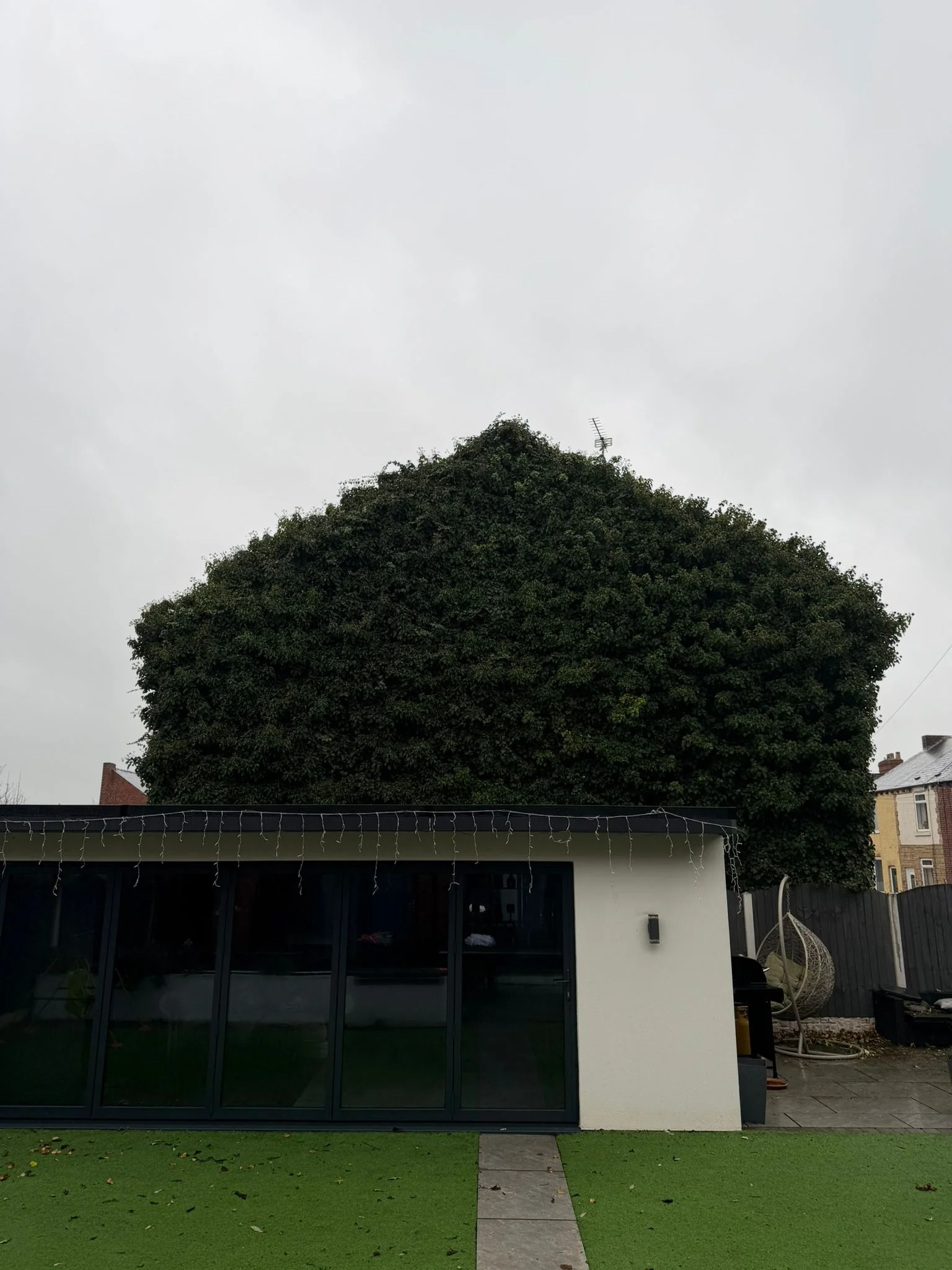
The ivy covered the full height of the wall and rose behind the neighbouring garage or garden building, making ladder access impossible.
Ivy Across the Wall, Roof and Narrow Side Passage
The ivy had grown far beyond a level that could be managed through ordinary trimming. Dense vegetation covered the wall, reached the roof tiles and continued into the confined space between the two properties.
The neighbouring garage or summer house was positioned directly behind the affected wall. This meant ladders could not be positioned safely to reach the highest growth.
There was also no suitable space for a MEWP or cherry picker to enter and operate. Scaffolding was therefore required to provide safe access to the upper wall and roofline.
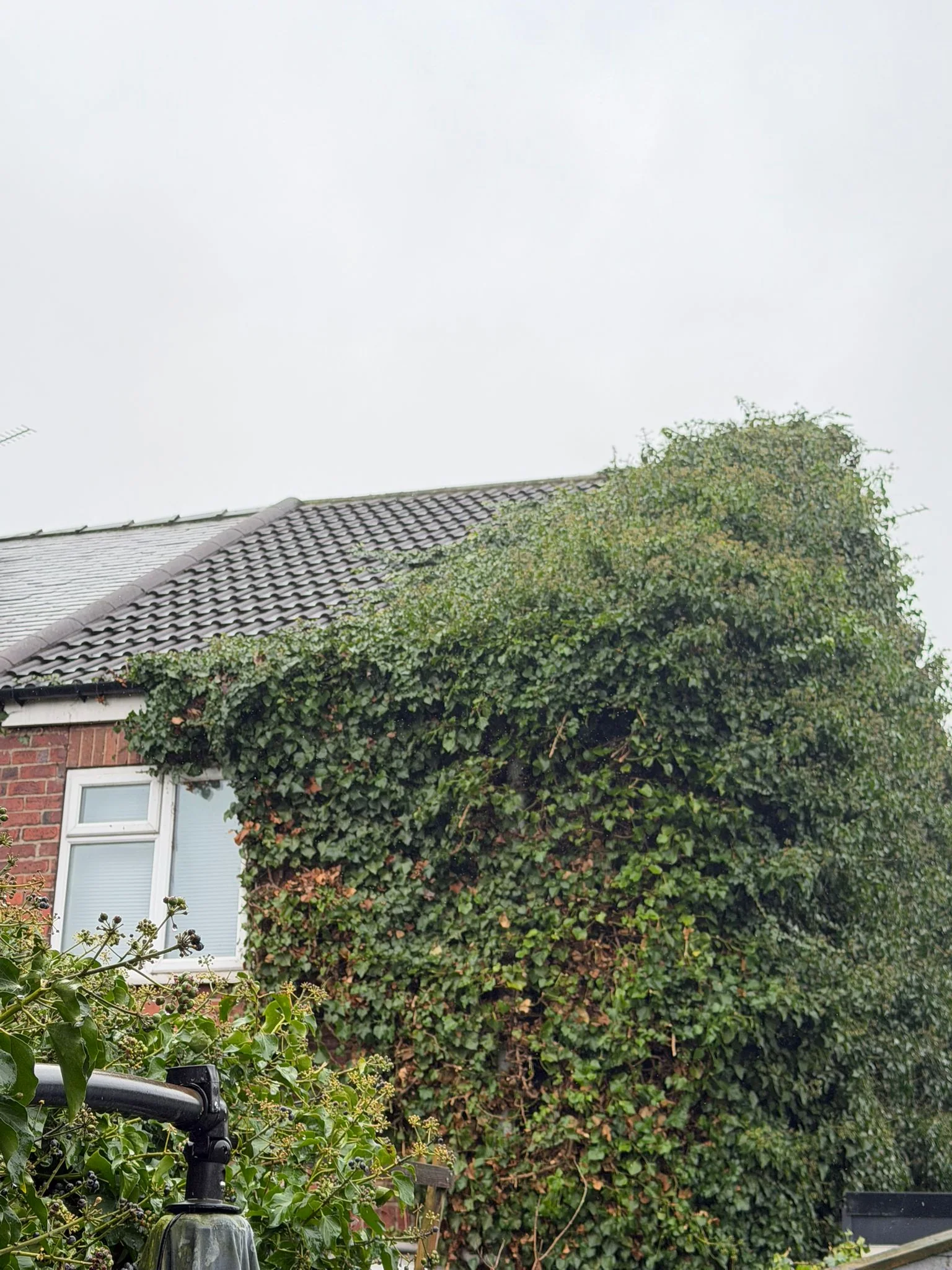
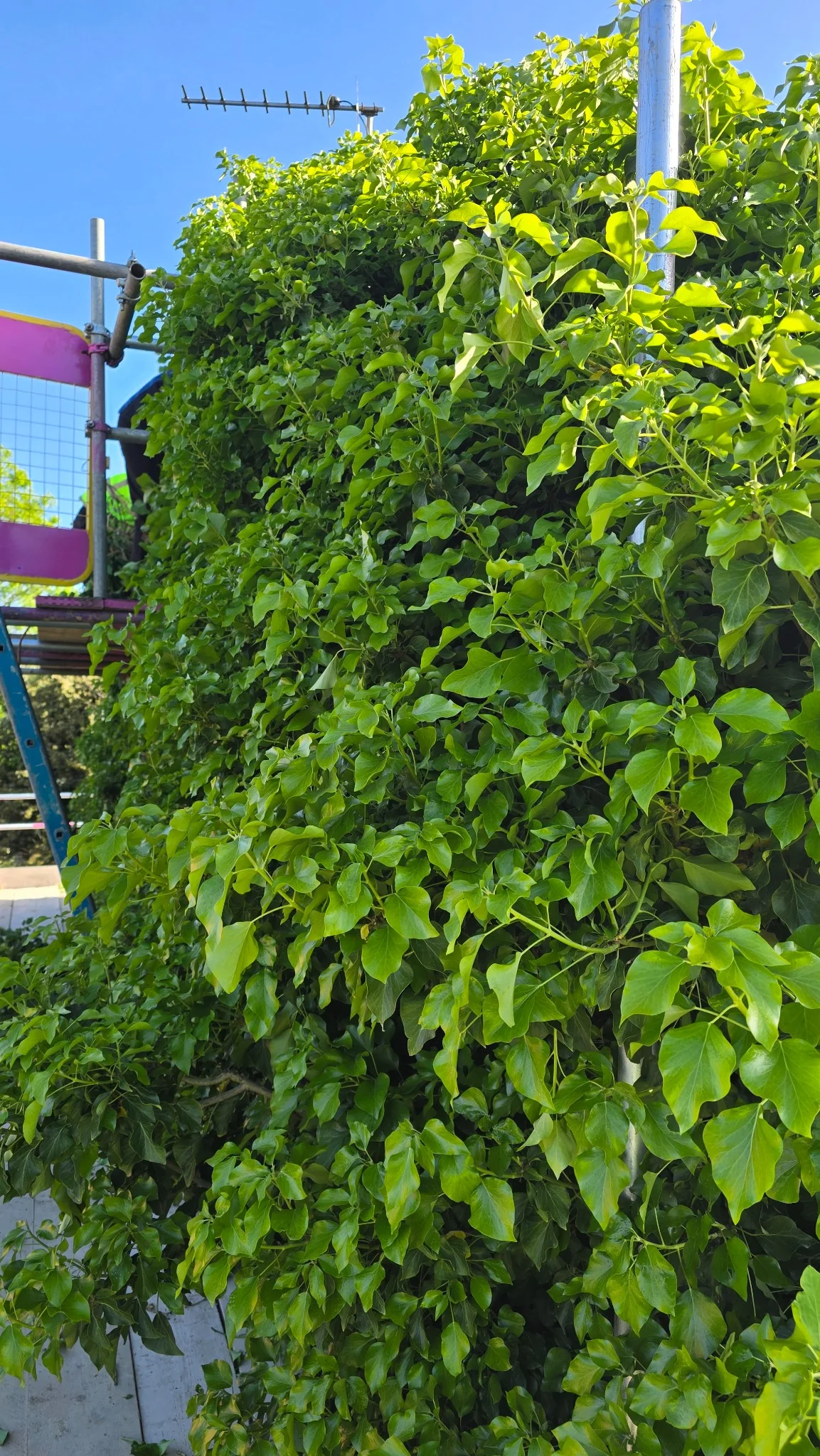
Restricted Access Between Neighbouring Properties
Access at ground level was also extremely difficult. The ivy filled a narrow passage between the affected wall and the neighbouring structure, leaving very little working space.
Sections of fencing were temporarily removed so the team could enter the affected area, reduce the compacted vegetation and reach the lower wall. Once the removal and treatment had been completed, the fence panels were reinstated.
- No safe position for ladders at the upper wall
- No suitable access for a MEWP or cherry picker
- Scaffolding used for the top sections
- Fence panels temporarily removed for lower access
- Work completed inside a confined passage
- Fence panels reinstated afterwards
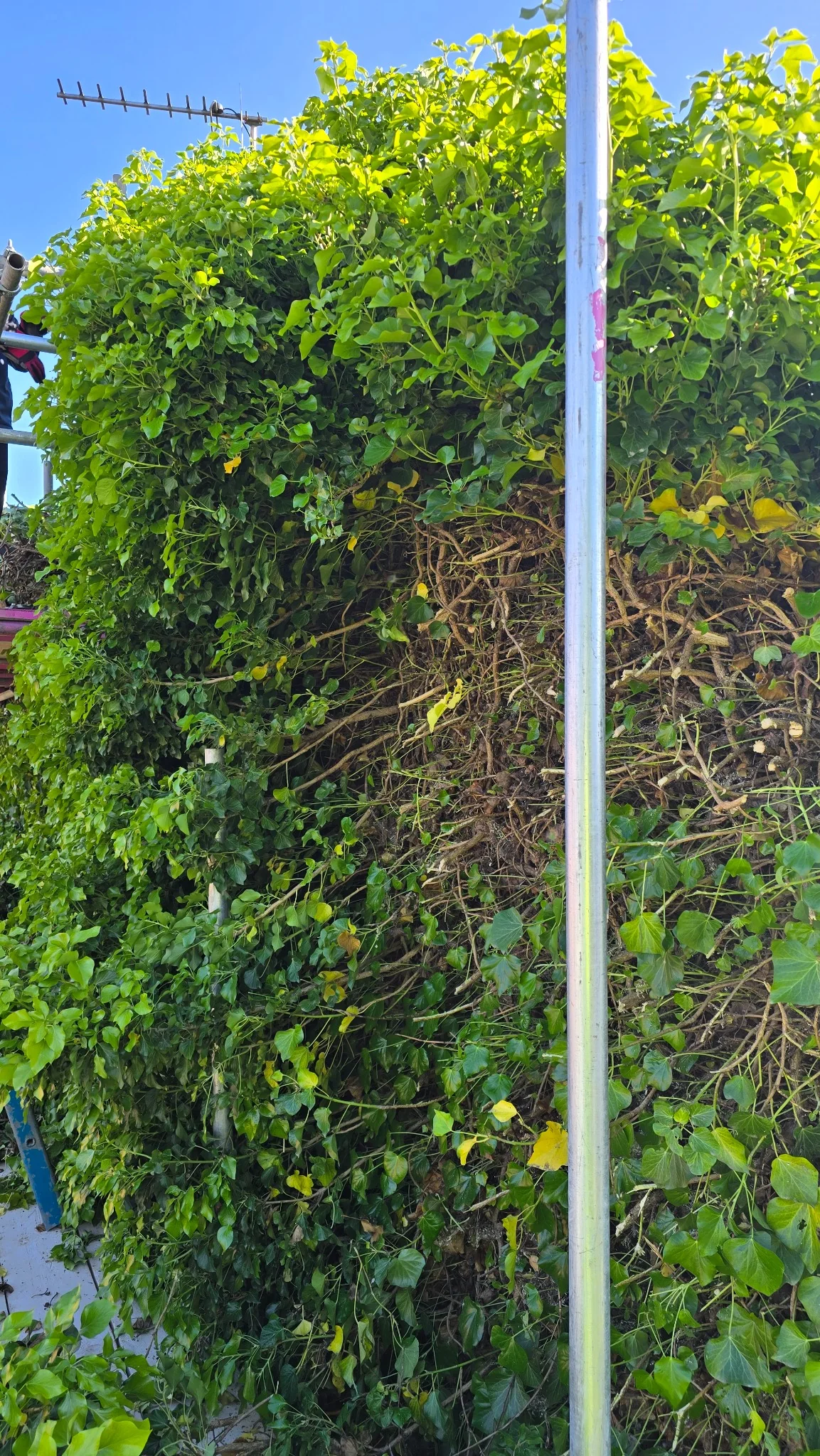
Scaffolding provided controlled access to ivy at the highest sections of the wall and roof edge.
How the Rotherham Ivy Removal Was Completed
The vegetation was removed manually in controlled sections. Because of the height, density and access restrictions, the project had to be completed in several carefully planned stages.
Upper growth reduced from scaffolding
The highest sections were separated and brought down gradually from the scaffold platform.
Roof and roof-edge ivy cleared
Vegetation spreading across the roof tiles and gutter area was removed to expose the roofline again.
Temporary fence-panel removal
Fence panels were taken out carefully to create access into the narrow passage between the neighbouring buildings.
Lower wall and passage cleared
The remaining ivy, woody stems and compacted vegetation were manually removed from the confined lower area.
Biocide treatment applied
After the main vegetation was removed, the exposed wall was treated with a suitable biocide as agreed.
Waste removed and fencing reinstated
The vegetation was loaded for disposal and the temporarily removed fence panels were put back into position.
Two Days of Intensive Manual Work
The first stage was completed by a three-person team. Work began at approximately 8:00am and continued throughout the day into the evening to remove the bulk of the established growth.
A two-person team then completed the remaining clearance, wall treatment, waste removal and reinstatement work during the second stage.
The long working hours reflect the amount of vegetation, difficult access and care required around the neighbouring structures, roof and fencing.
van loads
Substantial vegetation removed
Approximately five van loads of ivy and associated green waste were collected and removed during the two-day project.
Before and After the Ivy Removal
The transformation exposed the full gable wall and roof edge, allowing the underlying surface to dry before its planned preparation and repainting.
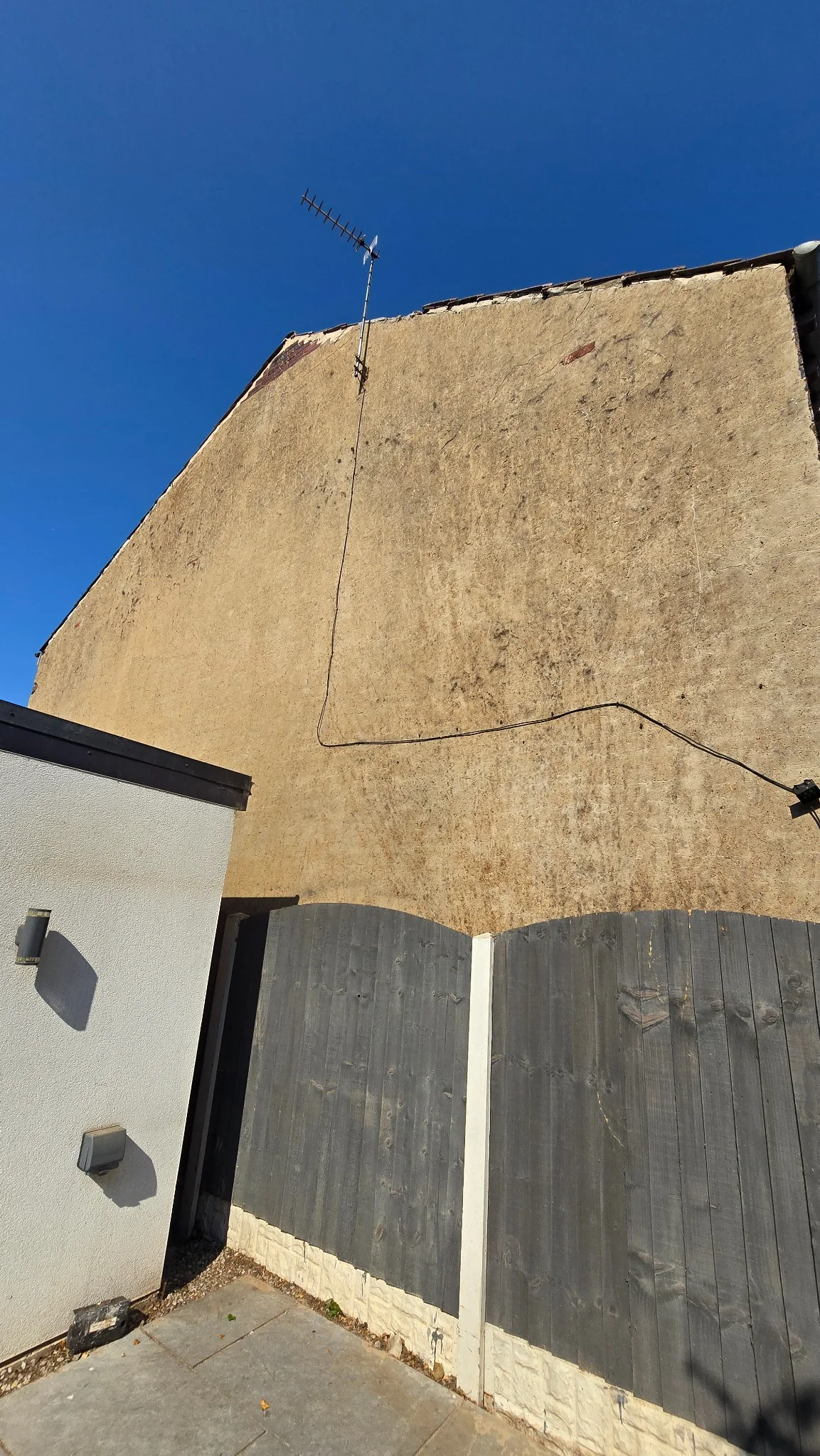
The Wall and Roofline Fully Exposed
Once the vegetation was removed, the full size and condition of the underlying wall became visible. The roof edge was cleared and the building could once again be inspected and maintained.
The wall was treated with biocide and left to dry naturally. It was not painted immediately because a surface that has been covered by mature vegetation needs sufficient time to dry and stabilise before decoration.
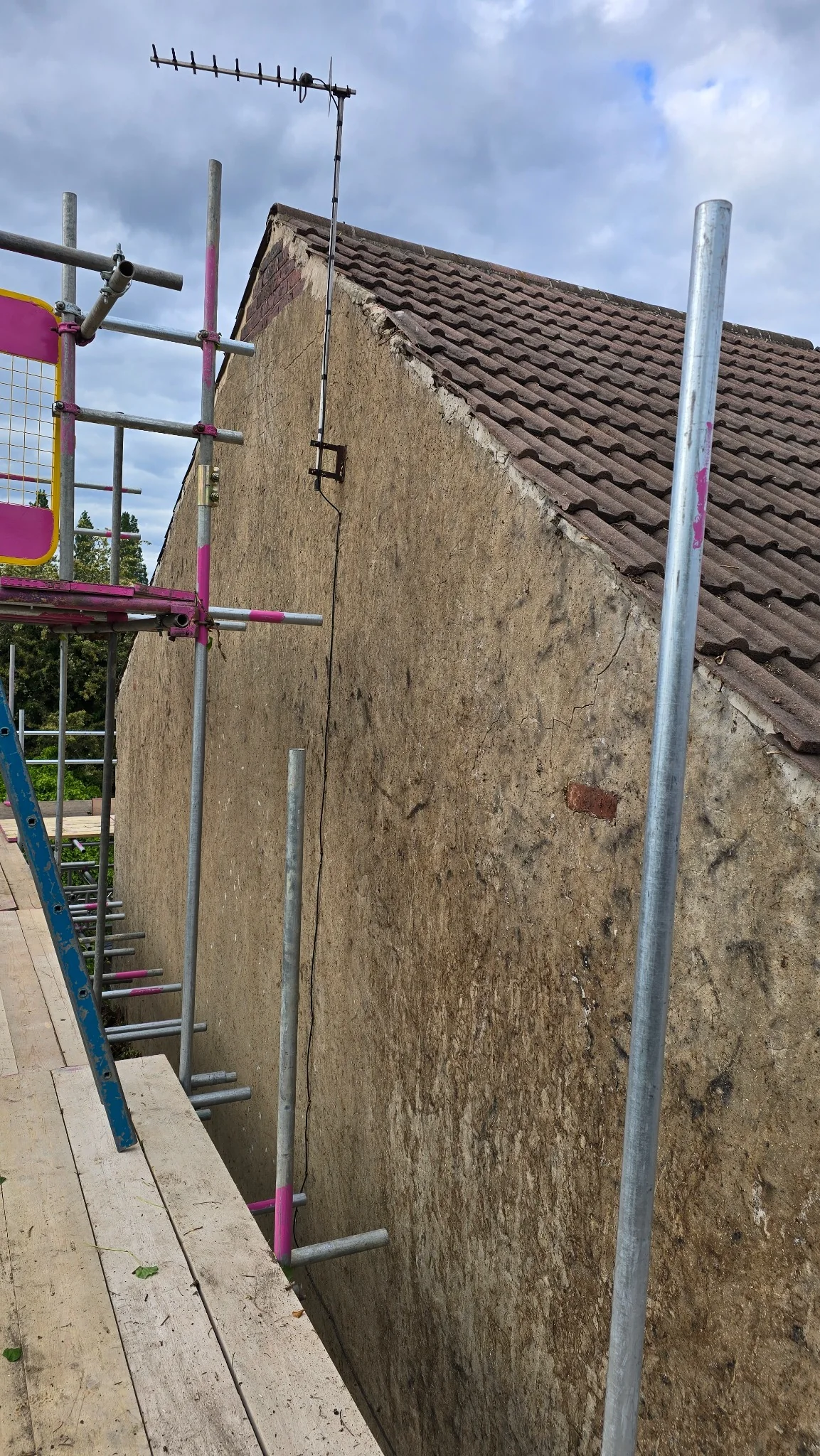
Elevated view showing the wall and roof edge after the ivy had been cleared.
Ivy removal does not immediately restore the wall
Mature ivy can leave attachment marks, fine tendrils, staining and areas of retained moisture after the main vegetation has been removed.
Standard removal exposes the wall but does not automatically include render restoration, filling, repainting or removal of every fine rootlet. Those stages are completed separately once the wall is suitably dry and stable.
The Next Stage: Preparing and Repainting the Wall
The customer has arranged for Trusted Cleanerz Ltd to return in September to prepare and repaint the wall after it has had sufficient time to dry and stabilise following the ivy removal and biocide treatment.
Once the painting work has been completed, this case study will be updated with the final decorated result and additional photographs.
Professional Ivy Removal in Rotherham
Trusted Cleanerz Ltd provides professional ivy removal in Rotherham, across Yorkshire and throughout the UK by appointment.
We complete small controlled removals as well as major projects involving rooflines, gable walls, scaffolding, narrow access, neighbouring buildings and large quantities of vegetation.
Every quotation is based on the height, density of growth, access arrangements, affected surfaces, manpower and waste volume involved.
Frequently Asked Questions
Common questions about large and restricted-access ivy removal projects.
Why was scaffolding needed for this ivy removal?
A neighbouring garage or garden building prevented the safe positioning of ladders behind the affected wall. There was also insufficient access for a MEWP or cherry picker, so scaffolding was required for the highest sections.
Why were the fence panels removed?
The lower ivy was growing inside an extremely narrow passage between neighbouring properties. Sections of fencing were temporarily removed to create working access and were reinstated after the clearance and treatment.
How long did the Rotherham ivy removal take?
The project took two working days. Three operatives completed the first intensive stage, followed by a two-person team for the remaining clearance, treatment and reinstatement work.
How much ivy waste was removed?
Approximately five van loads of ivy and associated green waste were removed from the property during the project.
Can a wall be painted immediately after ivy removal?
Not necessarily. The wall may retain moisture and organic residue after being covered by mature ivy. It should be allowed to dry and stabilise before final preparation and painting. The appropriate period depends on the wall and weather conditions.
Do you remove ivy from roofs and difficult-access areas?
Yes, where safe access can be arranged. Each project is individually assessed, and scaffolding or other access equipment may be required for high or obstructed areas.
Need Help with Heavy or Difficult-to-Reach Ivy?
Send photographs showing the complete ivy growth, roofline, access and surrounding buildings together with your postcode. We can then assess the likely team, equipment and waste requirements.