What to Do If Your Neighbour’s Ivy Is Growing on Your House (UK Guide)
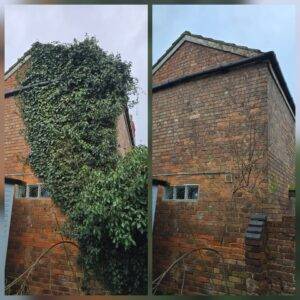
When your neighbour’s ivy begins creeping onto your house, walls, or guttering, it can go from a small annoyance to a serious property risk surprisingly fast. Ivy may look decorative, but in the UK’s damp climate it spreads aggressively and grips tightly to brickwork, render, fascia boards, and even roof edges. Left unmanaged, it can cause structural problems, damp, blocked gutters, and hidden damage you won’t notice until it’s too late.
Quick Answer:
You can legally cut any ivy that crosses onto your property, but your neighbour remains responsible for vegetation growing from their land. However — removing ivy incorrectly can cause more damage. If the growth is high, heavy, or attached to weak brickwork, it may be safer to use a professional service such as our Ivy Removal Experts.
This guide explains your rights, the safest removal methods, and the steps to take if your neighbour refuses to deal with the problem.
Why Neighbour Ivy Is a Serious Problem for Your Home
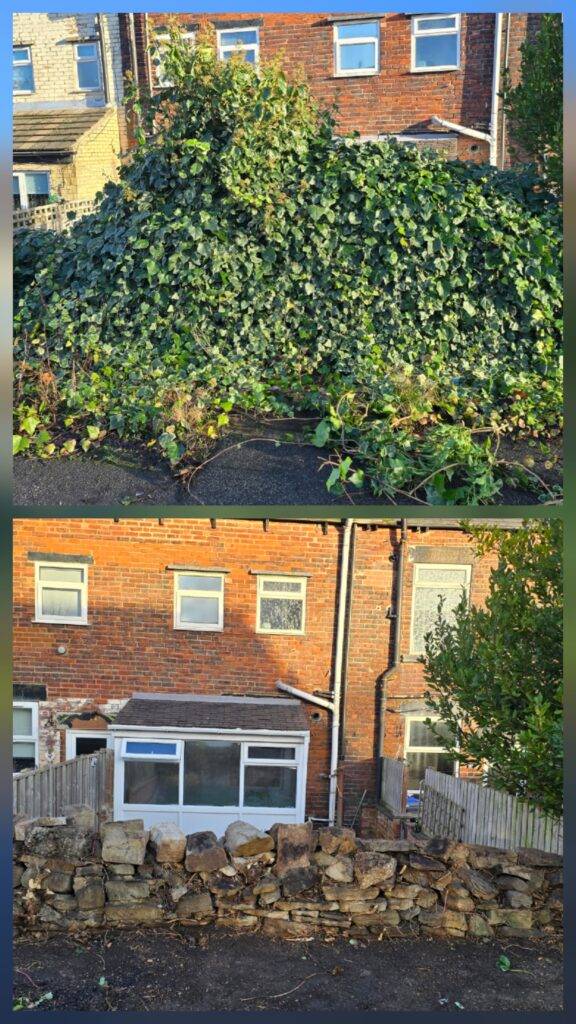
Neighbour ivy can cause damage in ways most homeowners don’t realise — especially on older UK properties. Once it crosses the boundary, it anchors itself into surfaces, clogs guttering, and spreads behind pipes and rooflines.
Below are the main reasons ivy needs to be dealt with early.
Ivy Damages Brickwork, Render, and Mortar
Ivy climbs by using tiny “root pads” that glue themselves to surfaces — and over time, they dig into:
- mortar joints
- tiny cracks and gaps
- loose render
- brick pores
- window frames
As the plant thickens, these tendrils widen the gaps, pull surfaces apart, and trap moisture. That’s why homeowners often discover damp patches under ivy that has been growing for years. If you want to understand how to safely remove root pads and tendrils without ripping off mortar, read our guide:
👉 How to Remove Ivy Tendrils Without Damaging Brickwork
Ivy Causes Gutter, Fascia, and Roofline Problems
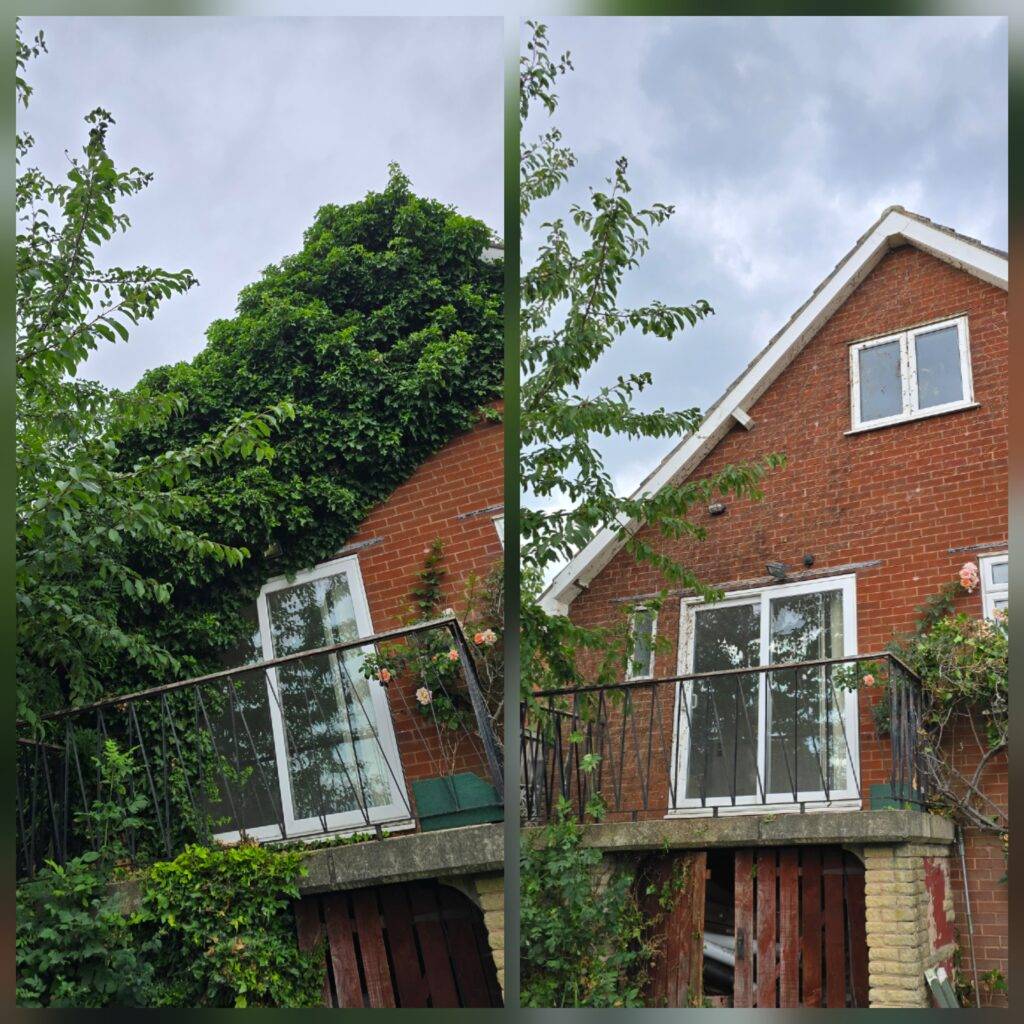
Once ivy reaches gutter height, the problems accelerate. We commonly see this on terraced and semi-detached homes in areas like Manchester, where properties sit close together and ivy spreads easily between gardens.
Common damage includes:
- blocked gutters that overflow
- water running behind fascia boards
- downpipes clogged with ivy stems
- roof tiles lifted or displaced
- moisture trapped beneath roof edges
- algae staining down exterior walls
Overflowing gutters are one of the biggest risks because they cause long-term damp patches and moss growth.
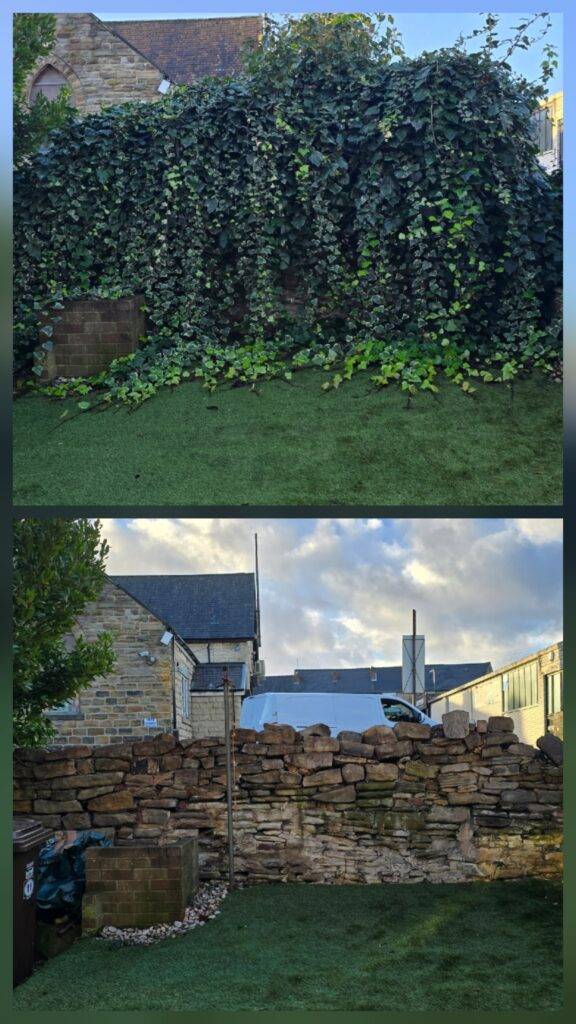
Ivy Hides Damage You Cannot See
The most dangerous aspect of ivy is that it masks the issues it creates. Heavy ivy can conceal:
- cracked bricks
- crumbling mortar
- loose render
- damp penetration
- wall gaps
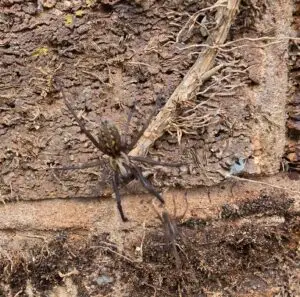
- nesting birds and pests
In older homes we frequently find fragile mortar hidden beneath thick ivy. When homeowners try to pull it off, large chunks of render or brick surface come with it.
If ivy has been growing for years, professional removal is usually safest.
Who Is Legally Responsible for Neighbour Ivy in the UK?
The good news: UK law on neighbour plants is simple.
Your neighbour is legally responsible for vegetation growing from their land, including ivy, even if the plant spreads onto your walls or roof.
Here’s what that means in practice.
You Are Allowed to Cut Ivy Back — But Only on Your Side
UK property law states that you can:
- trim, cut, or remove any ivy that enters your property
- remove ivy from your walls, gutters, and fences
- cut ivy stems at the boundary line
But you cannot:
- cross into their garden
- damage their plants on their side
- throw cuttings back over the fence (this is illegal fly-tipping)
If thick vines have attached deeply to your brickwork, don’t rip them off — you may cause more harm. Instead, follow the safe method recommended in our Ivy Removal Tips guide or use our Ivy Removal Service for heavily rooted growth.
Who Pays for Damage Caused by Ivy?
If the neighbour’s ivy has caused:
- cracked render
- damaged brickwork
- damp patches
- gutter blockages
- roof tile displacement
…then they may be legally liable for repairs.
Most disagreements never reach legal escalation — a friendly conversation usually solves the issue quickly. We cover how to approach this later in the article.
What You Should Do First – The Polite Approach
Before you take any physical action or contact the council, the best first step is simply talking to your neighbour. Most people genuinely don’t realise how fast ivy grows or how destructive it can become.
A friendly conversation prevents conflict and usually results in a quick agreement.
What to mention when speaking to your neighbour:
- The ivy has crossed the boundary
- It’s climbing your wall or entering your gutter
- You’ve noticed damp, staining, or blocked downpipes
- You’re concerned about damage if it keeps spreading
If possible, take a few photos — visual proof makes the problem clear without sounding confrontational.
Example wording you can use:
“I’ve noticed the ivy from your side is now climbing onto my wall and starting to reach the gutter. I’m worried it may cause damage if it keeps growing. Is it okay if we cut it back to the boundary or arrange a proper removal?”
Most neighbours respond positively when approached politely, especially when shown the impact.
Safe DIY Ivy Control You Can Do Legally
You are allowed to remove ivy on your side of the boundary — but you must do it the right way, or you risk damaging your brickwork, render, or guttering.
Below are the safest homeowner-friendly steps used by professionals.
Step 1 – Cut Ivy at the Base to Stop Growth Immediately
If the ivy is attached to your wall, don’t start ripping it off. That almost always leads to:
- render being torn away
- mortar being pulled out
- brick faces cracking
- damp exposure behind the plant
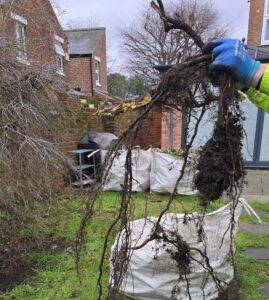
Instead, cut the main stems at ground level where they cross onto your land.
This:
- kills the ivy above
- releases tension from the wall
- prevents further spread
- prepares the plant for easier removal later
Leave the upper vines in place for 2–6 weeks. Once dry, they detach far more safely.
You can see a full explanation of the drying process in our guide:
👉 Professional Ivy Removal Tips
Step 2 – Loosen and Remove Ivy Tendrils Carefully
After drying, you can begin removing ivy from your wall. But be patient — the smallest tendrils and root pads grip incredibly tightly.
Trying to scrape them off too early can cause visible scarring on brick and render.
For best results:
- Start from the top of the dead vines
- Gently peel sections downward
- Use a soft brush to remove dry tendrils
- Avoid metal scrapers unless you know the surface is robust
For a detailed breakdown of how to remove root marks safely (and what to avoid), see our tendril removal guide.
Step 3 – Clear Ivy from Gutters and Downpipes
Ivy entering guttering is one of the main causes of damp on UK walls. Once inside the gutter, it blocks water flow, causes overflowing, and pushes water into fascia boards or behind brickwork.
Check for:
- water spilling over the gutter edge
- plants visibly growing from the gutter
- slow-draining downpipes
- algae streaks on the wall below the gutter
We regularly see this problem on older terrace and semi-detached homes in Nottingham, where houses are tightly spaced and ivy quickly reaches roof height.
If your gutter is blocked with thick vines or internal roots, avoid tugging. This can:
- pull gutters away from the wall
- crack joints
- break downpipe brackets
If it looks heavy or waterlogged, you may need professional support via our Ivy Removal Service.
Step 4 – Assess Safety Before Handling High Ivy
DIY ivy removal becomes dangerous when growth has reached:
- first-floor windows
- upper brickwork
- second or third storey
- roof tiles and edges
- chimney stacks
- behind satellite or electric cables
Tall ivy requires:
- a safe ladder angle
- standoff stabilisers
- a second person for safety
- controlled removal to avoid falling debris
If you’re unsure, it’s safer to stop and call in trained ivy removal specialists. You can learn more about safe methods in our Professional Ivy Removal Tips guide.

When Ivy Becomes Too Risky to Remove Yourself
Some ivy situations should never be attempted by homeowners because the risk of damage — or personal injury — is simply too high.
Avoid DIY removal if:
- vines are thicker than your wrist
- growth is wrapped around pipes or cables
- ivy has entered gaps under roof tiles
- brickwork or render is old and fragile
- the wall is damp underneath
- the ivy is extremely high or heavy
Thick vines can tear the face off bricks when pulled. Roof or chimney ivy can shift tiles. And fragile mortar can crumble instantly when large roots detach.
When in doubt, use a professional. The cost is almost always lower than repairing accidental damage.
How Professionals Remove Ivy Without Damaging Your Home
When ivy is heavy, high, or deeply rooted, professional removal is almost always safer and more cost-effective than DIY. Specialists use controlled, multi-stage methods to prevent surface damage.
Here’s how a trained team removes ivy safely:
1. Cutting the vines to release tension
Professionals carefully cut the main stems at the base and strategic points higher up. This relieves pressure on the wall or render.
2. Allowing the ivy to dry naturally
Drying weakens the adhesion of tendrils, reducing the risk of tearing mortar or pulling out brick faces.
3. Hand-removing vines from top to bottom
This prevents heavy pieces from pulling on lower sections and damaging gutter brackets or pipes.
4. Clearing rooflines and gutters
Teams safely remove all ivy from gutters, fascia boards, downpipes, and roof edges. This is especially important for homes where growth has reached the upper storeys.
5. Removing tendrils and root pads carefully
This final step is done with soft brushes or low-abrasion tools to prevent surface scarring.
6. Waste disposal and prevention advice
All debris is cleared, and homeowners are given guidance to prevent regrowth.
If you need ivy removed safely without risking damage to brickwork, render, or roofline, you can request help through our main service page:
👉 Ivy Removal Specialists
What to Do If Your Neighbour Refuses to Deal with the Ivy
Unfortunately, not every neighbour is cooperative. If they refuse to acknowledge the issue or take responsibility, you still have several straightforward options.
Option 1 – Send a Polite Written Request
If a friendly conversation didn’t resolve the issue, your next step should be a calm written message — either by letter, text, or email.
Your message should include:
- A brief explanation of the situation
- Photos showing where the ivy has crossed onto your property
- Any visible damage (gutter blockages, staining, mortar gaps)
- A polite request to agree a plan
Example message:
“I’m following up regarding the ivy that has grown over the boundary onto my wall and gutter. It’s causing blockages and may lead to further damage. Could we agree on cutting it back safely or arranging removal together?”
Putting things in writing creates a record of your efforts to resolve the issue amicably.
Option 2 – Remove Ivy on Your Side Only
UK law is clear:
You can always cut back or remove vegetation that enters your property, as long as you don’t cause damage beyond the boundary.
This includes removing ivy from:
- your walls
- your fence
- your gutters
- your downpipes
However, be careful when dealing with thick, heavy, or high ivy. Older brickwork — especially in regions like West Yorkshire — can be fragile beneath years of growth.
If the vines are large or the wall looks weak, avoid DIY and consider hiring specialists.
Option 3 – Use Local Mediation Services
If communication breaks down, mediation is the next step (and far cheaper than involving solicitors).
Mediation helps you:
- settle boundary disagreements
- avoid conflict
- reach a practical resolution
- maintain a respectful neighbour relationship
Nearly every UK council offers low-cost or free mediation programs for cases like this.
Option 4 – When Ivy Has Already Caused Damage
If the ivy has already caused:
- cracked render
- damaged brickwork
- damp issues
- gutter leaks
- roof tile displacement
…your neighbour may be responsible for the repair costs.
Before escalating:
- Take clear photos of the damage
- Document your conversations and attempts to resolve the issue
- Get a written assessment from an ivy removal professional
- Present this information calmly to your neighbour
The vast majority of situations resolve at this stage without legal involvement.
How to Prevent Ivy Regrowing From Next Door
Even after removal, ivy can return quickly if the neighbour does not manage their side. Preventing regrowth requires a combination of maintenance and early monitoring.
Here’s how to reduce the chance of ivy returning:
- Keep a 30–50 cm clear zone along your wall
- Cut any new shoots immediately when they appear
- Inspect gutters twice a year
- Take photos of early signs of growth
- Remove small tendrils before they establish
If the neighbour still has large amounts of active ivy, complete prevention is impossible — but early action will keep the growth under control.
Final Advice
Neighbour ivy is frustrating — but manageable. Your rights are clear, your options are reasonable, and safe solutions are available.
Final steps to remember:
- Start with a friendly conversation
- Document everything with photos
- Remove ivy on your side safely
- Avoid ripping vines from brickwork
- Use professionals for high or heavy growth
- Consider mediation if communication fails
For safe, guaranteed ivy removal without risking damage, visit our main page:
👉 Trusted Ivy Removal Service