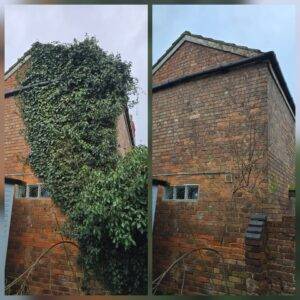
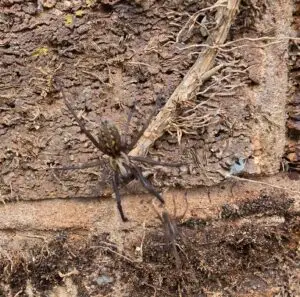
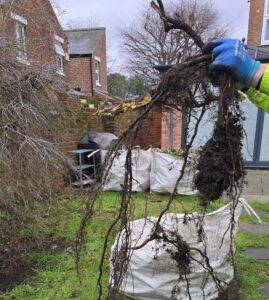
When Ivy Should Be Removed Immediately
Ivy can look attractive on UK homes, but there are situations where it becomes a serious risk rather than a decorative feature. In West Yorkshire especially, where many properties are older and exposed to frequent rainfall, ivy growth can quickly lead to structural problems, damp, and costly repairs.
This guide explains exactly when ivy should be removed immediately, helping homeowners recognise the warning signs and act before damage worsens.
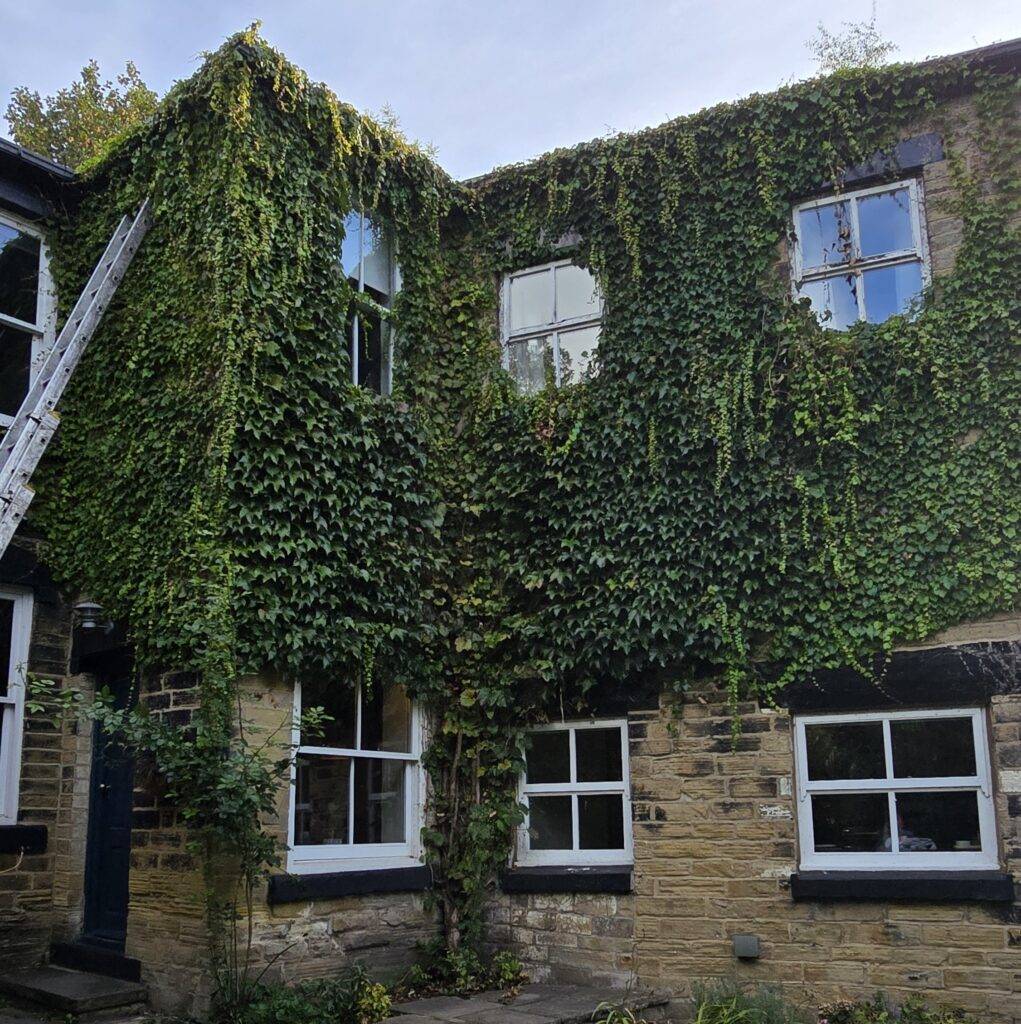
Older or Listed Homes Are at Higher Risk
If your home is older or listed, ivy should always be treated with caution.
Many traditional West Yorkshire properties were built using lime mortar and solid stone or brick construction. These materials are breathable and softer than modern alternatives. Ivy exploits weak points in this type of structure, pushing into cracks and joints and gradually widening them over time.
On listed buildings, ivy can also obscure important architectural details, making inspections difficult and potentially leading to unauthorised damage to protected features. Removal becomes more complex and expensive the longer ivy is left in place. For period homes, ivy is rarely harmless and often best removed sooner rather than later.
Crumbling or Cracked Mortar Is a Serious Warning Sign
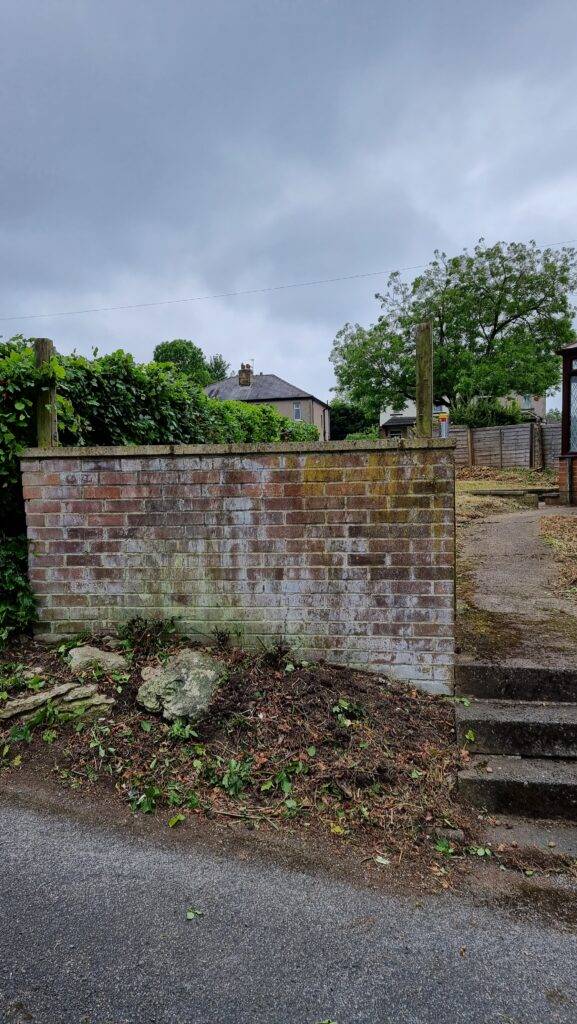
Ivy does not create cracks in masonry, but it takes advantage of them.
When mortar is already deteriorating, ivy roots can work their way into the gaps, forcing joints apart and loosening bricks or stone. Over time, this weakens the integrity of the wall and makes future repairs far more costly.
Another problem occurs during removal. If ivy has been allowed to root deeply into damaged mortar, pulling it away can dislodge large sections of pointing or masonry.
If your mortar shows visible cracking, flaking, or powdering, ivy removal should be treated as urgent.
Existing Damp Problems Often Get Worse
Damp is one of the most common property issues across West Yorkshire, and ivy frequently makes it worse.
Dense ivy growth traps moisture against exterior walls, reducing airflow and slowing natural drying. In shaded or north-facing areas, walls can remain damp for long periods, encouraging mould growth internally and frost damage externally.
While some claims suggest ivy protects walls from rain, this benefit only applies to well-maintained, structurally sound buildings. On properties with existing damp problems, ivy almost always increases moisture retention rather than reducing it.
If you already have damp patches, mould, or musty smells indoors, ivy removal should not be delayed.
Ivy Growing Into Roof Spaces Is an Immediate Risk
One of the most serious reasons to remove ivy is when it reaches roof level.
Ivy commonly grows behind gutters, under roof tiles, and into soffits and fascias. Once it penetrates these areas, it can lift tiles, damage flashing, and create entry points for water and pests.
Roof-related ivy damage is often hidden until leaks appear inside the property. By that point, repair costs can be significant.
If ivy is anywhere near your roofline, professional removal should be arranged as soon as possible.
Gutters and Drains Must Never Be Obstructed
Blocked gutters are a leading cause of damp and structural damage in UK homes.
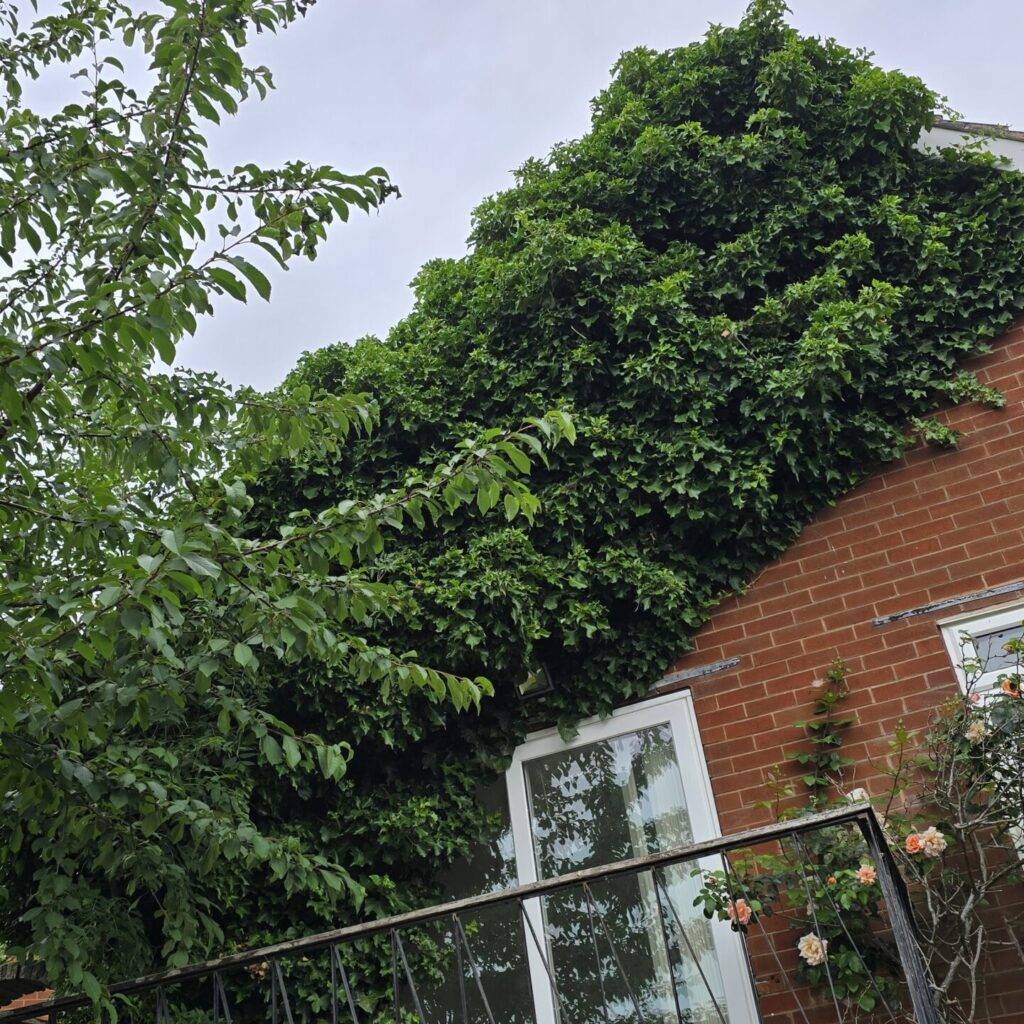
Ivy frequently grows directly into gutters and downpipes, restricting water flow and causing overflow during heavy rain. Water spilling down exterior walls can soak brickwork, weaken foundations, and worsen internal damp issues.
In many cases, ivy hides blocked gutters completely, meaning homeowners are unaware of the problem until damage is already underway. If ivy is affecting drainage in any way, removal should be considered urgent maintenance.
Ivy Spreading From a Neighbouring Property
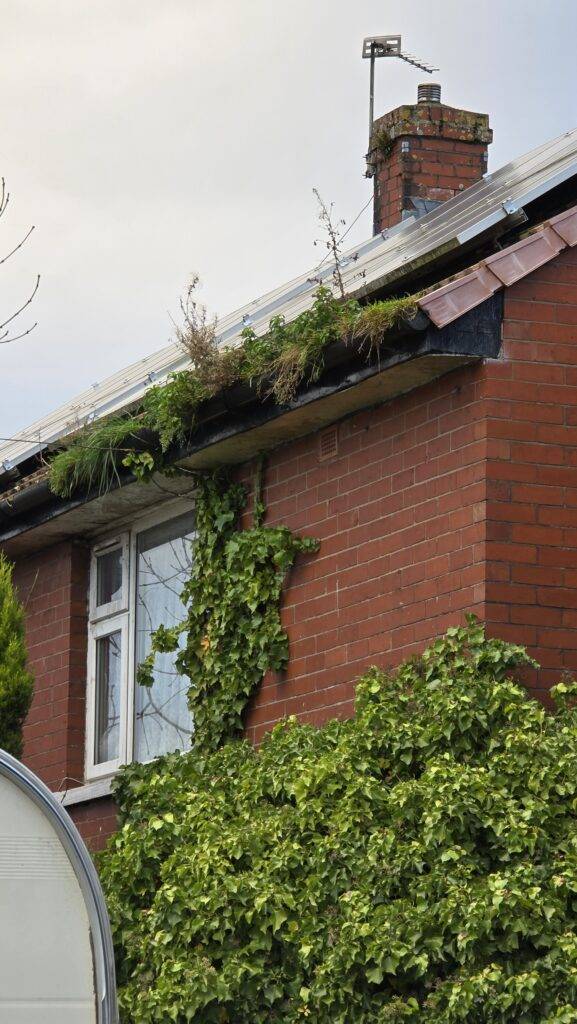
A common problem for homeowners is ivy growing from a neighbouring wall or garden and spreading onto their own property.
This situation can quickly escalate, particularly when ivy crosses boundaries and begins damaging brickwork or roof areas. If you’re dealing with this issue, our guide Neighbour’s Ivy Is Growing on My House explains your options and responsibilities in more detail.
Regardless of where the ivy originates, any growth affecting your structure should be addressed promptly.
Professional Ivy Removal in West Yorkshire
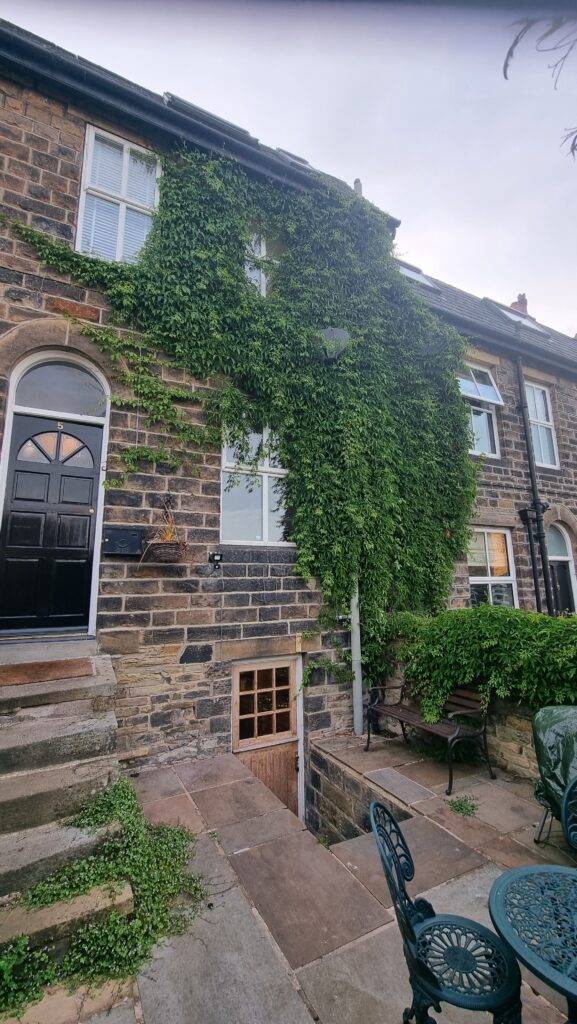
When ivy reaches this stage, professional removal is the safest option.
At Ivy Removal West Yorkshire, Trusted Cleanerz Ltd provides careful, manual ivy removal designed to protect brickwork, stone, render, gutters, and rooflines. Each property is assessed individually to ensure ivy is removed safely without causing unnecessary damage.
Attempting to remove heavy ivy without the right experience or equipment often leads to broken tiles, pulled-out mortar, and avoidable repair costs.
Final Verdict: Act Early to Avoid Costly Repairs
Ivy becomes dangerous when it threatens the structure of your home, not when it simply changes its appearance.
If your property is older, shows signs of mortar damage, suffers from damp, or has ivy reaching roof or gutter level, removal should not be delayed. Acting early prevents minor issues from turning into major structural repairs.
For homeowners across the UK, Trusted Cleanerz Ltd provides professional ivy removal services nationwide, backed by experience and a proven, careful removal process.
If you’re unsure whether ivy on your property is still harmless or already causing damage, Trusted Cleanerz Ltd can assess your home and advise on the safest next steps.
A professional inspection now can prevent far more costly repairs later.