Nottingham Ivy Removal Case Study: 2-Storey Roofline Clearance + Root Removal (2 Operators, 5 Hours)
Job summary
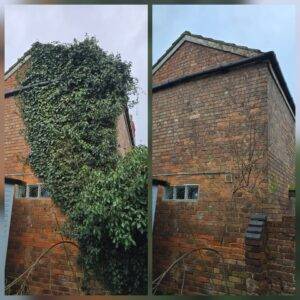
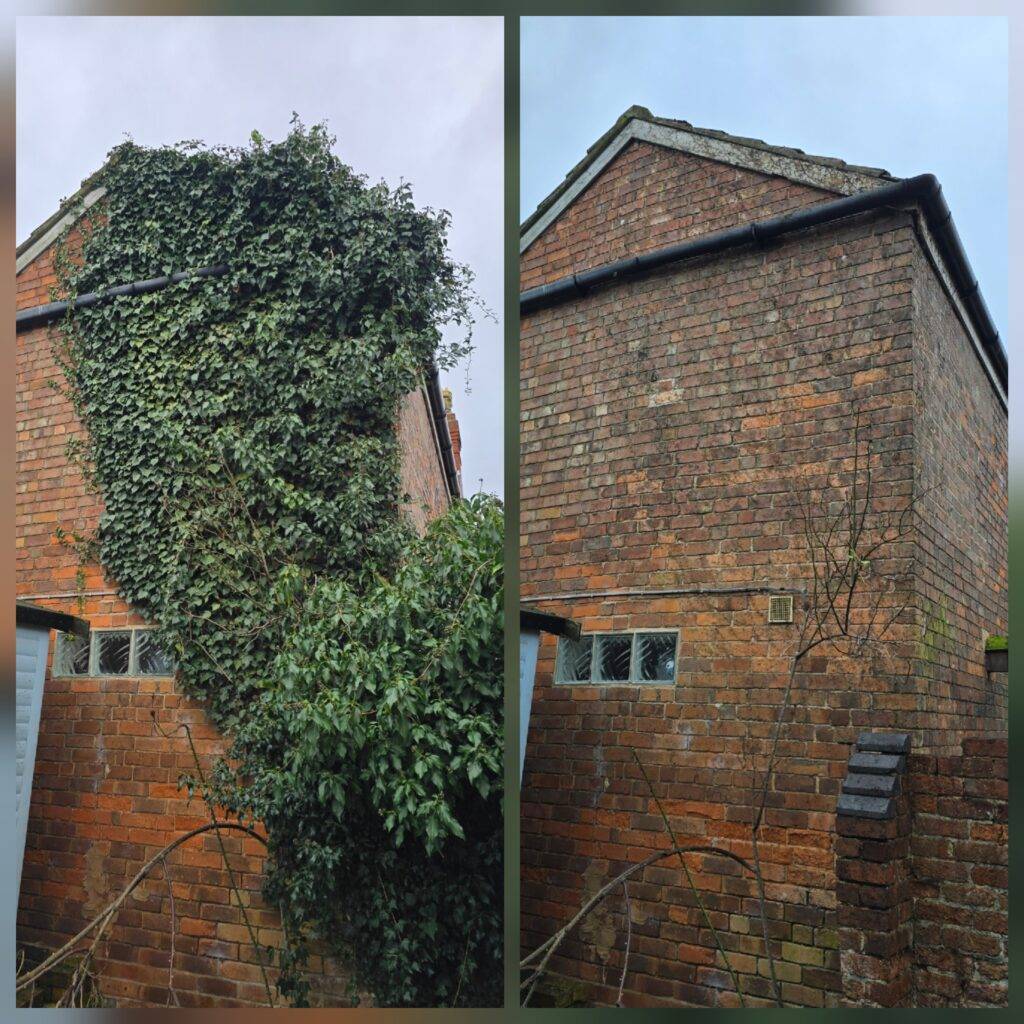
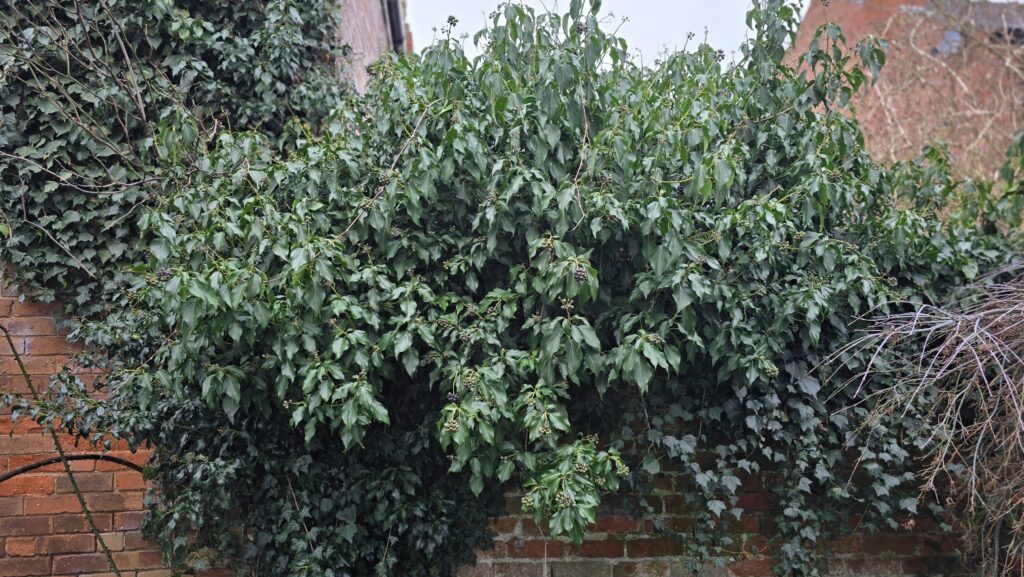
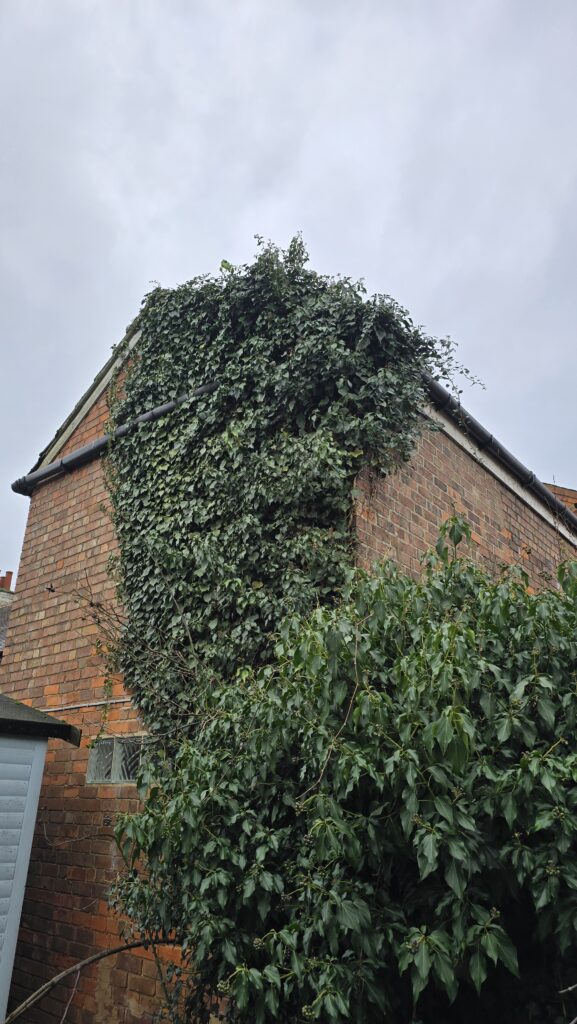
This job took place in Nottingham after a neighbour raised concerns about ivy spreading onto their extension. The ivy was mainly growing on our customer’s side, but it had climbed up and over the roofline and was encroaching onto the neighbour’s property, creating a clear risk to gutters, brickwork and boundary walls.
- Property: 2-storey home with ivy reaching the roofline
- Issue: Ivy spreading over onto a neighbour’s extension and affecting gutters/brickwork
- Time on site: Approx. 5 hours
- Team: 2 operators
- Customer request: Preserve established roses while removing ivy
- Outcome: Ivy removed safely at height, roots removed at source to reduce regrowth
The problem
The ivy had become established at ground level on the customer’s side and had been allowed to climb for some time. Over the years it spread across the garden brick wall and up the house exterior, eventually reaching the roofline and pushing across onto the neighbour’s extension.
The neighbour complained about the spread and the potential for damage. At this point, the customer wanted the ivy removed properly and safely to prevent further issues and to restore the appearance of the brickwork and wall.
Why this wasn’t a DIY job
Working at height
The ivy had climbed to second-storey height and over the roofline. Attempting to remove this as a DIY job would have involved working at height with limited control over falling material. That creates unnecessary risk for the homeowner and can easily lead to damage if ivy is pulled down aggressively.
Risk to gutters, brickwork and boundary walls
When ivy reaches roof edges and gutters, it can trap debris and moisture and add extra load. On brick walls, heavy ivy can also hide existing defects and make maintenance harder. The safest approach is controlled removal in stages, with careful handling around roof edges, gutters and vulnerable brickwork.
Our method
Step 1 — Controlled cut-back and safe removal at height
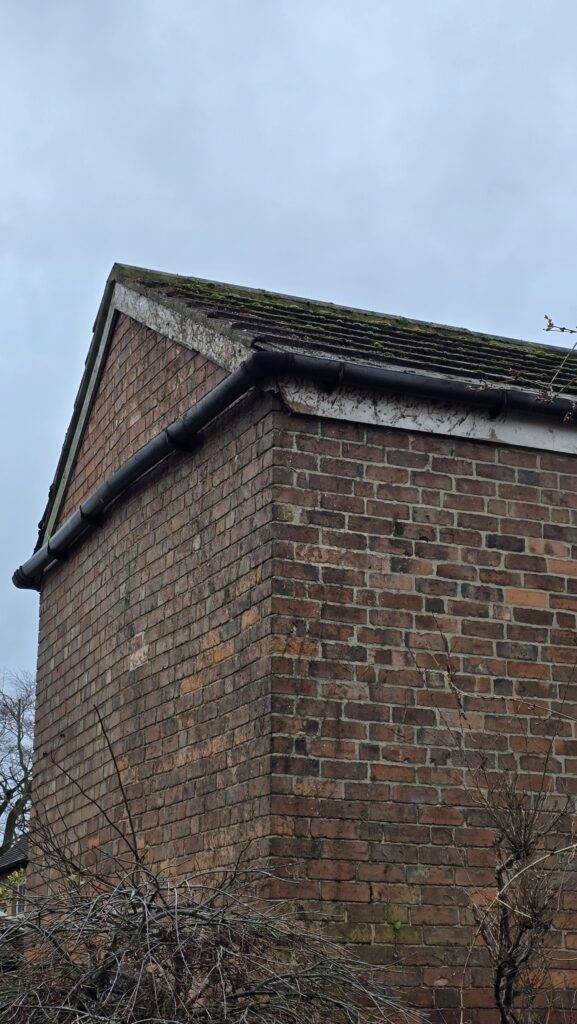
We started by planning a controlled removal so ivy sections could be taken down safely rather than pulled off in one go. Working in stages helps protect brickwork and prevents large sections from tearing away unpredictably.
We cleared the roofline area first to stop further spread and reduce the risk of debris collecting in gutters. As sections were detached, we managed the material carefully to keep the area safe and tidy throughout the job.
Step 2 — Careful handling to protect surfaces
As the ivy came away, we avoided harsh pulling that can damage mortar joints or dislodge material. Where ivy tendrils were embedded, we removed what could be taken off cleanly and left the surface in a condition suitable for natural weathering or later gentle cleaning if the customer wanted it.
Step 3 — Removing ivy at source (root crown and excavation)
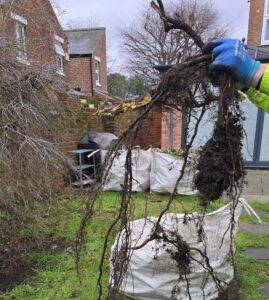
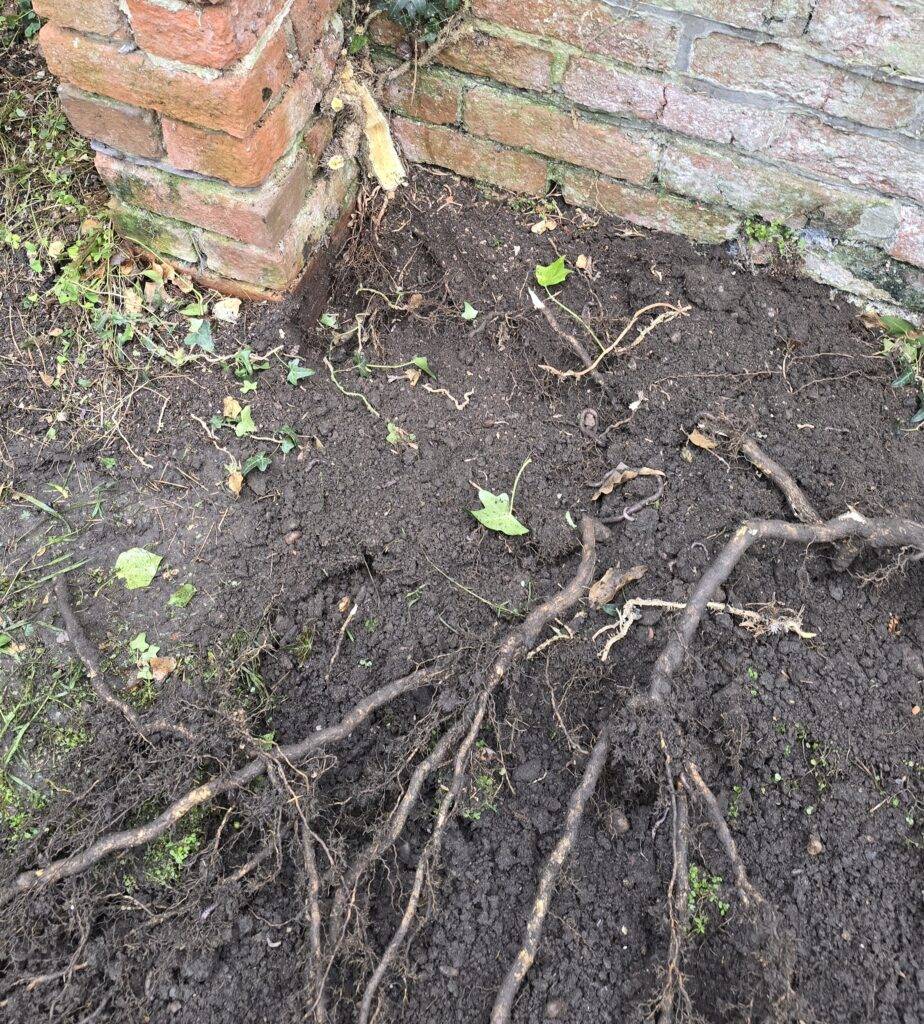
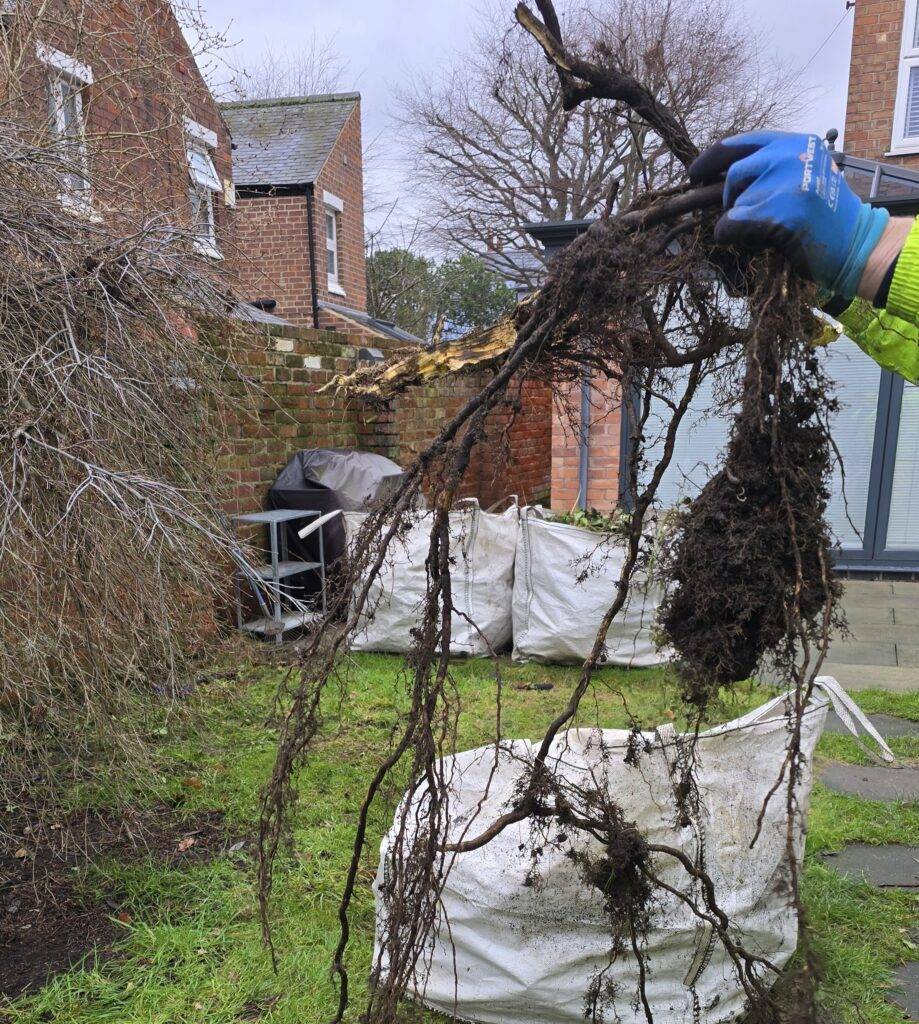
To reduce the chance of the ivy returning, we addressed the growth at the source. The ivy was established at ground level on the customer’s side, so we exposed the base and located the root crown and main root system.
We then dug out the root crown and removed as much of the root system as practical in the area. This is the key difference between a temporary cut-back and a proper removal: dealing with the root crown helps stop regrowth and prevents the ivy re-establishing itself quickly.
Step 4 — Preserving the roses
The customer asked us to protect existing roses that were growing near the ivy. We carried out selective removal around the plants so the ivy could be taken away without ripping through the rose growth. This took extra care and time, but it meant the customer kept the plants they wanted while still resolving the ivy problem.
Results
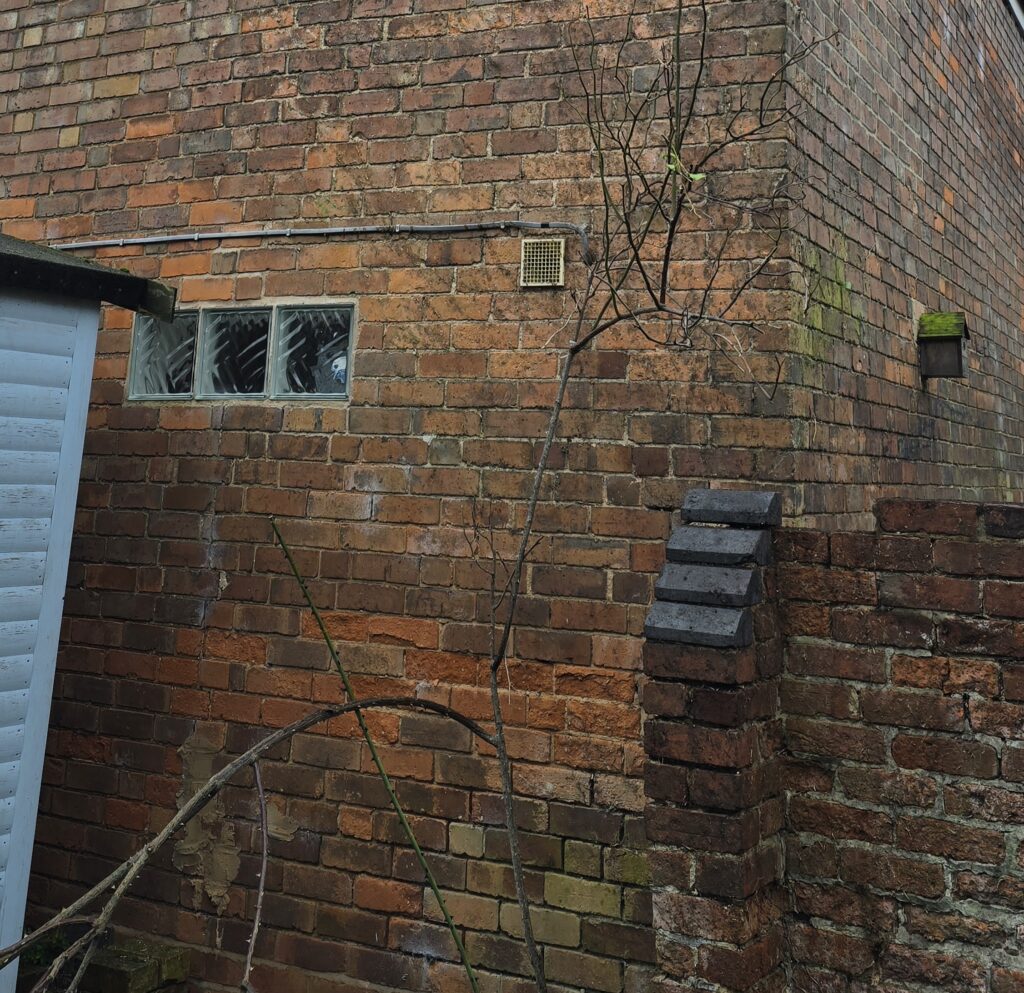
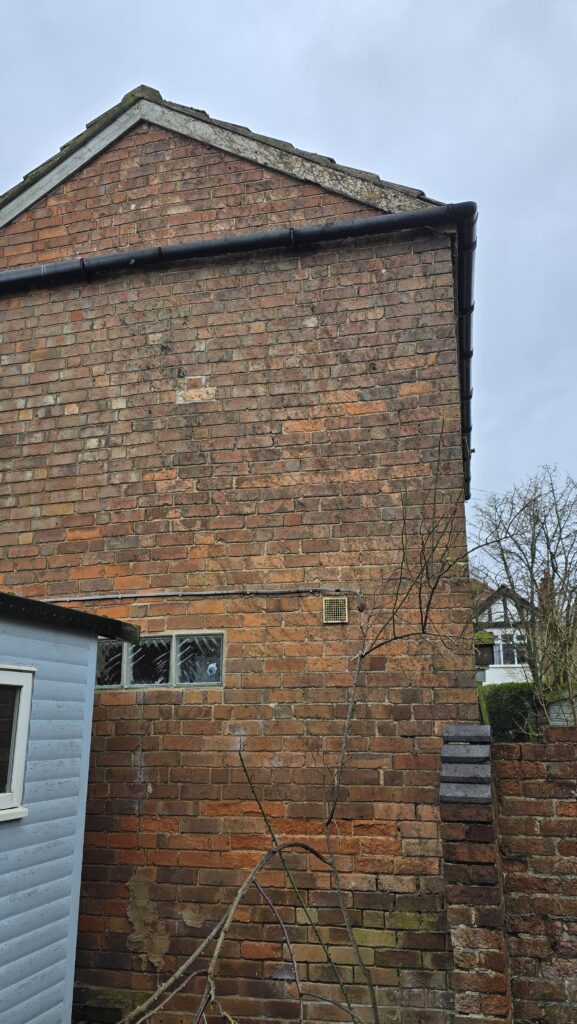
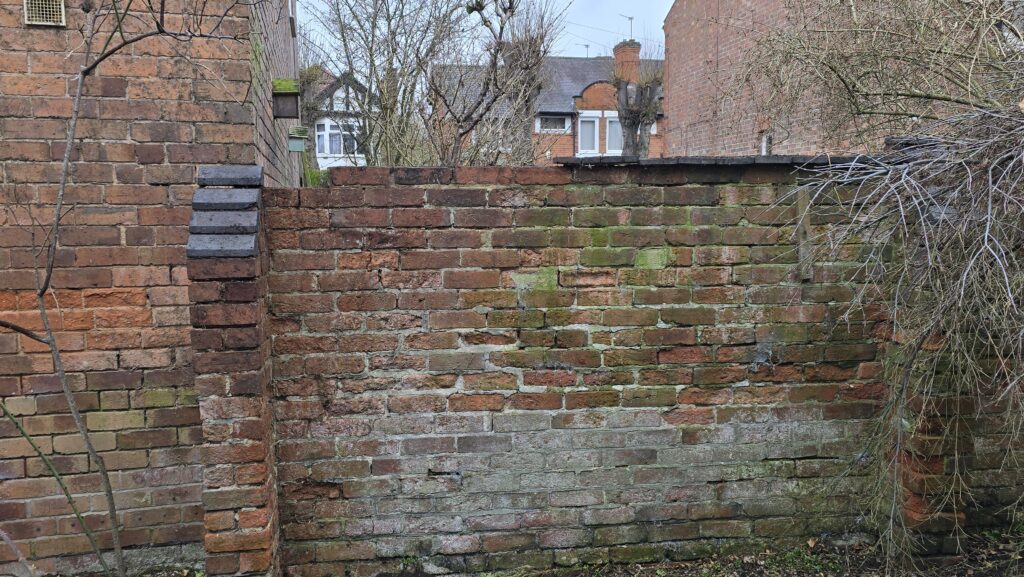
By the end of the job, the ivy was removed from the wall and from the house exterior up to and over the roofline. The affected areas were opened up again so brickwork and boundaries could be properly seen and maintained, and the neighbour’s extension was no longer being encroached by growth from the customer’s side.
Because the root crown was removed, the risk of rapid regrowth was greatly reduced. The site was left tidy, with ivy debris cleared away and the customer’s roses preserved as requested.
FAQs
Will ivy grow back if you only cut it back?
If ivy is only cut back and the root crown remains healthy, it can regrow. Removing the ivy at source and dealing with the root crown significantly reduces regrowth risk.
Can ivy cause problems around gutters and roof edges?
Ivy can trap debris and moisture and create extra weight as it thickens. Clearing ivy from rooflines helps keep these areas visible and easier to maintain.
Can you remove ivy from a 2-storey property safely?
Yes, with the right approach and controlled removal. The key is staged removal, safe access, and careful handling so large sections don’t tear away unpredictably.
Can you remove ivy without destroying nearby plants?
In many cases, yes. With selective removal and careful handling, established plants like roses can often be preserved while ivy is removed.
Get a quote for ivy removal in Nottingham
If you have ivy climbing towards your roofline, spreading across walls, or encroaching onto a neighbour’s property, we can help. Read more about our full Trusted Cleanerz ivy removal service here: https://trustedcleanerz.com/ivy-removal/ and see our dedicated Nottingham page here: https://trustedcleanerz.com/ivy-removal-nottingham/. To request a quote, contact us here: https://trustedcleanerz.com/contact/.