
Ivy Removal in London | Trusted Cleanerz Ltd
Trusted Cleanerz Ltd provides professional, manual ivy removal for residential and commercial properties across London and Greater London. Ivy can look attractive on older brickwork and garden walls, but in dense urban areas it often spreads quickly into rooflines, gutters, vents, and mortar joints—creating hidden maintenance issues and making routine upkeep difficult.
London properties also bring specific challenges: narrow side passages, shared boundaries, limited rear access, parked cars, and multiple storeys are common. Our approach is designed for these conditions—controlled, section-by-section removal, careful surface protection, and full green-waste clearance so the site is left tidy and easier to maintain.
For a fast quote, send clear photos of the ivy plus your postcode. We’ll reply with honest guidance, pricing, and available appointment dates.
Get a fast ivy removal quote
WhatsApp / Call: 07858 424693
Email: sales@trustedcleanerz.com
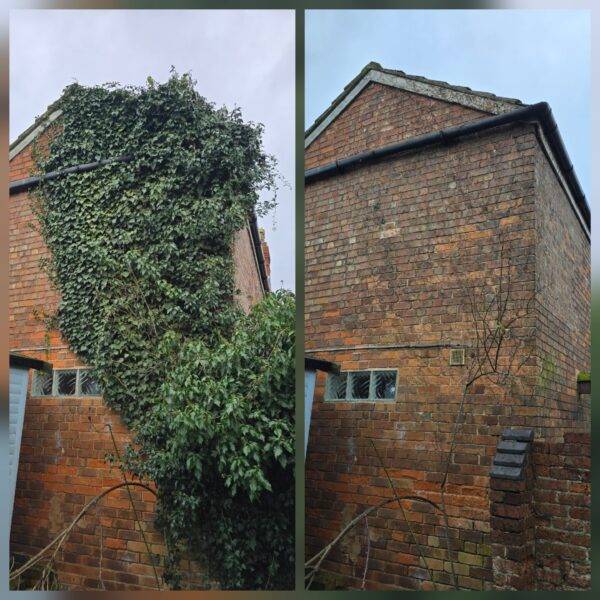
Professional Ivy Removal Services Across London
We remove ivy safely from a wide range of surfaces and structures. Every job starts with an assessment of how the ivy has anchored and what materials are underneath, so we can choose the safest method for the property.
Our London ivy removal service can include:
Ivy removal from walls, brickwork, render, stone, and painted surfaces
Clearance from roof edges, chimneys, fascias, soffits, and guttering (where safe access allows)
Ivy cut at the base to stop further growth and reduce load on walls and rooflines
Controlled, manual removal in manageable sections (never ripped off in one pull)
Full waste collection and responsible disposal
Practical prevention advice to reduce regrowth and re-attachment
If you’re looking for a general overview of safe methods and what to expect, see Professional ivy removal tips.
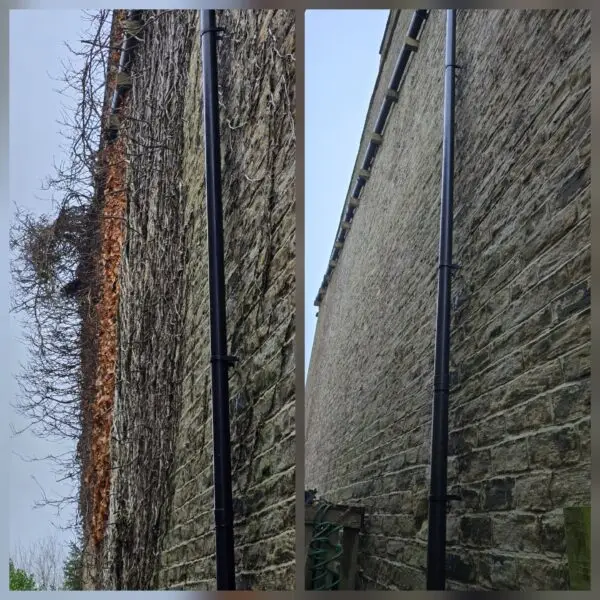
Why Ivy Removal Matters in London
Ivy clings using small root-like tendrils that can work into cracks and weak points over time. In London, where buildings are close together and shaded elevations are common, ivy can spread unnoticed along rear walls and shared boundaries—especially around extensions, garages, and garden structures.
Common problems caused by established ivy growth include:
Moisture held against walls, increasing damp risk
Blocked gutters and poor drainage, leading to overflow and staining
Ivy creeping into roof edges, vents, and chimneys
Hidden cracks, loose pointing, and defects that worsen over time
Pests and insects using dense growth as shelter
If you’re concerned about moisture or hidden damage, you may find Is ivy good or bad for your home helpful. For a warning-sign checklist, read When ivy should be removed immediately.
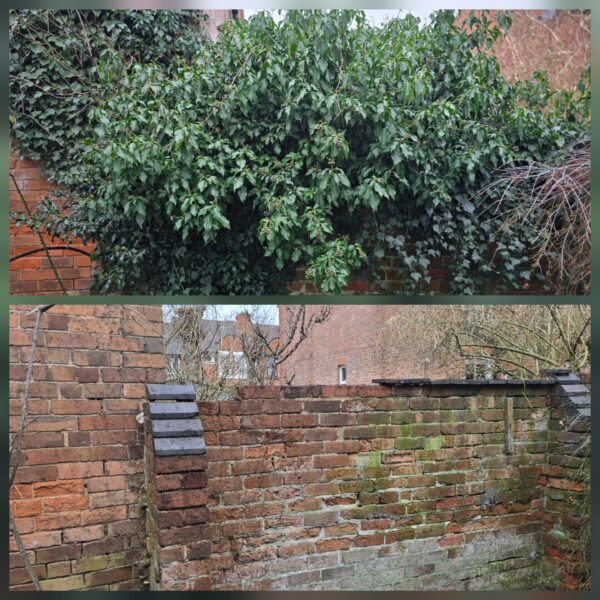
Ivy Removal for London Property Types
London’s housing stock is diverse, and ivy behaves differently depending on layout, materials, and access. We tailor the approach to the building type and the risks involved.
Terraced houses and period properties
Victorian and Edwardian terraces often have older brickwork and shared boundaries. Ivy frequently spreads along rear elevations, parapet walls, and boundary fences. We work carefully in tighter spaces to limit mess and disruption, and we pay close attention to mortar joints and painted surfaces.
Conversions, flats, and apartment buildings
Converted houses and apartment blocks may have ivy on communal walls, garages, bin-store areas, or rear elevations. These jobs require careful planning and controlled access so shared surfaces are protected and the work remains safe for residents.
Detached homes and larger residences
Larger properties often have multiple elevations, outbuildings, and long rooflines where ivy can spread into gutters and upper brickwork. We may carry out staged removal to manage weight and reduce strain on fragile areas.
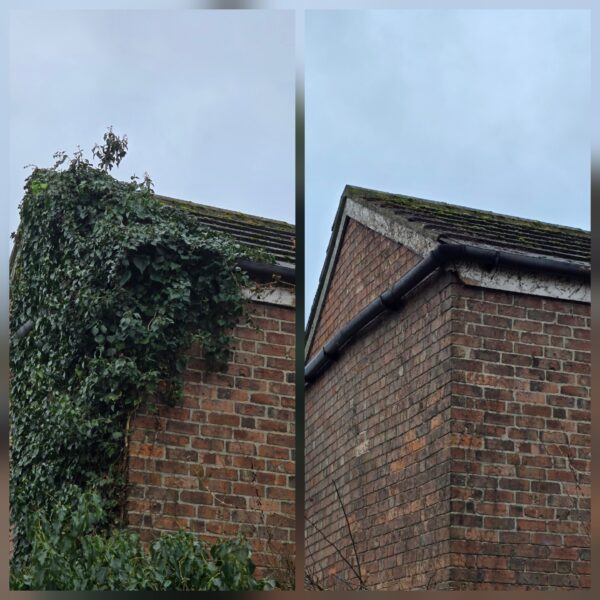
Ivy Removal from Rooflines, Gutters, and Chimneys
One of the most serious issues we see in London is ivy spreading into rooflines and drainage systems. Ivy naturally seeks higher edges and sheltered details. Once it reaches gutter level, it can trap leaves, moss, and debris—causing blockages and poor flow. Over time, this may lead to overflow, damp patches, and staining, and it can hide defects around flashing and roof edges.
Where access and safety allow, our service can include careful clearance from:
Roof edges and guttering
Chimneys and parapet walls
Fascias, soffits, and bargeboards
Upper brickwork and rendered elevations
For a fixed quote, send a photo of the ivy and your postcode — or visit Professional Ivy Removal Services Across the UK for full details, pricing guidance, and fast bookings.
Working Safely on London Properties With Limited Access
London access can be tricky. Narrow passages, shared alleys, small rear gardens, and closely positioned buildings all affect how the work is planned. Before we begin, we assess:
How the team and equipment will reach the ivy safely
Height, reach, and whether roofline growth is involved
Proximity to neighbours and shared boundaries
Fragile surfaces (older pointing, painted render, vents, pipework)
Parking and working space considerations
This planning helps us keep the site organised and reduce disruption, especially on terraced streets or properties with restricted rear access.
Our Ivy Removal Process in London
We follow a structured, methodical process designed to protect the surface underneath and leave a tidy finish.
1) Photo-based assessment and quote
In many cases, clear photos are enough for an initial assessment. Send photos plus your postcode and any notes about height, access, or roofline involvement. We’ll reply with guidance and a quote range (or fixed quote where appropriate).
2) Cutting ivy at the source
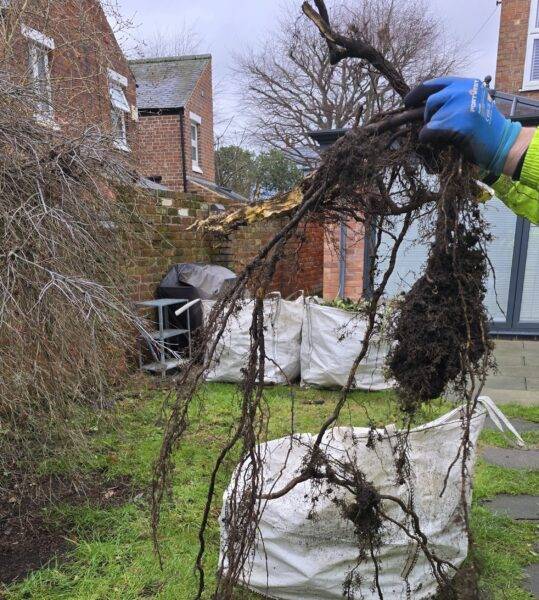
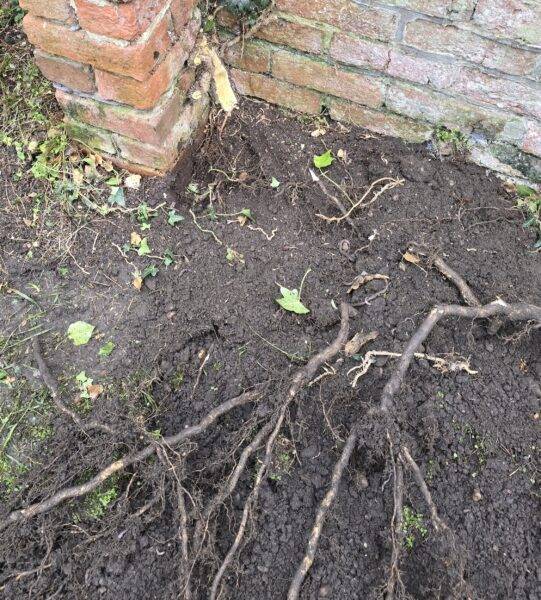
We cut ivy at the base to stop further growth and reduce load. This step is essential, especially when growth is heavy or wet.
3) Section-by-section manual removal
Ivy is removed gradually in manageable sections. This reduces stress on brickwork, render, and roof edges, and allows us to work carefully around windows, vents, pipework, and fragile masonry.
4) Inspection and explanation of exposed areas
Once the surface is exposed, we check for remaining tendrils and debris. Ivy can reveal pre-existing issues such as worn pointing or flaking paint; we’ll point these out clearly so you know what you’re dealing with after removal.
5) Waste removal and tidy finish
All ivy growth and green waste is collected and removed from site, leaving paths, gardens, and access routes clean and clear.
Ivy Removal Cost in London
The cost of ivy removal in London depends on the size, height, and complexity of the growth. Some jobs involve light clearance from a wall or fence; others involve mature ivy covering multiple elevations, reaching gutter level, or spreading into chimneys and roof edges.
Pricing is commonly influenced by:
Height and access requirements (including restricted access)
Thickness and age of the ivy
Surface type (brick, render, stone, timber, roofing)
Number of affected areas (front, side, rear, outbuildings)
Volume of waste to be removed
Any roofline or gutter work required
For typical UK pricing ranges and what affects cost, see UK ivy removal cost guide. If you send photos and your postcode, we can usually provide an estimate quickly and confirm available appointment dates.
Areas We Cover Across London and Greater London
We provide ivy removal across London and Greater London by appointment. Rather than focusing on one postcode, our mobile teams attend where the job and access are suitable, maintaining consistent standards across the city.
Common areas we cover include:
Central: Westminster, Camden, Kensington & Chelsea
North: Islington, Barnet, Enfield, Haringey
South: Lambeth, Southwark, Wandsworth, Croydon
East: Hackney, Newham, Barking & Dagenham
West: Ealing, Hounslow, Hammersmith & Fulham
If you’re unsure whether your area is included, send your postcode and we’ll confirm availability.
Frequently Asked Questions – Ivy Removal in London
Can ivy be removed without damaging brickwork or render?
Yes. Our controlled manual approach is designed to minimise risk. Ivy may reveal pre-existing issues (loose pointing, weakened render, flaking paint), but we avoid aggressive pulling that can cause unnecessary damage.
Do you remove ivy from roofs, gutters, and chimneys?
Where safe access allows, yes. Roofline ivy can create drainage problems and hide defects, so early removal is recommended. If the ivy is extensive at height, we’ll advise on the safest approach.
Will ivy grow back after removal?
Regrowth is significantly reduced when the main stems are cut and growth is removed properly. We also give practical prevention advice to help stop it returning, especially where neighbouring growth is present.
Do you take all ivy waste away?
Yes. All green waste and debris is removed from site and the area is left tidy.
How long does ivy removal take in London?
It depends on height, access, and how established the growth is. Smaller jobs can often be completed quickly; heavy multi-storey growth takes longer. We’ll give a realistic estimate once we’ve reviewed photos.
What if the ivy is coming from a neighbour’s property?
This is common in London terraces and shared boundaries. We can advise on safe removal and access considerations. You may also find Neighbours ivy growing on my house useful.
Get a Fast Ivy Removal Quote in London
If ivy is spreading across your walls, roofline, fences, or outbuildings, our team is ready to help.
To get started, send us:
Clear photos of the ivy
Your postcode
Any notes about height or access
WhatsApp / Phone: 07858 424693
Email: sales@trustedcleanerz.com
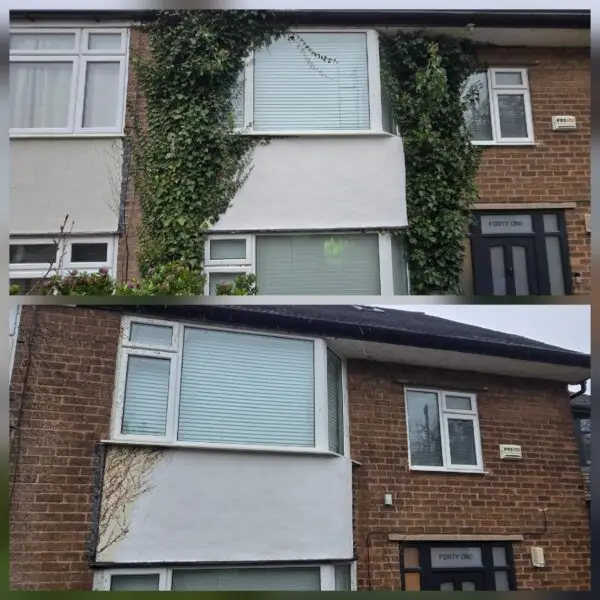
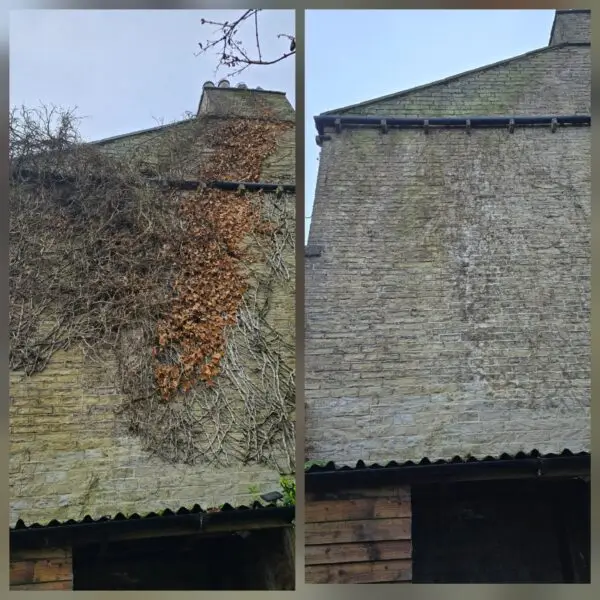
For examples of real results, see Ivy removal before and after gallery.