Is Ivy Good or Bad for Your Home? The Real Pros and Cons (UK Expert Guide)
Ivy-covered homes are a familiar sight across the UK. On older cottages and stone properties, ivy is often seen as charming, traditional, and even beneficial. You may have heard claims that ivy insulates walls, protects brickwork, or helps wildlife — and in some cases, these ideas aren’t entirely wrong.
However, as professional ivy removal specialists working on real UK properties every week, we also see the hidden damage ivy causes once it’s allowed to grow unchecked.
So is ivy actually good or bad for your home?
The honest answer is: it depends on where it’s growing, how it’s maintained, and the condition of the building underneath. In this guide, we’ll break down the real pros and cons of ivy on UK homes — separating long-standing myths from what actually happens in practice.
Why Some Homeowners Believe Ivy Is Good for Buildings
The idea that ivy is beneficial didn’t come out of nowhere. There are a few reasons why people believe ivy can help protect a property.
The Insulation Myth
One of the most common claims is that ivy provides insulation, keeping homes warmer in winter and cooler in summer.
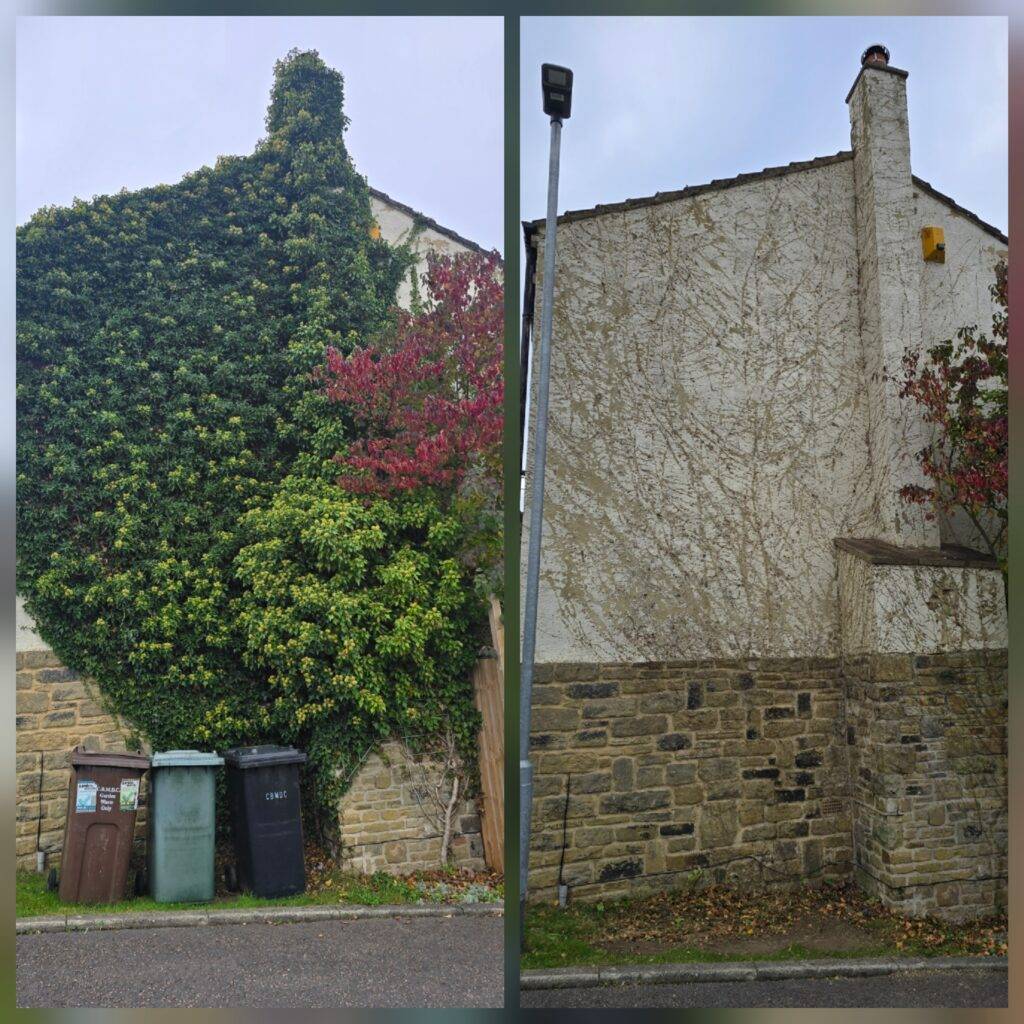
In reality, any insulating benefit is minimal. Ivy does not replace proper cavity insulation, solid wall insulation, or breathable materials. While dense ivy may slightly reduce wind exposure on an external wall, this benefit is often outweighed by the moisture it traps underneath.
Aesthetic & Heritage Appeal
On older stone cottages, rural homes, or heritage-style buildings, ivy can look attractive. In carefully managed settings, ivy can soften harsh lines and blend a building into its surroundings.
This is one reason ivy has historically been tolerated on non-residential structures, such as garden walls or ruins — not modern homes with gutters, flashing, and internal living spaces.
Wildlife Benefits
Ivy provides shelter for birds and insects, particularly in autumn and winter. This is often cited as a reason to leave ivy untouched.
However, when ivy is growing directly on a house, wildlife benefits often come with unintended consequences — something we’ll cover later.
The Hidden Risks of Ivy on UK Homes
While ivy can look harmless, the problems usually develop slowly and out of sight. By the time homeowners notice an issue, damage may already be done.
Ivy and Brickwork: What Really Happens
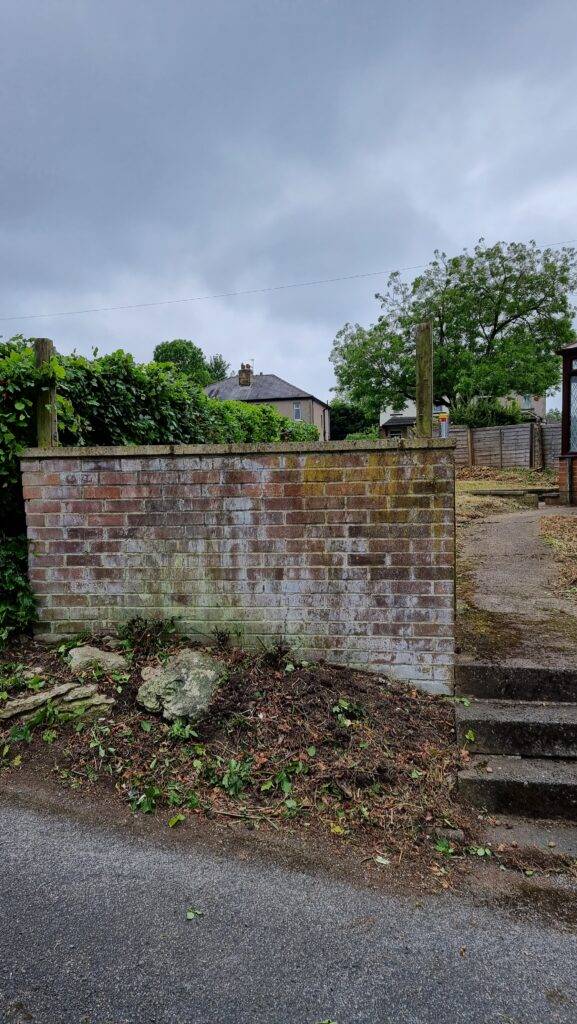
Ivy doesn’t “eat” brickwork, but it exploits weaknesses.
•Ivy roots and tendrils penetrate existing cracks
•Mortar joints, especially on older properties, are vulnerable
•As ivy thickens, it applies pressure to weakened areas
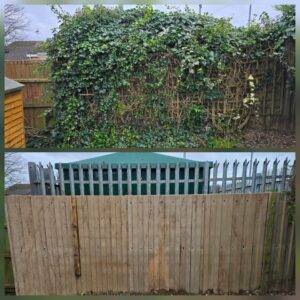
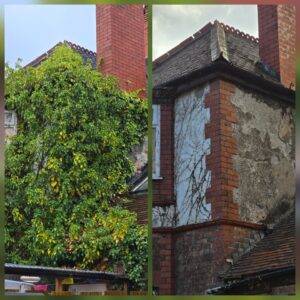
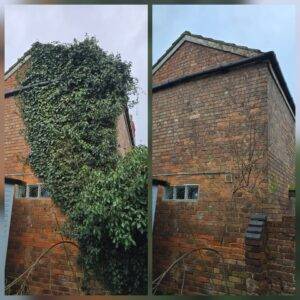
On many properties we attend, ivy has been hiding deteriorated pointing for years. Once removed, homeowners are often shocked by the extent of the damage revealed underneath.
This is one of the most common reasons ivy removal becomes unavoidable, as explained in When Ivy Should Be Removed Immediately.
Does Ivy Cause Damp?
Yes — and this is one of the biggest issues in the UK climate.
Ivy traps moisture against walls by:
•Preventing surfaces from drying naturally
•Blocking airflow
•Holding rainwater against brick, stone, or render
Over time, this can lead to:
•Penetrating damp
•Internal mould patches
•Flaking paint and plaster
•Cold, damp internal walls
While ivy may appear to shield a wall from rain, it often makes damp problems worse — especially on north-facing walls or older solid-wall properties
Rooflines, Gutters, and Hidden Damage
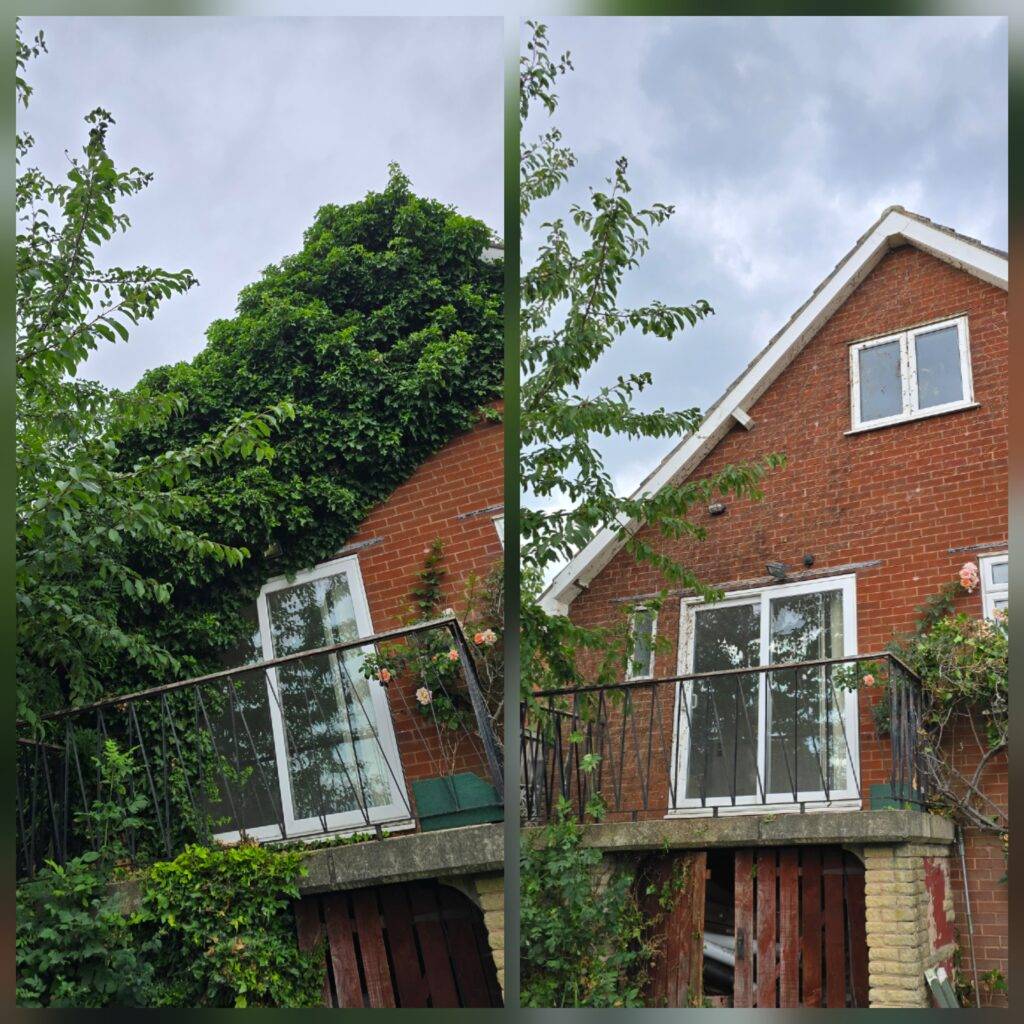
Once ivy reaches roof height, the risks increase significantly.
Common problems include:
•Blocked gutters and downpipes
•Ivy lifting tiles or creeping under flashing
•Water backing up into roof timbers
•Hidden rot developing behind growth
Many homeowners only discover these issues after leaks appear internally. At that stage, removal alone isn’t enough — repairs may already be required.
This is why professional assessment is recommended rather than simply cutting ivy back and hoping for the best.
Pests, Insects, and Ivy
Ivy-covered homes often become ideal nesting and hiding spots for insects and small animals.
In real-world cases, we frequently find:
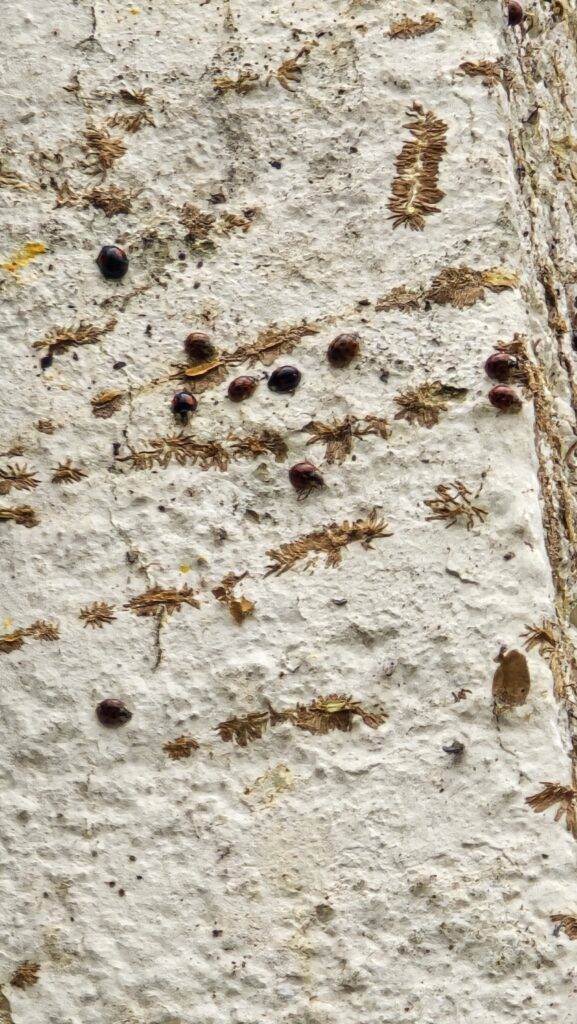
•Ladybirds nesting in large numbers
•Spiders and insects entering through windows
•Birds dislodging tiles or blocking vents
•Rodents using ivy as a climbing route
A good example of this issue is explained in Ladybirds Hiding in Ivy, where dense growth created a significant nuisance inside the property.
Why Cutting Ivy Alone Is Not Enough
Many homeowners assume that cutting ivy at the base solves the problem. While this stops growth, it does not remove the damage or adhesive remains.
Dead ivy often:
•Stays firmly attached for months or years
•Continues trapping moisture
•Leaves stubborn root marks on brickwork
Improper removal can also pull out mortar or damage render. This is why professional methods focus on controlled, manual removal, rather than force.
For a deeper explanation, see How to Remove Ivy Tendrils After Ivy Is Cut Back (and What Biocides Actually Do).
When Ivy Can Be Acceptable (In Limited Situations)
Despite the risks, ivy isn’t automatically a problem in every situation. The key difference is what it’s growing on and how it’s managed.
•Ivy can sometimes be acceptable when:
•It’s growing on free-standing garden walls
•The structure is not part of a lived-in building
•The wall is built from modern, solid masonry
•Growth is actively maintained and cut back
In these cases, ivy may provide aesthetic value without creating serious structural risk. That said, even garden walls should be inspected regularly, as ivy can still loosen joints and accelerate deterioration over time.
What matters most is that ivy should never be allowed to grow unchecked on structures that contain interiors, roofs, or drainage systems.
When Ivy Should Always Be Removed From a Home
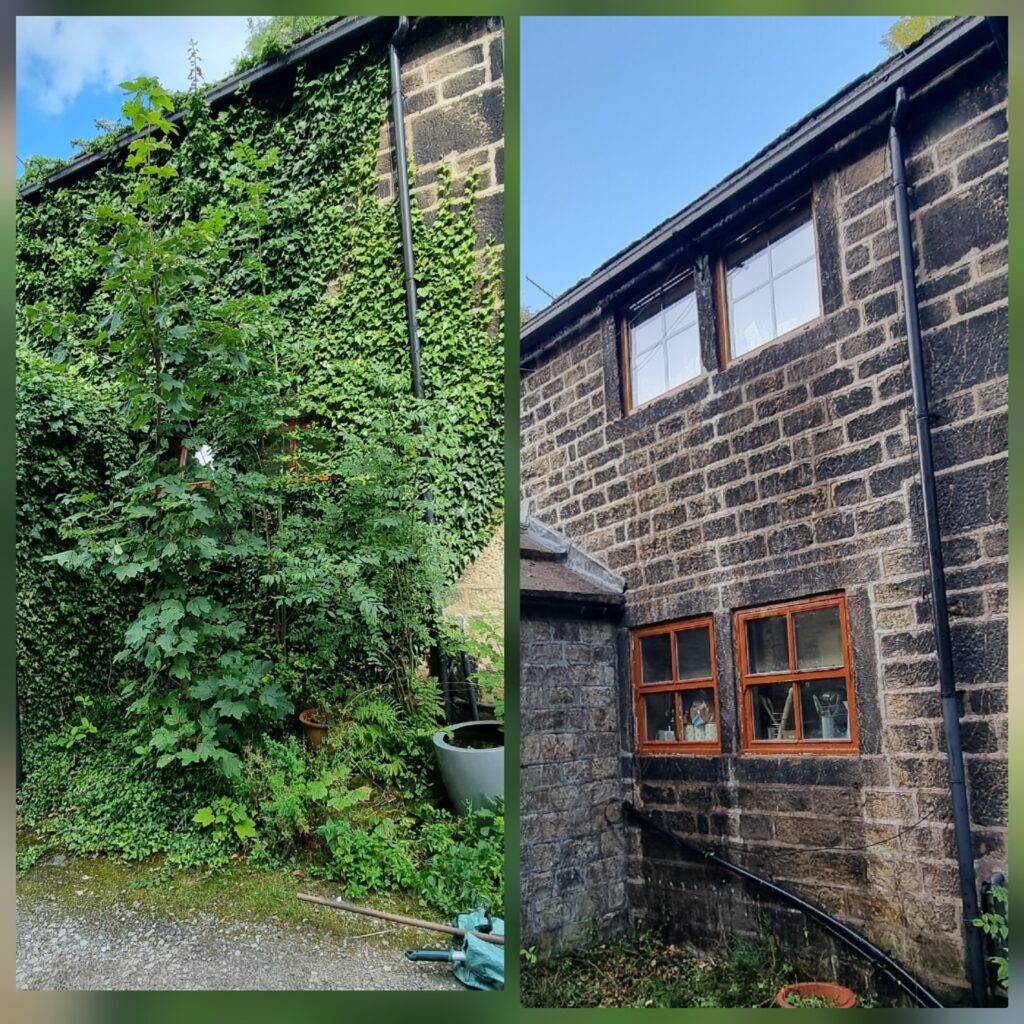
There are situations where ivy should not be debated — removal is the safest option.
Ivy should always be removed if it is:
•Growing on brickwork with ageing or weak mortar
•Covering rendered or painted walls
•Reaching gutters, roof tiles, or flashing
•Growing near windows, vents, or air bricks
•Spreading across shared or neighbouring walls
Older UK housing stock is particularly vulnerable. Many properties were built long before modern damp-proofing standards, and ivy can easily worsen underlying moisture issues.
If you’re unsure whether ivy has crossed the line from “cosmetic” to “damaging,” the warning signs are explained clearly in When Ivy Should Be Removed Immediately.
Ivy on Shared or Neighbouring Properties
Ivy doesn’t respect boundaries.
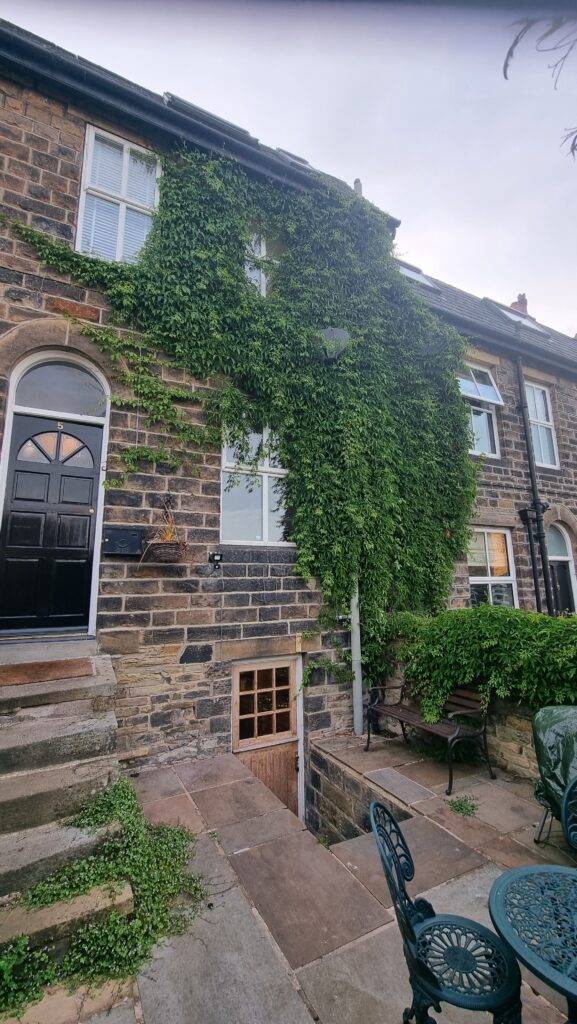
In terraced and semi-detached homes, ivy often spreads from one property onto another, leading to:
•Damage disputes
•Access issues
•Responsibility confusion
•Neighbour disagreements
In the UK, you’re generally entitled to protect your property, but cutting or removing ivy that originates next door must be handled carefully.
This situation is more common than many homeowners realise and is covered in detail in What to Do If Your Neighbour’s Ivy Is Growing on Your House.
Early action is always better than waiting until damage forces a difficult conversation.
DIY Ivy Removal vs Professional Removal
Many homeowners attempt to remove ivy themselves — often with good intentions — but DIY removal carries risks.
Common DIY Mistakes
•Pulling ivy aggressively, ripping out mortar or render
•Leaving root marks and tendrils behind
•Damaging roof tiles or gutters
•Creating safety risks when working at height
Cutting ivy at the base stops growth, but it does not remove adhesion or trapped moisture. Dead ivy can remain attached for years, continuing to cause issues.
Professional removal focuses on:
•Controlled, sectional hand removal
•Protecting brickwork, render, and pointing
•Safe access to rooflines and gutters
•Full debris clearance and inspection
Understanding the difference between cutting, treating, and actually removing ivy is essential — and often misunderstood, as explained in How to Remove Ivy Tendrils After Ivy Is Cut Back (and What Biocides Actually Do).
So — Is Ivy Good or Bad for Your Home?
The honest, expert answer is this:
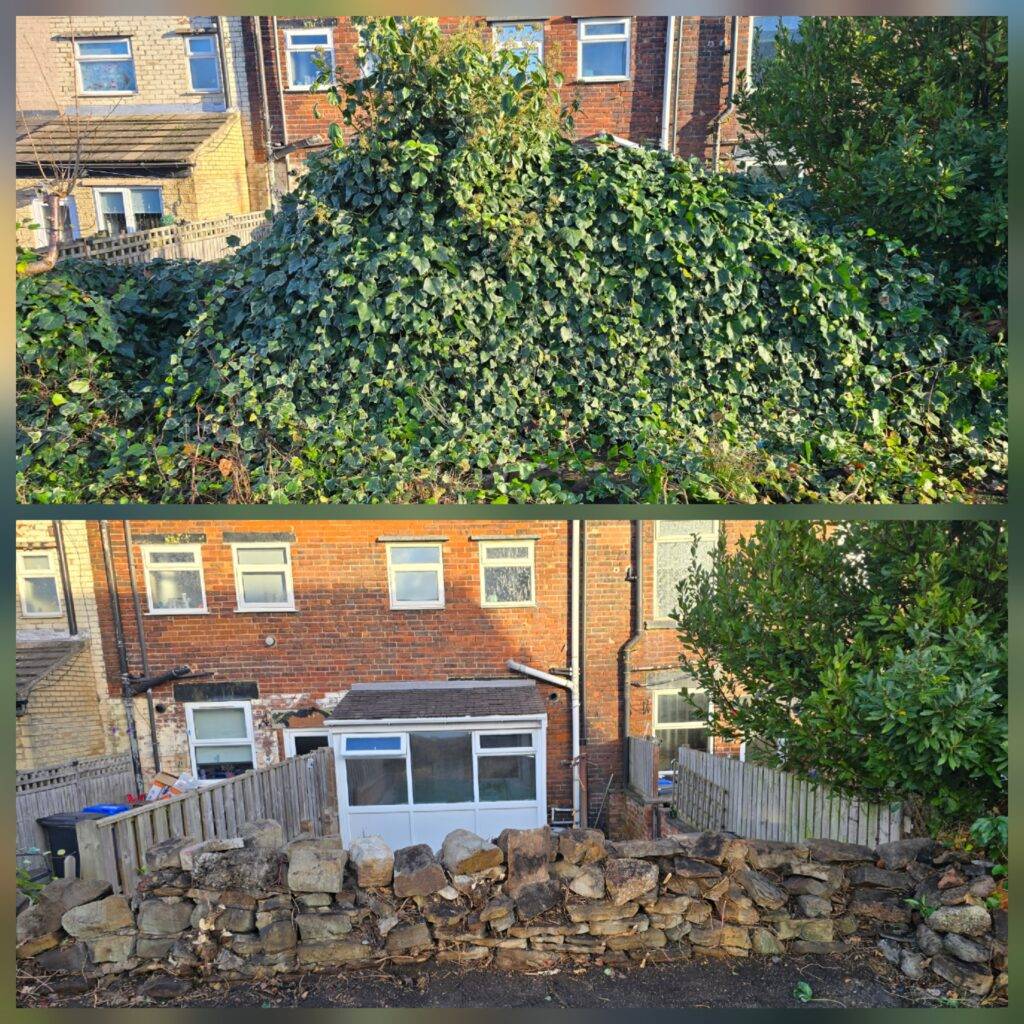
Ivy is rarely beneficial on UK homes and often causes more harm than homeowners expect.
While it may look attractive and seem harmless, ivy:
•Exploits weaknesses in brickwork and mortar
•Traps moisture and worsens damp
•Creates hidden roof and gutter damage
•Encourages pests and insects
•Hides defects that become costly later
In limited, controlled situations, ivy can be tolerated. But on most residential buildings, particularly older properties, removal is the safest long-term decision.
Professional Advice Before Problems Escalate
If you’re unsure whether ivy on your property is causing damage — or whether it should be removed — professional assessment can prevent expensive repairs later.
At Trusted Cleanerz Ltd, we provide safe, manual ivy removal across the UK, with experience on:
•Brick, stone, and rendered homes
•Rooflines and gutters
•Terraced, semi-detached, and detached properties
•Residential and commercial buildings
We also provide clear guidance on ivy removal costs, what’s involved, and what condition your walls are likely to be in once ivy is removed. Many homeowners find it helpful to review Ivy Removal Cost UK before deciding how to proceed.
Get Expert Ivy Removal Advice
For a fast, honest assessment, you can send us:
A clear photo of the ivy
Your postcode
📱 WhatsApp / Call: 07858 424693
📧 Email: sales@trustedcleanerz.com
We respond the same day with practical advice and transparent pricing — no pressure, just expert guidance.