Thousands of Harlequin Ladybirds Hiding in Ivy on UK Homes
On many UK streets, ivy-covered houses are a familiar sight. What most homeowners don’t see, however, is what’s happening inside that dense growth. During autumn and early winter, ivy can shelter hundreds – sometimes thousands – of ladybirds, clustered tightly together on walls, behind foliage, and inside cracks in brickwork and stone.
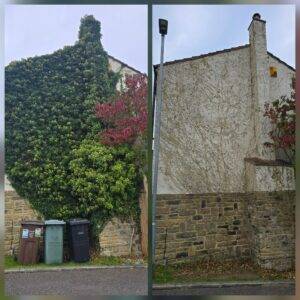
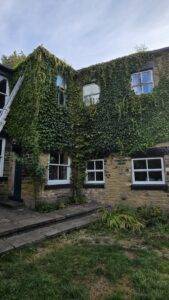
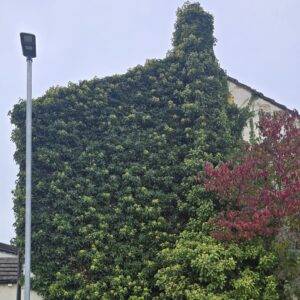
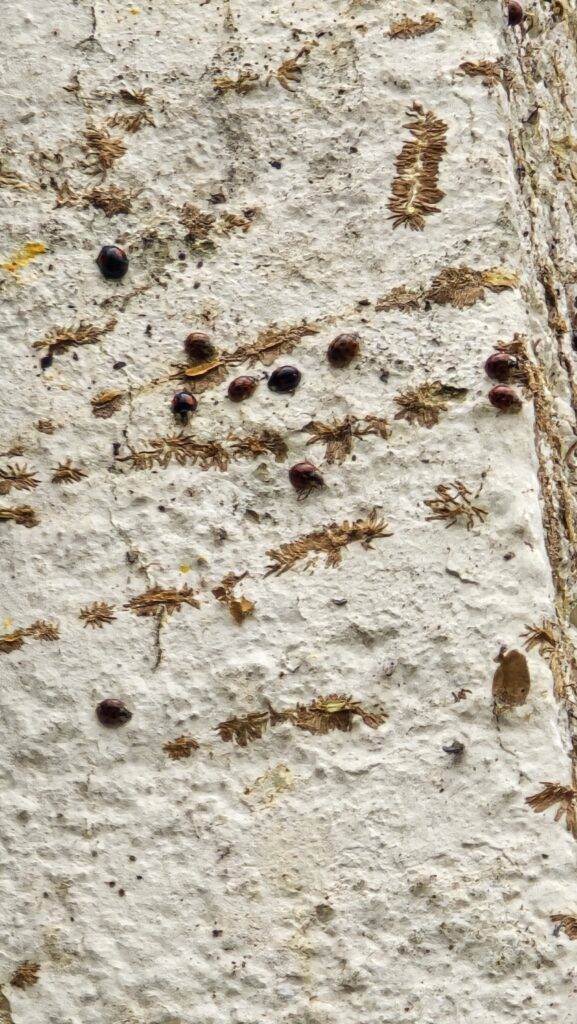
The images above were taken at a real UK property where mature ivy covered almost the entire side elevation. From a distance, everything looked green and harmless. Up close, the wall beneath the ivy was alive with ladybirds, many dark-coloured and clustered in groups.
This is not unusual – and it’s something we regularly see on properties across areas like Sheffield, York, and other towns with older housing stock and external stone or brick walls.
Why Ladybirds Gather in Ivy
Ladybirds gather in large numbers for one main reason: overwintering.
As temperatures drop, ladybirds look for:
- Shelter from frost and wind
- Stable temperatures
- Dry, protected surfaces
Ivy provides all of this. Dense growth traps warmth, blocks wind and creates thousands of small hiding spaces. When ivy grows directly against walls, it also allows ladybirds to shelter between the plant and the building itself.
Once a suitable spot is found, ladybirds release chemical signals that attract others. This is why numbers can escalate quickly from dozens to hundreds or thousands on a single property.
These Are Not Native Red Ladybirds
Many homeowners expect to see bright red ladybirds with black spots. The ladybirds commonly found clustering in ivy today often look different.
Most are Harlequin ladybirds, an invasive, non-native species now widespread across the UK. They:
- Vary in colour (dark red, brown, almost black)
- Have inconsistent spot patterns
- Gather in much larger numbers than native species
Harlequin ladybirds outcompete native ladybirds for food and shelter, and they dominate overwintering sites like ivy-covered buildings. This is why traditional red ladybirds are becoming less common in urban areas.
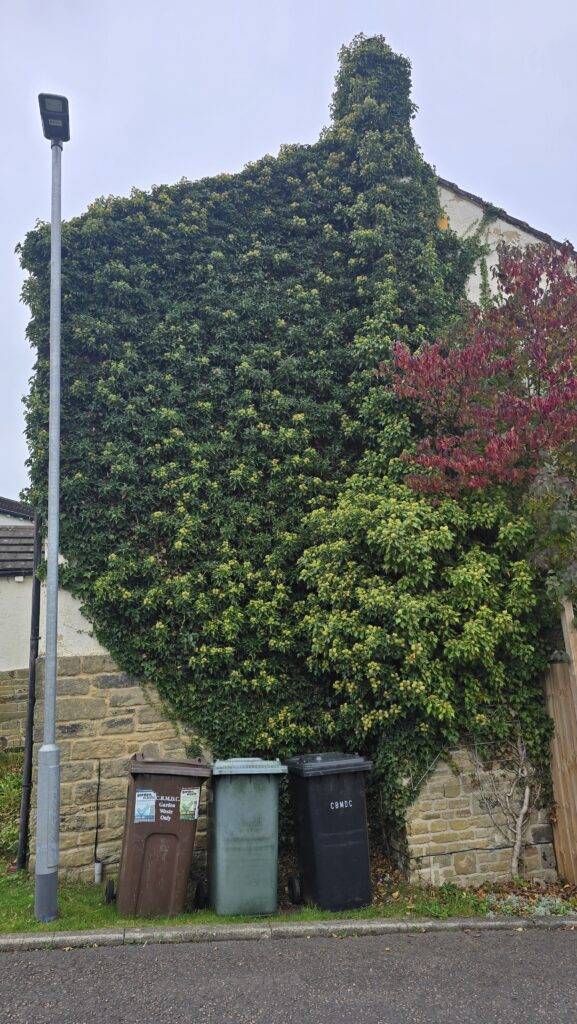
Ivy Turns Buildings into Pest Shelters
While ladybirds themselves don’t damage structures, ivy creates the conditions that allow pest problems to grow.
On properties with unmanaged ivy, we often find:
- Insects clustering behind foliage
- Entry points hidden by stems and leaves
- Damp trapped against walls
- Cracks and failing mortar concealed for years
This is one of the key issues we explain on our ivy removal service page. Ivy doesn’t just grow on a house – it interacts with the building fabric, often hiding problems until they become expensive to fix. The situation becomes even more complex when ivy is growing from a neighbouring property, something we cover in detail in our guide: “Neighbours’ ivy growing on my house”. In these cases, pests and moisture don’t respect boundary lines.
A Common Sight on Homes in Sheffield and York
Large ivy-covered elevations are especially common in cities like Sheffield and York, where stone terraces, older brickwork and boundary walls provide ideal surfaces for ivy to establish.
Without regular inspection or professional removal, ivy can:
- Encourage mass insect activity
- Increase pest entry into homes
- Hide long-term structural issues
This is why many homeowners contact us for ivy removal in Sheffield and ivy removal in York after noticing insects, damp, or unexplained staining on walls.
The Real Impact on Homes – More Than Just Insects
When ladybirds gather in large numbers, the impact on a property quickly becomes noticeable. Although they don’t chew wood or masonry, mass clustering creates secondary problems that homeowners often underestimate.
Harlequin ladybirds release a yellow defensive fluid when disturbed. On external walls, this can:
- Stain render, stone and paintwork
- Leave streaks beneath window frames
- Create unpleasant smells around doors and vents
When ivy is present, these insects are far more likely to end up inside. Ivy hides gaps around windows, soffits and brick joints, giving pests a direct route indoors during colder months. Once inside, ladybirds gather around light sources, ceilings and window sills, becoming a recurring nuisance throughout winter.
Why Ivy Makes the Problem Worse Over Time
Ivy doesn’t just attract ladybirds — it locks problems in place.
As ivy thickens:
- Moisture is held against walls
- Mortar joints deteriorate unseen
- Cracks widen without detection
- Pests return year after year to the same shelter
Because ivy conceals the wall surface, homeowners often don’t realise how advanced the issue is until large clusters of insects appear or damp patches become visible inside.
This is why unmanaged ivy frequently leads to repeated pest problems, even when the insects themselves are removed temporarily.
You can find a full breakdown of these risks on our main ivy removal page, where we explain how ivy interacts with brickwork, stone and render over time.
Ivy From Neighbouring Properties
In many cases, the ivy isn’t even growing from the affected home. We regularly deal with situations where ivy originates next door and spreads across boundary walls or shared elevations.
Even when the plant belongs to a neighbour, the impact still falls on your property — including:
- Insects nesting against your walls
- Damp forming on your side of the structure
- Hidden access points for pests
We cover this scenario in detail in our article “Neighbours’ ivy growing on my house”, which explains rights, responsibilities and practical steps homeowners can take.
Prevention Is Better Than Repeated Problems
Once ladybirds have chosen a building as an overwintering site, they often return to the same location year after year. The key to preventing this cycle is removing the shelter that attracts them in the first place.
Professional ivy removal:
- Exposes walls so issues can be assessed
- Reduces moisture retention
- Removes pest harbourage
- Allows cracks and defects to be repaired
In areas like Sheffield and York, where older homes and stone elevations are common, early intervention can prevent years of hidden damage and recurring pest activity. Our ivy removal services in these towns focus on controlled, manual removal, protecting the building fabric while stopping future growth from re-establishing.
Ladybirds Are a Warning Sign
Seeing hundreds or thousands of ladybirds on an ivy-covered wall isn’t just a seasonal curiosity — it’s a visible warning sign.
It shows that the ivy has reached a stage where it:
- Creates a stable pest environment
- Conceals the condition of the wall beneath
- Increases long-term maintenance risks
By addressing the ivy, homeowners don’t just deal with insects — they protect the structure of their property.
If ivy is covering your walls or spreading from a neighbouring property, professional assessment and removal can prevent these issues before they escalate.
Contact Trusted Cleanerz Ltd
If ivy is covering your walls or creating pest issues around your property, our team can help with safe, professional removal across Sheffield, York and surrounding areas.
📞 Call / WhatsApp: 07858 424693
📧 Email: sales@trustedcleanerz.com
We offer free advice, honest assessments and careful ivy removal that protects your home’s brickwork and structure.